


Amid sluggish expenditure by several departments in the first half of the fiscal year, Odisha on Wednesday tabled a ₹24,150 crore supplementary budget for 2026-27, with a major share of the additional spending going towards food subsidies and disaster management rather than fresh allocations across the board.
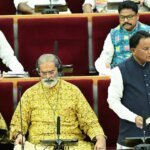
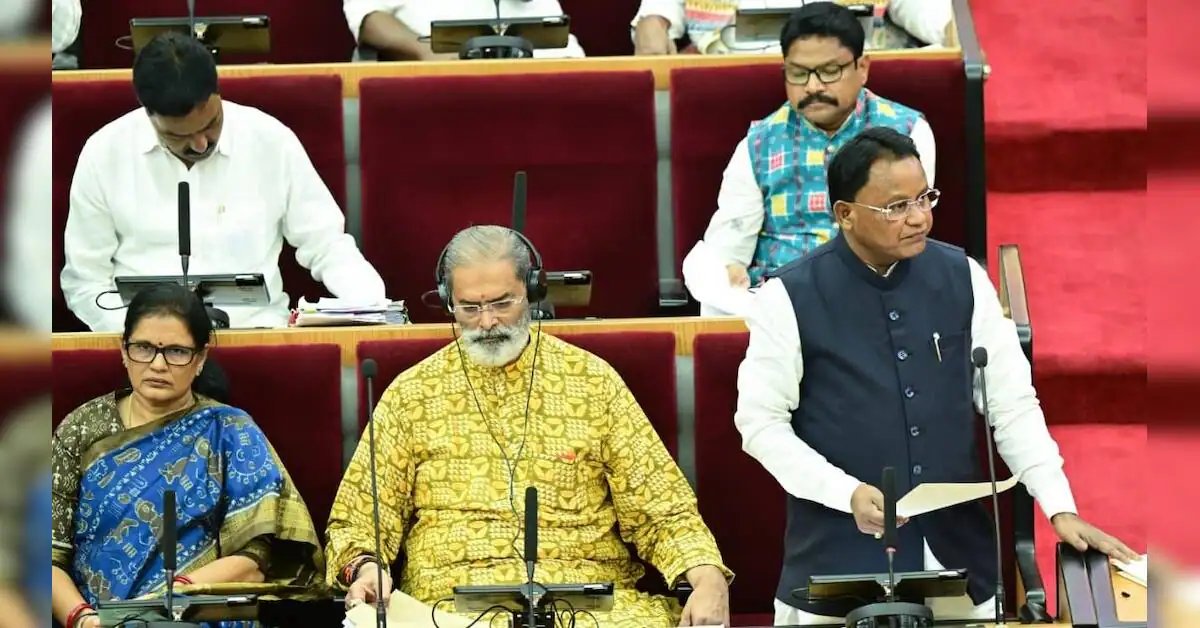
Chief Minister Mohan Charan Majhi presented the supplementary statement of expenditure in the Assembly, allotting ₹8,389.76 crore for food security and ₹5,100 crore for disaster response, relief and rehabilitation.
Equivalent to nearly 7.8 per cent of the state’s annual budget of ₹3.1 trillion, the supplementary outlay also provides additional funds for infrastructure, healthcare, education, agriculture and industrial development, as the government strategises to meet expenditure commitments and sustain key programmes in the second half of the fiscal year.
Odisha departments incurred a total expenditure of ₹94,463 crore (excluding debt servicing and disaster management) up to September 2026, representing 33.4 per cent of the annual budget estimate for the 2026-27 financial year.
Of the total supplementary outlay, ₹1,060 crore has been earmarked under administrative expenditure and ₹17,990 crore under programme expenditure.
The supplementary statement also seeks to shore up expenditure in sectors that underpin the state’s infrastructure and investment push, including railway connectivity, industrial land and infrastructure maintenance, water management and urban services.
The programme expenditure component of ₹17,990 crore comprises ₹14,228 crore under State Sector Schemes, ₹3,442 crore under Centrally Sponsored Schemes and ₹320 crore under Central Sector Schemes.
Of the total, ₹3,765 crore has been provided under the Tribal Area Sub-Plan and ₹2,646 crore under the Special Component Plan for Scheduled Castes. Infrastructure development projects account for ₹2,359 crore.
The infrastructure allocation includes ₹642 crore under Odisha Akshaya Shakti Bikash Yojana and ₹500 crore under the Chief Minister’s Special Assistance. The government has also earmarked ₹300 crore for sustainable groundwater extraction in water-deficit areas, ₹100 crore under Setubandhan Yojana through RIDF, ₹18 crore under the Minimum Needs Programme for constituency-wise allocations and ₹20 crore for road reconstruction in Left Wing Extremism-affected areas.
As part of new initiatives, the government has earmarked ₹8,312 crore under Mukhya Mantri Annapurna Yojana to ensure food security, while ₹485 crore has been allocated for the KG-to-PG Free Education Scheme. The Urban Challenge Fund has received ₹174 crore, and ₹316 crore has been provided under the Scheme for Financial Assistance to State for Public Health Infrastructure (FASPHI).
The government has also earmarked ₹25 crore towards a one-time settlement scheme for the liquidation of closed spinning mills, ₹35 crore for salt-pan land acquisition in Ganjam district and ₹550 crore for land acquisition for new railway lines, adding to the state’s investment in rail connectivity and infrastructure development. The transport sector has received a total of ₹650 crore, including the railway allocation and ₹100 crore towards subsidy under the Green Odisha Electric Vehicle Policy.
The Industries and MSME sector has been provided ₹843 crore, including ₹265 crore under the Land Bank Scheme, ₹100 crore under the SIDBI Cluster Development Fund and ₹380 crore under the Industrial Infrastructure Maintenance Fund.
The biggest allocation in the supplementary statement is for the Food Supplies and Consumer Welfare Department, which has been provided ₹8,389.76 crore, substantially higher than its original budget provision of ₹1,538.28 crore. The bulk of the additional funding is under the Mukhya Mantri Annapurna Yojana, which has received ₹8,312 crore towards food subsidy to ensure food security.
The School and Mass Education Department received ₹1,390.74 crore, the Health and Family Welfare Department got ₹1,246.33 crore and the Industries Department was allocated around ₹792 crore.
Of the outlay for the health sector, ₹500 crore has been provisioned under the National Health Mission, ₹316 crore under the Scheme for Financial Assistance to State for Public Health Infrastructure and ₹90 crore under the Pradhan Mantri Ayushman Bharat Health Infrastructure Mission. The government has also earmarked ₹76 crore for the TB Control Programme and ₹35 crore for establishing paediatric cancer facilities.
Urban development has received ₹372 crore, including ₹174 crore under the Urban Challenge Fund, ₹100 crore under Mukhyamantri Sahari Vikas Yojana for urban infrastructure, ₹50 crore under SUJALA for drinking water supply and ₹60 crore for solid waste management under Swachha Odisha.
The agriculture and allied sectors have received ₹1,606 crore under the supplementary statement, including ₹380 crore towards subsidies under Samrudha Krushak Yojana, ₹120 crore under Shree Anna Abhiyan, ₹101 crore under Mukhyamantri Matsyajeevi Kalyan Yojana and ₹207 crore for poultry development under Prani Sampad Samruddhi Yojana.
Women-centric programmes have received ₹1,247 crore, including ₹550 crore under SUBHADRA Yojana and ₹697 crore under the National Rural Livelihood Mission.
No supplementary provision has been made for the Panchayati Raj and Drinking Water, Sports and Youth Services, Commerce and Public Enterprises departments.
Majhi had presented the annual budget of ₹3.1 trillion in February, comprising ₹1.14 trillion under administrative expenditure, ₹1.8 trillion under programme expenditure, ₹5,375 crore under disaster response funds and ₹10,625 crore as transfers from the state.