

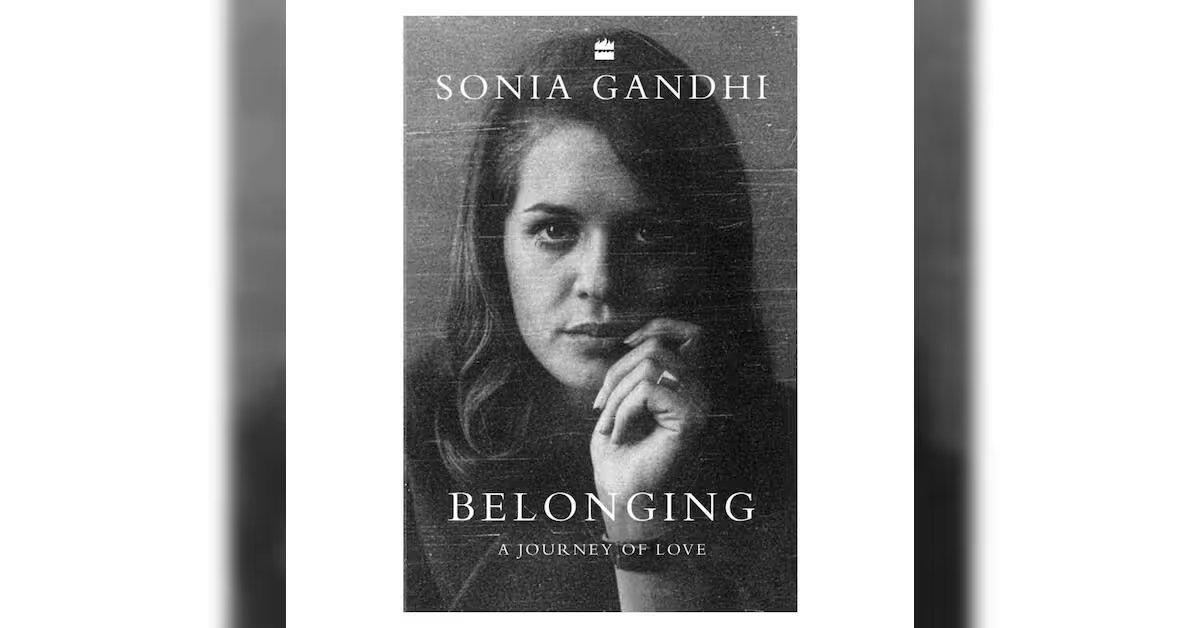

Here are some of the significant revelations from the memoir.
Emergency was a mistake, says Sonia Gandhi
Gandhi describes the imposition of the Emergency in 1975 as a mistake and says she believes her mother-in-law, then prime minister Indira Gandhi, eventually came to feel the same. She also writes that keeping Sanjay Gandhi “in check” could have prevented much of the damage that followed the decision.
In an interview with The Guardian ahead of the memoir’s release, Sonia said, “I always feel that Mrs (Indira) Gandhi was a democrat at heart. I know that many would laugh at this, but I believe she was never comfortable in the course of the emergency. I think it was sitting heavy on her,” she added.
According to Sonia, the decision created divisions within the family. Her husband, Rajiv Gandhi, opposed the move and advised his mother to wait for the next election. Her younger son, Sanjay, however, pushed for it, arguing at a family dinner that the Opposition would destroy his mother and telling her, “They must be stopped.”
Babri Masjid demolition was a turning point, says Sonia Gandhi
Revisiting the demolition of the Babri Masjid in 1992, Gandhi describes it as a turning point in India’s political journey and a sign of the growing influence of the BJP-RSS combine.
“There had been for several years clear indications that the BJP-RSS and their affiliates were single-mindedly advancing their divisive agenda. The tragic demolition of the Babri Masjid in 1992 and the ensuing spiral of communal violence were definite pointers: Those outfits were no longer going to work behind the scenes. The BJP was drawing closer to its dream of absolute power,” she writes.
In an interview with The Guardian, Gandhi recalled breaking down in tears while watching the Babri Masjid being demolished in Ayodhya on December 6, 1992. She said the incident made her realise that preserving the secular vision of Mahatma Gandhi, Jawaharlal Nehru and other leaders of India’s founding generation would require a long struggle. This account has since become a major flashpoint with the BJP.
Why Sonia Gandhi chose Manmohan Singh as prime minister in 2004
Gandhi also explains why she considered former prime minister Manmohan Singh the right person to lead the UPA government after the 2004 general elections, when she declined her party’s offer to become prime minister.
In the memoir, she describes Singh as a person of “unquestionable integrity and a deep understanding of governance”. She also explains that Singh was not aligned with any particular faction within the Congress and was well placed to lead a government supported by the Communist parties.
“He was not allied to any camp in the party. Over a period of time, the Congress had been painted as being left of centre, and our government would now be supported by the Communist parties as well. I thought Dr Manmohan Singh would assuage the doubts of many about our ability to manage and continue the policies that had been begun years ago,” she writes.
Sonia Gandhi reveals details of her cancer treatment in Italy
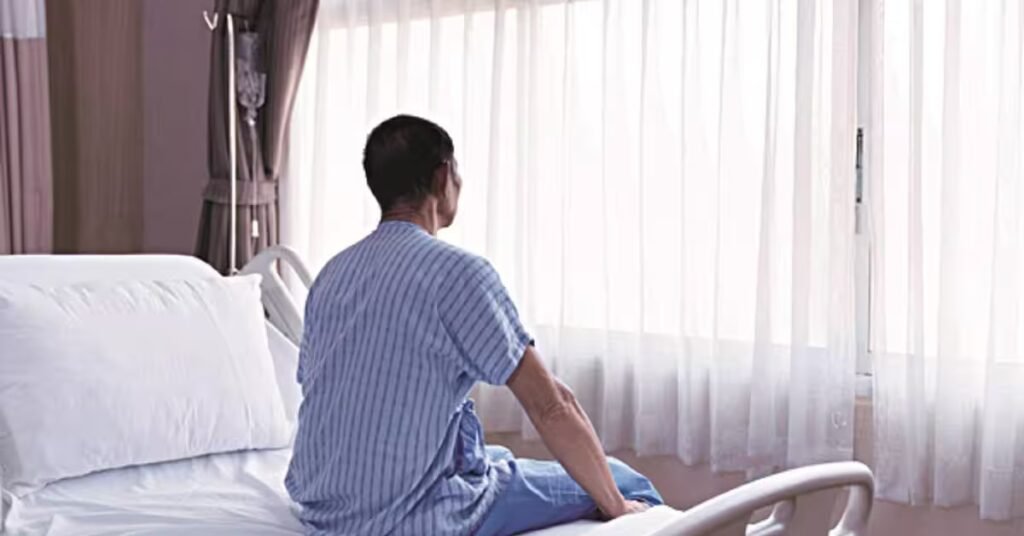
The memoir also recounts Gandhi’s medical ordeals, including a breast cancer diagnosis in 2010 followed by the discovery of a pancreatic growth a year later.
She writes that before the breast cancer diagnosis, she had experienced occasional bouts of asthma, allergies and stomach problems but had no major health concerns. “Still, I felt shaken and worried; there was no time to lose, my children and I were told, and my mind began to race to a possible scary outcome,” she recalls.
Gandhi opted for surgery at the European Institute of Oncology outside Milan, Italy. She travelled for the surgery accompanied by a senior officer, her children Rahul and Priyanka Gandhi, Priyanka’s husband Robert Vadra, and her sisters. The operation was performed under the guidance of renowned surgeon Dr Umberto Veronesi.
Sonia recalls finding grenades at home after Operation Blue Star
Gandhi writes about the frightening discovery of grenades in a room of her house following Operation Blue Star in 1984. The military operation at the Golden Temple in Amritsar was one of the most turbulent episodes in India’s history.
Her account offers a glimpse into the security fears and uncertainty surrounding the Gandhi family during that period. She also recalls how deeply the operation affected the then prime minister Indira Gandhi. When Indira Gandhi was first shown photographs of the devastation inside the Golden Temple following the operation in June 1984, “tears rolled down her face,” Sonia writes.
Indira Gandhi’s temper intimidated Sonia in her early years
Gandhi recalls that her early days in the Nehru-Gandhi family were not always easy, particularly when it came to understanding her mother-in-law’s temper.
In the memoir, she describes Indira’s occasional outbursts of anger, which could leave even members of her staff frightened. In one instance, a staff member who forgot to remind Indira about an appointment was made to stand in a corner. In another, Gandhi saw a senior Congress leader being ordered to face a wall. “But until I got to know her well, I’d quake in my seat,” she writes.
Sonia Gandhi responds to allegations of controlling UPA government
Gandhi also addresses allegations that she functioned as a “back-seat driver” or exercised unofficial control over the government during Manmohan Singh’s tenure as prime minister.
She describes an unspoken division of responsibilities, with Singh managing the government and her leading the Congress party. She denies interfering in administrative matters or accessing official files, insisting that she respected the boundaries of her position.
Pranab Mukherjee hinted at wanting to become prime minister
Gandhi recounts a conversation with former President Pranab Mukherjee in 2010, when he reportedly suggested that “it was time for a change at the top”.
She interpreted the remark as a hint about his long-standing ambition to become prime minister. Gandhi writes that she “gently changed the subject” and that Mukherjee never made her feel he resented her response.
Sonia Gandhi says she has had little contact with Narendra Modi
In another passage, Gandhi writes that she has had “practically no real contact” with Prime Minister Narendra Modi during his 12 years in office.
She says that when they have been in the same room, including in the Speaker’s small chamber, Modi tends to look away and avoid eye contact. Their interactions have largely been limited to formal greetings at official gatherings. However, she acknowledges that he once briefly enquired about her health following a hospital stay.
Sonia Gandhi recalls losing her first child
One of the most intimate revelations in the memoir concerns the loss of her first child in 1969. The baby was born prematurely and died shortly after birth. Gandhi recalls the painful experience and says she insisted that the baby’s remains be buried.
Sonia Gandhi on fallout with Maneka Gandhi
Sonia Gandhi recalls that her relationship with sister-in-law Maneka Gandhi, initially warm, deteriorated over time. Maneka married Sanjay Gandhi in 1974, aged 18, and joined the family as the “Choti Bahu”. Sonia writes that their arguments grew over time and that Maneka sometimes used harsh expletives, even in front of Indira Gandhi.
Tensions escalated after Sanjay’s death in an aircraft crash in June 1980, amid Maneka’s political ambitions. Indira considered her, then 23 and mother to a three-month-old Varun, too young for a leadership role. The rift deepened in 1982 after Maneka began moving her belongings out while Indira was in London. Sonia writes that Maneka later viewed her and Rajiv as “enemies” and leaked stories about them to journalists.