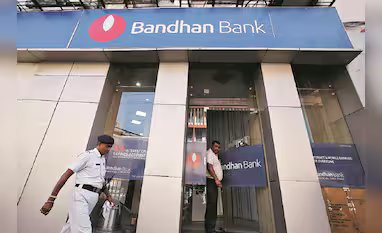




The proposed norms could affect banks that earn commissions by selling life, health and general insurance policies.
What are Irdai’s proposed commission cuts?
Irdai’s consultation paper, ‘Recalibrating Economics of Insurance Distribution’, proposes product- and channel-specific caps on commissions paid by insurers to distributors, including banks. It also proposes lower expense-of-management (EoM) limits for insurers, which cover their operating and distribution expenses.
The proposals seek to distinguish between distribution channels and the effort involved in selling and servicing insurance policies. They could reduce commissions earned by banks, which are major distributors of insurance products, particularly through bancassurance arrangements.
Bandhan Bank to expand mutual fund distribution
The bank reported third-party product income of around ₹156 crore in the September quarter, up 26 per cent year-on-year.
Sengupta said the lender was looking to diversify its fee income through mutual fund distribution and wholesale banking. The latter business has turned profitable and is expected to contribute more in the coming quarters.
The bank is also looking to generate additional fees through trade finance and foreign exchange services. It plans to increase insurance distribution in Tier-III and Tier-IV cities, where it has a larger presence and expects commission rates to be higher, the news report said.
Axis Bank explores higher sales volumes
Executive Director Subrat Mohanty said the bank had assessed the possible impact and was exploring a combination of measures He said the exercise was at an early stage and the bank would take a medium-term view.
Mohanty also said lower insurance prices could encourage more customers to buy policies, helping distributors compensate for reduced commissions through higher volumes. The bank is engaging with insurance partners to increase its share of the business.
AU Small Finance Bank looks to forex, trade finance
According to a report by The Economic Times, the bank’s management expects the proposed changes to create a medium-term headwind, although the final impact will depend on the regulations.
The lender is assessing how growth in these businesses and other income streams could offset lower insurance commissions. The strategy would diversify its fee income rather than leave it dependent on insurance distribution.
IDFC FIRST Bank counts on funding savings
According to the news report, the bank expects to benefit from lower funding costs on foreign currency non-resident (FCNR(B)) deposits. It also sees the potential for higher interest rates to support income from its floating-rate loan book.
Growth in product agency business and other income is expected to provide an additional cushion. Unlike Bandhan Bank, which is expanding alternative fee-income streams, IDFC FIRST Bank is relying on a combination of funding savings, potential interest income gains and business growth.
Central Bank of India looks to insurance ventures
Managing Director (MD) and Chief Executive Officer (CEO) Kalyan Kumar said the bank’s bancassurance fees could decline to ₹49 crore from ₹76 crore, The Economic Times reported.
The lender expects its new life and general insurance ventures to contribute more as they stabilise. It is also looking at products such as credit-linked insurance to support income.
Canara Bank estimates impact of up to ₹200 cr
Canara Bank expects an annual impact of ₹120-145 crore on its life insurance distribution income if the proposed norms are implemented in their current form.
Managing Director (MD) and Chief Executive Officer (CEO) Brajesh Kumar Singh said the overall impact across the bank’s distribution businesses would not exceed ₹200 crore, the report said. Canara Bank has quantified the potential hit but has not detailed a specific alternative revenue stream to replace the income.
HDFC Bank assesses options
HDFC Bank is assessing how the proposals could affect its insurance distribution business. Chief Financial Officer (CFO) Srinivasan Vaidyanathan said the proposed reduction in commission rates was significant.
“The cut down in the commission rate is quite high. There are three other things that one needs to watch out for — what kind of persistency pick-up it provides, so that it could have a positive effect. The other could be lower cost of insurance, which could mean more volumes,” he said.
He added that insurers and distributors would need to review their cost structures.