

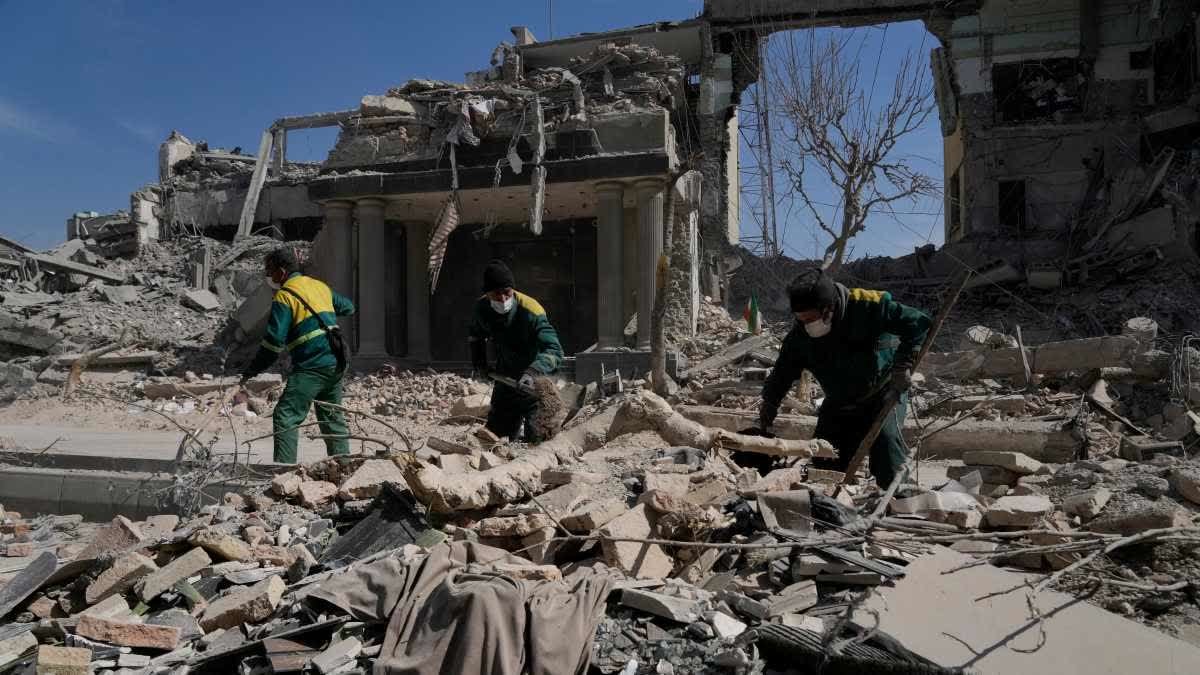
Washington / Tehran — Airstrikes by the United States and Israel in Iran entered their seventh consecutive day on Friday, intensifying one of the most serious military confrontations in the Middle East in recent years.
According to reports from Iran’s state-linked Fars News Agency, at least 1,230 people have been killed since the military campaign began on February 28. The agency reported that missile strikes hit two schools in the southwestern city of Parand near Tehran, raising concerns about civilian casualties.
The ongoing strikes are part of a broader military operation targeting Iranian military infrastructure, including air defense systems, missile sites, and strategic bases.
Meanwhile, Iran has responded with missile and drone attacks targeting U.S. military installations and Israeli-linked sites across the Gulf region. Iranian strikes have reportedly been directed toward Israel as well as U.S.-allied countries including the United Arab Emirates, Qatar, Bahrain, Kuwait, and Saudi Arabia.
Former U.S. President Donald Trump claimed that the Iranian military had suffered devastating losses in the aerial campaign.
“Iran now has no air force, no air defense. Their air force has essentially been wiped out,” Trump said, adding that Iran is being “destroyed in a way people have never seen before.”
However, Iranian officials rejected such claims. Ali Larijani, Secretary of Iran’s Supreme National Security Council, said the Iranian military is prepared for further escalation.
“Iran’s armed forces are waiting for any ground invasion by the United States,” Larijani warned, signaling that Tehran could respond forcefully if the conflict expands beyond airstrikes.
The conflict has raised global concerns about a wider regional war, particularly as tensions spread across the Gulf and threaten key energy routes and international security.
Diplomatic efforts by several countries and international organizations are ongoing, but so far there are no signs of an immediate ceasefire.