

New Delhi: Presenting the Union Budget for FY 2026–27 on February 1, Finance Minister Nirmala Sitharaman announced a major cultural and heritage initiative to transform 15 archaeological sites across India into “vibrant and experiential cultural centers” accessible to the public.
In her ninth consecutive budget speech, Sitharaman named seven sites that will be developed in the first phase, including Lothal, Dholavira, Rakhigarhi, Adichanallur, Sarnath, Hastinapur, and Leh Palace. The remaining eight sites are yet to be officially disclosed.
“These sites will be developed as experiential cultural hubs, allowing people to engage directly with India’s ancient heritage,” Sitharaman said, adding that excavated areas will be opened to visitors through dedicated walkways.
The selected locations include some of the most significant sites of the Indus Valley Civilization (IVC), such as Rakhigarhi in Haryana and Dholavira and Lothal in Gujarat, as well as prominent Buddhist sites like Sarnath and Hastinapur in Uttar Pradesh.
The Archaeological Survey of India (ASI) has conducted extensive excavations at many of these sites since Independence. According to ASI Director General Y. S. Rawat, the new initiative will make archaeological discoveries visible to the public for the first time.
“For decades, these sites were confined to academic books. Opening them to visitors will offer archaeology enthusiasts and ordinary citizens a completely new experience,” Rawat said, calling the announcement a welcome step.
Culture Minister Gajendra Singh Shekhawat said the budget reflects the government’s focus on “inclusive development,” with special emphasis on strengthening culture and tourism.
Explaining the rationale behind the selection, officials said the sites are of immense historical importance but have remained neglected for years. The government has recently increased research and infrastructure investments to revive their prominence.
For instance, Lothal in Gujarat is being developed into a National Maritime Heritage Complex. Archaeologist Vasant Shinde has described Lothal as potentially home to the world’s earliest dockyard.
Another Harappan site, Dholavira, located in Gujarat’s Kutch district, is known for its advanced urban planning, sophisticated water management systems, and massive stone structures. It was declared a UNESCO World Heritage Site in 2021.
Geologist and former chief scientist Rajiv Nigam of the National Institute of Oceanography has suggested that Dholavira was once close to the sea and that its inhabitants were aware of tsunami risks, indicating advanced environmental knowledge in ancient India.
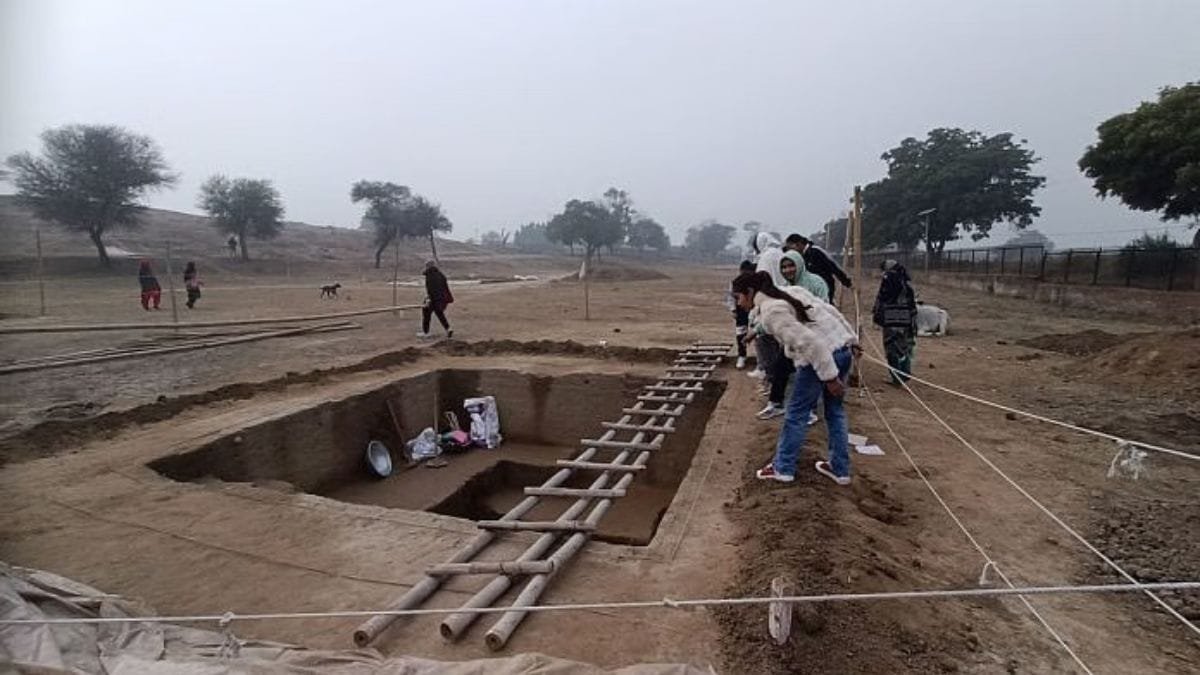
Meanwhile, Rakhigarhi, one of the largest IVC cities near the national capital, has emerged as a priority area for the government after years of administrative delays and unfulfilled promises.
In southern India, Adichanallur in Tamil Nadu offers valuable insights into ancient Tamil civilization and the early Iron Age.
The government is also working to secure UNESCO World Heritage status for Sarnath, while the Uttar Pradesh government aims to develop Hastinapur as a major archaeological and religious tourism destination.
Buddhist Circuit in Northeast India
In addition to archaeological development, Sitharaman announced a new Buddhist Circuit Development Plan for the northeastern states, including Arunachal Pradesh, Sikkim, Assam, Manipur, Mizoram, and Tripura.
“The northeastern region represents a confluence of Theravada and Mahayana–Vajrayana traditions,” the finance minister said. The plan will focus on conserving temples and monasteries, improving connectivity, and enhancing facilities for pilgrims.
ASI Director General Rawat noted that while sites like Nalanda and Sarnath are well known, many other Buddhist locations remain overlooked. “This initiative will bring them onto the national and global map,” he said.