

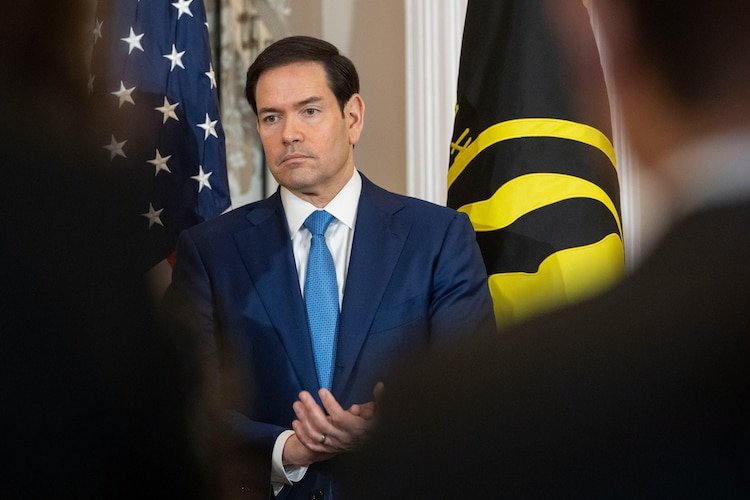
Washington, D.C., March 17, 2026 — U.S. Secretary of State Marco Rubio has ordered American diplomats worldwide to press foreign governments for swift and coordinated action against Iran and groups aligned with it, citing what the United States describes as an “elevated risk of attack” from Iranian-backed forces.
According to a private diplomatic cable obtained, Rubio issued the directive Monday to all U.S. diplomatic and consular missions as part of an urgent “action request” titled “Elevated Concern of IRGC Activity.” The message specifically references the Islamic Revolutionary Guard Corps (IRGC), a powerful branch of Iran’s military that Washington accuses of supporting militant groups across the Middle East.
Directive to Diplomats Worldwide
The cable instructs American officials stationed around the globe to engage with foreign governments “at the highest appropriate level” by March 20. Diplomats have been asked to encourage partner nations to “move expeditiously to diminish the capabilities of Iran and Iran-aligned terrorist groups from attacking our respective nations and citizens.”
Although the message was marked “sensitive but unclassified,” it highlights growing concern within Washington about potential attacks by Iranian proxies operating in multiple regions.
Trump Administration Seeks Global Coalition
The move comes as the administration of U.S. President Donald Trump intensifies efforts to build international backing for its broader strategy against Iran. U.S. officials have been working to assemble a coalition of countries willing to support military and security measures aimed at limiting Iran’s regional influence.
One of the key strategic concerns is the security of the Strait of Hormuz, a critical global shipping route through which roughly one-fifth of the world’s oil supply passes. Trump said Monday that the United States is preparing to release a list of nations that have agreed to help maintain security in the area.
Focus on Collective Pressure
The cable emphasizes that Washington believes multilateral pressure is more effective than unilateral action in dealing with Iran.
“We assess that the Iranian regime is more sensitive to collective action than unilateral action, and that joint pressure is more likely to compel behavior change,” the communication states.
It further urges diplomats to act quickly while global attention remains focused on the issue:
“We must act while international attention is focused now to end the Iranian campaign of terror in the Middle East and globally. Do not allow this critical movement to pass.”
U.S. Accuses Iran-Backed Groups of Destabilizing Region
In response to questions about the directive, a spokesperson for the U.S. State Department said the administration is prioritizing regional stability.
“President Trump is focused on securing peace in the Middle East,” the spokesperson said, adding that the IRGC, Hezbollah and other Iran-backed groups “destabilize governments and undermine regional peace.”
Rising Tensions in the Middle East
The directive underscores escalating tensions between Washington and Tehran, which have intensified over security concerns, proxy conflicts, and maritime threats in the region. Analysts say the diplomatic push suggests the United States is attempting to rally broader international support before taking further strategic steps against Iran.
With the March 20 deadline approaching, U.S. diplomats around the world are expected to hold urgent consultations with allied governments as Washington seeks to build a coordinated response to what it sees as an expanding Iranian threat.