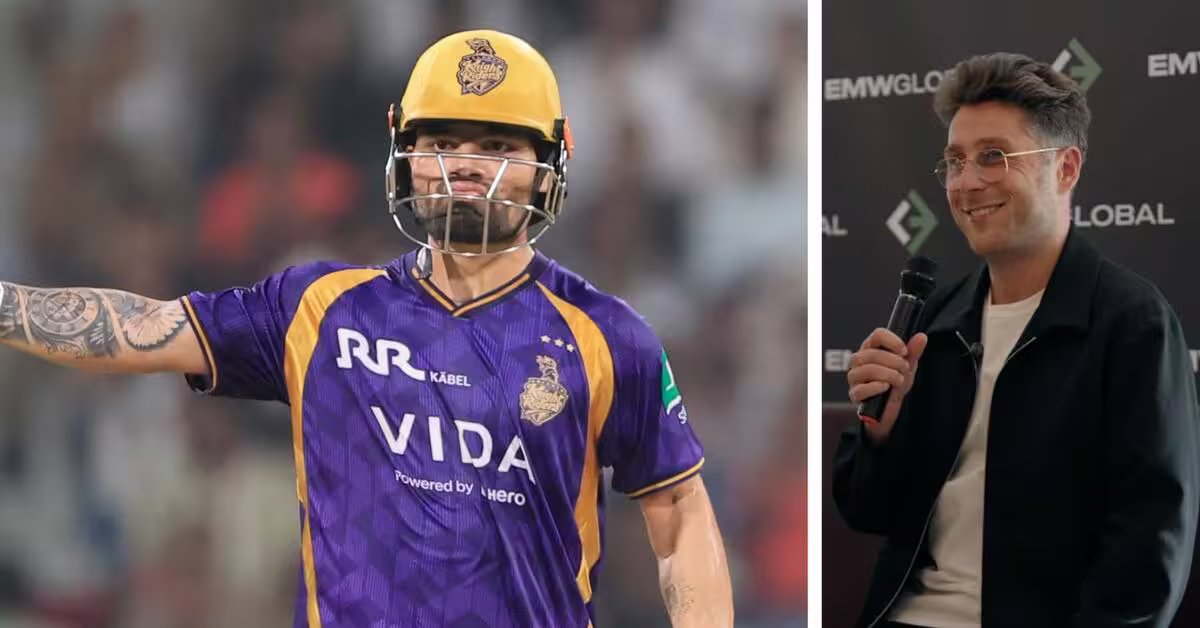

India’s cricket sponsorship market is becoming crowded and expensive at the top, but it is far from saturated, with opportunities emerging among younger athletes whose popularity has yet to translate into sustained commercial partnerships, according to Michael Rocha-Keys, founder and chief executive officer of sports marketing agency EMW Global.
Rocha-Keys said brands risk paying for an athlete’s fame rather than the effectiveness of an endorsement, as established players command increasing attention and commercial premiums. He believes the next phase of growth will come from identifying rising athletes and developing their personal brands through long-term partnerships.
“The top is crowded and expensive. I would say the market isn’t saturated, but I would say there’s definitely a need for diversification,” Rocha-Keys told Business Standard in an interview. Why is EMW betting on Rinku Singh?
His assessment comes as EMW Global expands its operations in India, with the agency placing its first bet on cricketer Rinku Singh. The signing is part of its strategy to establish a local presence before taking Indian athletes and their commercial brands to international markets.
The agency, which has worked on commercial partnerships involving football stars Lionel Messi and Neymar, has also facilitated a regional sponsorship for Spain’s national football team in China and managed its China-focused social-media and content strategy during the team’s 2026 FIFA World Cup-winning campaign.
For its India entry, however, EMW has deliberately chosen a cricketer who is not yet among the country’s most commercially established sporting personalities.
“Rinku offers an upside and a story that sells itself,” Rocha-Keys said, citing the batter’s five consecutive sixes in the 2023 Indian Premier League (IPL) and his journey as factors behind the decision.
“He is not as established as some of the other stars. But his story is authentic, and I think it is something that needs to be told to inspire future generations,” he said. How big is India’s commercial sports market?
According to WPP Media figures cited in EMW Global’s report, Why Global Sport Can’t Ignore India, the country’s commercial sports industry reached Rs 18,864 crore ($2.1 billion) in 2025, growing 13.4 per cent year-on-year. Cricket accounted for 89 per cent of this spending.
Athlete endorsements contributed Rs 1,350 crore, or around $153 million, to the market, compared with Rs 9,571 crore from media advertising and Rs 7,943 crore from sports sponsorship.
The report also cited Ormax Media’s estimate that India has 678 million sports viewers, including 612 million cricket viewers. Football and kabaddi have estimated audiences of 305 million and 280 million, respectively. Why does EMW see opportunity in athlete endorsements?
Rocha-Keys identified athlete endorsements as one of the most underdeveloped revenue streams relative to the popularity of Indian sporting personalities. He said EMW’s objective is to identify athletes whose attention is not being adequately commercialised and develop digital-first, annual ambassador partnerships around them.
“What we have found coming into the market is that there are a lot of ad hoc, low-value, small deals being done. Our job is to be able to create more year-round, long-term, consistent annual partnerships,” he said.
He added that the risk for brands was paying for fame rather than effectiveness, with attention, relevance and engagement becoming more important in determining an athlete’s commercial appeal.
How can Indian athletes build global audiences?
Rocha-Keys said Rinku already enjoys strong recognition in India, but has considerable scope to expand his appeal among the Indian diaspora.
“The way you build a brand with an athlete isn’t just with them as an athlete, but also with them as a person, their personality and their journey,” he said.
He acknowledged that regular appearances on the international stage help athletes build recognition, but believes their commercial development need not depend entirely on sporting exposure. EMW intends to maximise Rinku’s visibility through storytelling and partnerships that can reach audiences beyond traditional cricket-following markets.
The agency is also looking at cross-sport collaborations to introduce athletes to new audiences. Rocha-Keys said partnerships between cricketers and international football or basketball personalities could help expose fans of one sport to another.
He identified international markets, emerging players, women’s cricket, non-live digital content, international sponsorships and ambassador partnerships as areas with room for commercial growth. What does India’s wider sports ecosystem need?
The broader opportunity, he said, is not limited to established cricket properties. The IPL has already become a mature commercial product, but the ecosystem surrounding Indian sport needs further development through stable competition calendars, investable franchises, better distribution and stronger athlete branding.
For EMW, the immediate priority remains cricket as it establishes its Indian operations and understands the domestic commercial market.
Rocha-Keys said the agency expects to announce at least one additional Indian athlete signing before the end of 2026. It will assess the market’s response and the opportunities available during 2027 before expanding its roster further.
“Quantity is not the objective. I think we want to work with quality,” he said, adding that EMW wants to represent athletes who are willing to invest time and energy in developing their personal brands beyond their performances on the field.