

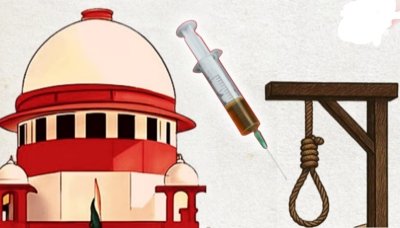
New Delhi । The Supreme Court of India on Wednesday reserved its verdict on a petition seeking a less painful alternative to hanging as the method of execution for death row convicts. The plea argues that hanging is a cruel, inhuman, and outdated form of punishment and should be replaced with lethal injection or, at the very least, convicts should be given a choice between the two methods.
The petition was filed by senior advocate Rishi Malhotra, who contended that hanging often causes prolonged suffering and violates the right to dignity guaranteed under the Constitution. He told the court that lethal injection is a quicker and more humane method, widely adopted by several countries that still retain capital punishment.
During the hearing, the Attorney General, appearing for the central government, informed the court that the government has constituted a committee to examine alternative methods of execution. However, the government maintained that hanging remains the fastest and most reliable method under the current legal framework and expressed reluctance to change the existing system.
The court expressed dissatisfaction with the government’s stance, observing that constitutional values must evolve with time. The bench noted that the Indian Constitution is compassionate and dynamic, and the concept of a dignified death cannot be ignored, even in cases involving capital punishment.
The petition, originally filed in 2017, has been heard multiple times over the years. The court has now directed both the petitioner and the central government to submit their written arguments within three weeks.
The case is significant as it reopens the debate on the method of execution in India. While several countries have moved away from hanging in favor of lethal injection, Indian law—under the Code of Criminal Procedure (now the Bharatiya Nagarik Suraksha Sanhita)—continues to prescribe hanging as the sole method of carrying out the death penalty.
The Supreme Court’s forthcoming decision could have far-reaching implications for the future of capital punishment in India.