

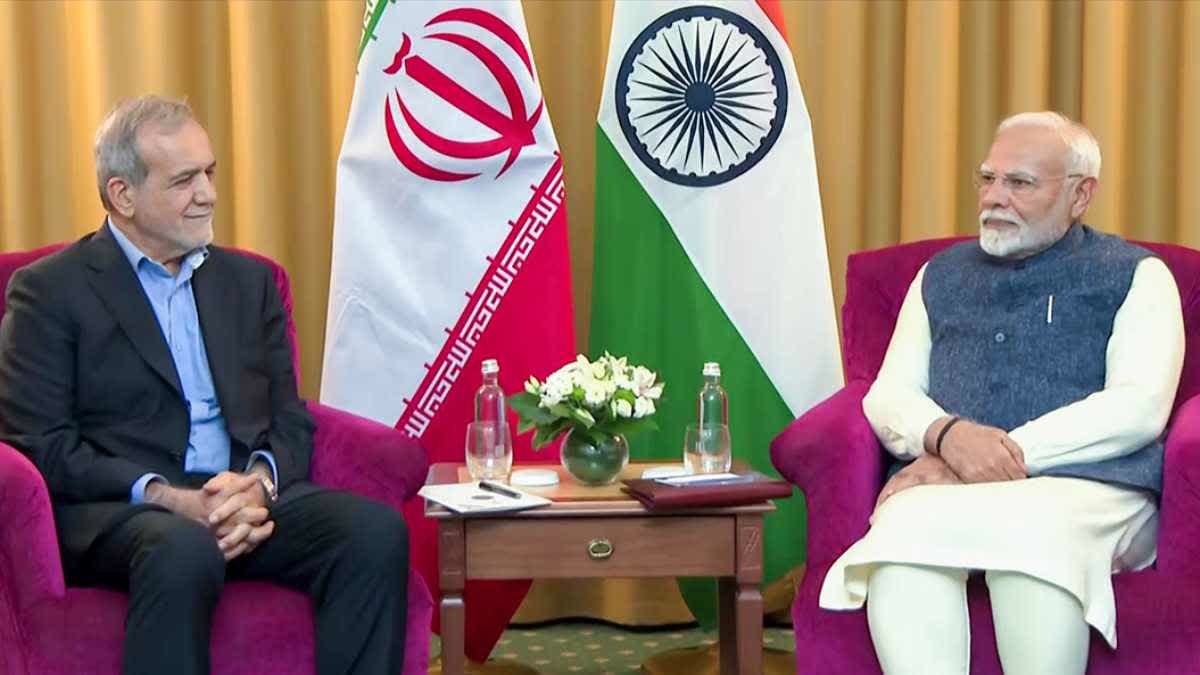
New Delhi: Indian Prime Minister Narendra Modi held a phone conversation with Iranian President Masoud Pezeshkian on Thursday night to discuss the rapidly escalating conflict in the Middle East and its humanitarian impact.
During the call, Modi expressed deep concern over rising civilian casualties and damage to civilian infrastructure as tensions continue to grow in the region following ongoing military actions involving Iran, Israel, and the United States.
In a message posted on the social media platform X, Modi said he discussed the “serious situation in the region” with the Iranian president and highlighted India’s concerns regarding the increasing loss of civilian lives and destruction of public infrastructure.
Safety of Indians and Energy Supply a Priority
Prime Minister Modi emphasized that the safety of Indian citizens in the region remains a top priority for the Indian government. He also underlined the importance of maintaining uninterrupted movement of goods and energy supplies, which are critical for India’s economy.
India relies heavily on energy imports that pass through the strategically important Strait of Hormuz, one of the world’s most crucial maritime oil transit routes.
Iran Shares Its Perspective
According to an official statement, President Pezeshkian briefed Modi on the current situation in Iran and shared his government’s perspective on the ongoing conflict and regional developments.
Both leaders agreed to remain in contact as the situation continues to evolve.
Strait of Hormuz Closure Raises Global Concerns
Iran has reportedly closed the Strait of Hormuz amid the conflict, raising serious concerns for global energy markets and shipping routes. A large portion of India’s oil imports passes through this narrow waterway.
Earlier this week, Iranian forces reportedly fired at a bulk oil carrier heading toward India as it attempted to pass through the strait.
India Engaging With Regional Leaders
Over the past ten days, Prime Minister Modi has also spoken with leaders from several Middle Eastern nations, including Oman, Kuwait, Bahrain, Saudi Arabia, United Arab Emirates, Jordan, Israel, and Qatar.
During these discussions, Modi expressed concern over attacks affecting the region and condemned violations of sovereignty and territorial integrity in some countries. He also discussed the safety and welfare of the large Indian diaspora living in Gulf nations.
Conflict Escalated After Attacks on Iran
The conflict intensified after joint military strikes by the United States and Israel on February 28, which reportedly killed Iran’s Supreme Leader Ali Khamenei.
In response, Iran launched missile and drone attacks on Israeli targets and U.S. military bases across the Gulf region, including areas near major global business and aviation hubs such as Dubai in the UAE and Doha in Qatar.
Call for Diplomacy
Prime Minister Modi reiterated India’s commitment to peace and stability in the region and called for resolving the crisis through dialogue and diplomacy to prevent further escalation and humanitarian suffering.