

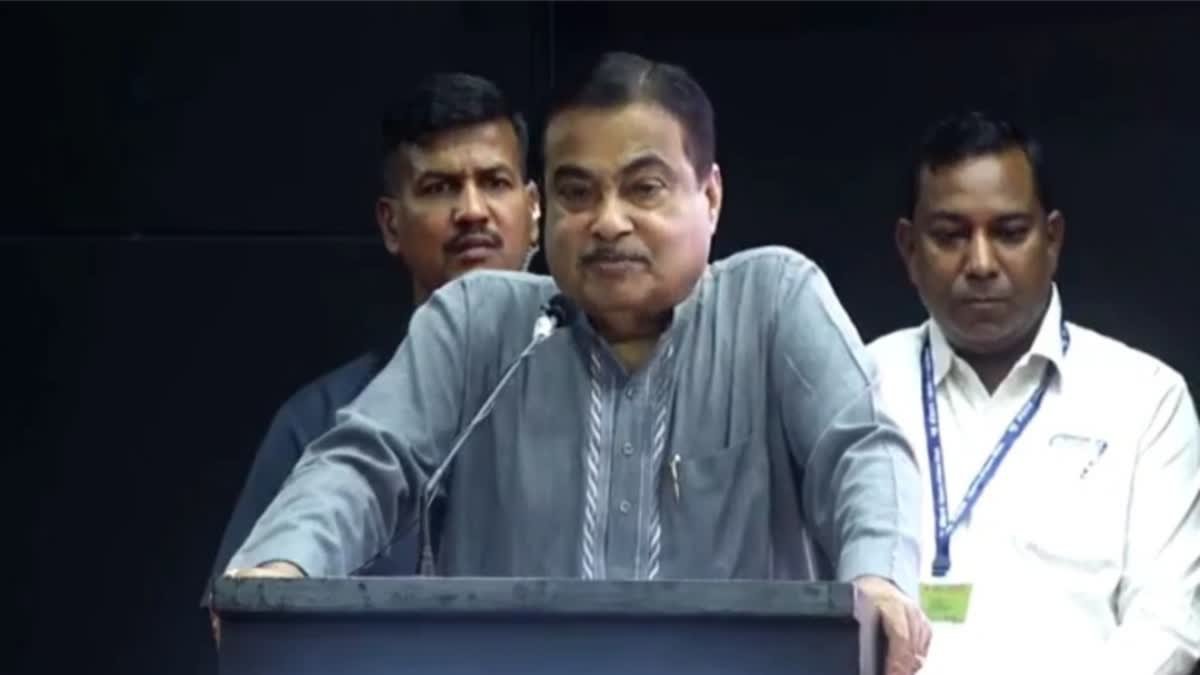
Pune, India: India’s Union Minister for Road Transport and Highways, Nitin Gadkari, said on Friday that powerful petroleum interests are resisting efforts to promote alternative and green fuels in the country because of the massive financial stakes tied to fossil fuel imports.
Speaking at a conference organized by the Indian Federation of Green Energy (IFGE) on compressed biogas in Pune, Gadkari said the petroleum lobby is strongly opposing his initiatives aimed at accelerating the transition to cleaner fuels.
According to the minister, India spends nearly ₹22 lakh crore (about $260 billion) annually on fossil fuel imports, creating strong economic interests that slow the shift toward green energy. “When such a huge import bill is involved, the petroleum lobby will not easily allow the dream of green fuels to succeed,” he said.
Gadkari noted that India currently imports around 86 percent of its energy requirements, making energy security a major national concern. He added that despite progress in promoting cleaner transport options such as compressed natural gas (CNG), liquefied natural gas (LNG), and electric vehicles, the share of green fuels in the overall energy economy remains very small.
The minister also remarked that his advocacy for alternative fuels had previously been mocked. “When I first spoke about these ideas, people laughed and called me crazy, but today we have proven that work in this sector is possible,” he said.
Gadkari emphasized that the government aims to transform India’s transportation system into a smart, safe, and sustainable network by 2030. Promoting non-polluting and domestically produced fuels is a key part of that strategy.
He also highlighted the broader benefits of green energy, saying it could strengthen the rural agricultural economy, reduce pollution, cut dependence on imported fossil fuels, and generate employment in rural areas.
According to Gadkari, the green and alternative fuel sector holds significant potential, and as many as 5,000 companies could be operating in the industry in the coming years. However, he said competition based on technology reliability, cost, and quality will be critical for the sector’s growth.
The minister added that recent geopolitical tensions in West Asia have further underlined the importance of energy security for India as it works toward becoming a $5 trillion economy.