

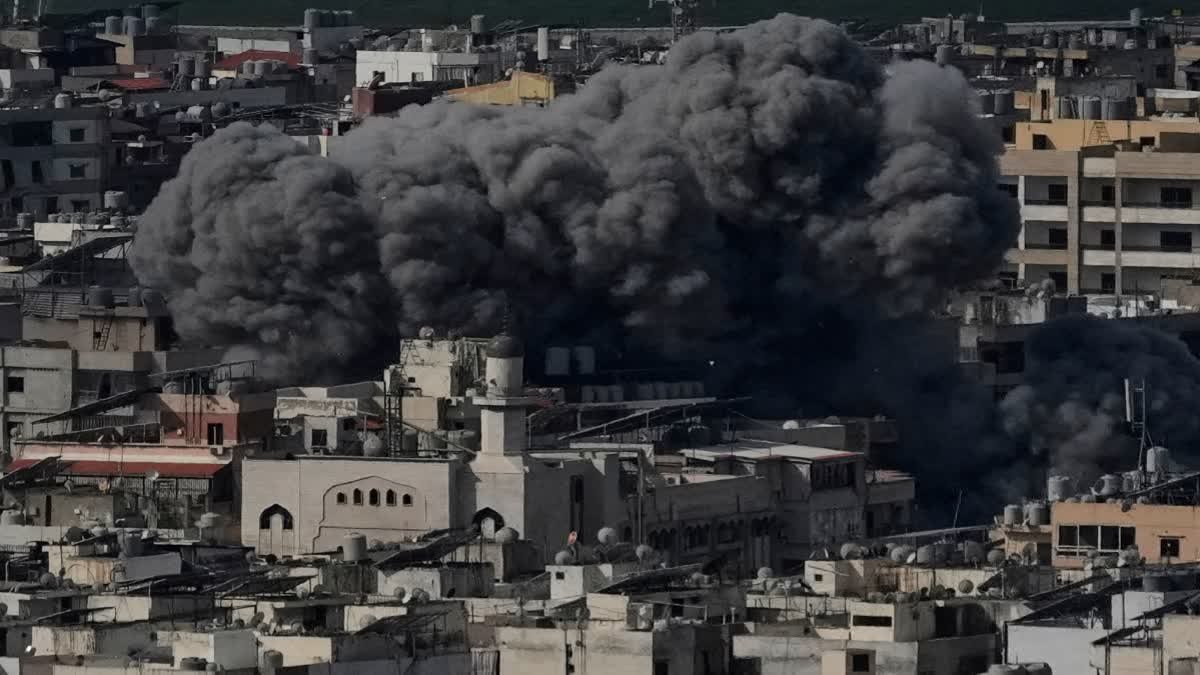
New Delhi — Escalating tensions in the Middle East are raising serious concerns about global supply chains, with experts warning that the crisis could soon trigger a major economic shock for India. A new report by the Global Trade Research Initiative (GTRI) says disruptions in the region could push up prices of not only petrol and diesel but also cooking gas, fertilizers and essential food items in India.
The warning comes after missile and drone attacks targeted several key energy and logistics hubs across the Gulf region in early March, increasing fears that shipments passing through the Strait of Hormuz, one of the world’s most critical energy corridors, could be disrupted.
Attacks on Key Energy Infrastructure
According to the report, between March 1 and March 3 several major facilities in the Gulf were targeted. These included Saudi Arabia’s Ras Tanura Oil Terminal, LNG hubs at Ras Laffan Industrial City and Mesaieed Industrial Area, fuel storage sites in Fujairah, and ports such as Duqm Port and Port of Salalah.
The rising risks to oil tankers moving through the region have already caused shipping delays and disruptions to production in some facilities.
The Strait of Hormuz, located between Iran and Oman, handles a significant share of global oil and natural gas shipments. Any prolonged disruption could affect energy markets worldwide.
India’s Heavy Dependence on the Region
India relies heavily on the Middle East for energy and industrial raw materials. According to GTRI data, India imported $98.7 billion worth of goods from West Asia in 2025, making the region one of its most important trade partners.
Countries involved include Saudi Arabia, Qatar, United Arab Emirates, Oman, Kuwait, Bahrain, as well as Iran, Iraq, Israel, Jordan, Lebanon, Syria, and Yemen.
The report highlights that even short disruptions in shipping routes could have widespread consequences for India’s economy.
Oil and Fuel Prices Could Surge
Energy imports represent the biggest risk. In 2025, India imported about $70 billion worth of petroleum products from the Middle East. Of this, $50.8 billion was crude oil, accounting for 48.7% of India’s total oil imports.
This crude oil is essential for Indian refineries that produce petrol, diesel, aviation fuel and petrochemicals.
India currently maintains crude oil reserves for less than 30 days of consumption. Experts warn that if supply disruptions persist, fuel prices could rise sharply, increasing transportation costs and pushing inflation higher.
Higher diesel prices would also affect farmers because irrigation pumps and agricultural machinery depend heavily on diesel fuel.
LNG Supply Already Affected
Natural gas supplies are also under pressure. In 2025, India imported $9.2 billion worth of liquefied natural gas (LNG) from the Middle East, accounting for 68.4% of total LNG imports.
LNG is widely used in fertilizer plants, gas-based power stations and city gas networks supplying CNG for vehicles and piped cooking gas for households.
The impact of the crisis is already visible. Due to shipping restrictions, Petronet LNG in Qatar halted LNG deliveries to GAIL (India) Limited starting March 4, 2026.
Cooking Gas and Fertilizer Supplies at Risk
India is also highly dependent on the Middle East for LPG imports used by households for cooking.
In 2025, India imported $13.9 billion worth of LPG from the region, representing 46.9% of total LPG imports. Current domestic reserves cover roughly two weeks of consumption, meaning supply disruptions could quickly affect availability and prices.
Fertilizer imports could also face serious disruptions. India imported $3.7 billion worth of fertilizers from the region in 2025, including mixed fertilizers and nitrogen-based fertilizers critical for agriculture.
If fertilizer supplies are disrupted during the cropping season, it could lead to shortages, increase government subsidy costs, and eventually push up food prices across the country.
Impact on Manufacturing and Infrastructure
The report also highlights potential disruptions to several industrial supply chains.
India imported petroleum coke worth $1.3 billion from the region in 2025, used extensively in cement plants, aluminum smelters and power generation. Any shortage could increase production costs in construction and infrastructure projects.
Other critical raw materials also come from the region, including polyethylene used in plastic manufacturing and packaging industries.
India imported $1.2 billion worth of polyethylene, accounting for 35.6% of total imports of this plastic feedstock.
Construction materials are also heavily dependent on Gulf supplies. India imported 68.5% of its limestone, 65.8% of sulfur, and significant quantities of gypsum from the Middle East, all essential for cement, fertilizer and chemical industries.
Diamond and Export Industries Could Be Hit
India’s diamond industry, centered in Surat, also depends on imports from the region.
In 2025, India imported $6.8 billion worth of rough diamonds from the Middle East, accounting for 40.6% of its total imports of raw diamonds. These stones are cut and polished in India before being exported globally.
Any interruption in shipments could slow production and affect employment in the jewelry sector.
A Warning for India’s Supply Chain
Ajay Srivastava, founder of the Global Trade Research Initiative, said the data highlights how deeply India’s economy is connected to Middle Eastern supply chains.
He warned that even a week-long disruption in shipping through the Strait of Hormuz could trigger a ripple effect, impacting energy markets, fertilizer supplies, manufacturing costs and export industries.
As geopolitical tensions continue to rise in the region, economists say governments and businesses worldwide will be closely monitoring developments in the Gulf, as any prolonged disruption could have far-reaching economic consequences.