

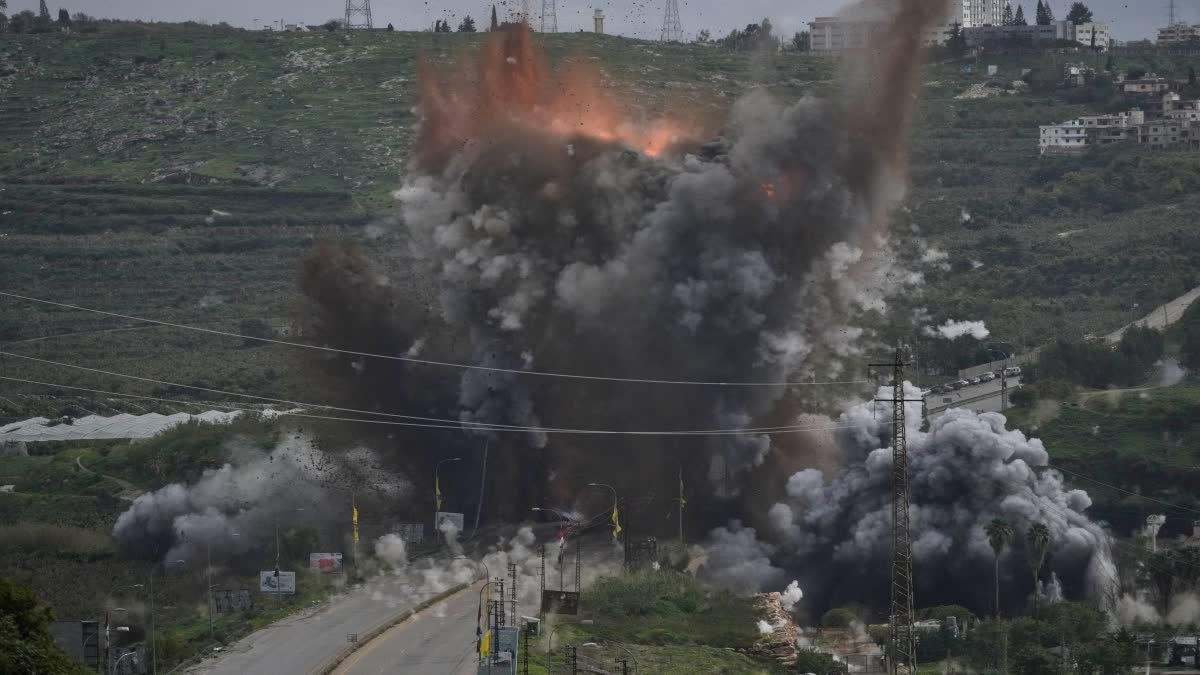
Washington, D.C. / Middle East — The ongoing war involving the United States, Israel, and Iran entered its 24th day on Monday, with no clear signs of de-escalation as military strikes, threats, and conflicting diplomatic signals continue to intensify tensions across the region.
Trump Announces Temporary Pause on Strikes
U.S. President Donald Trump said he has ordered a five-day halt on planned military strikes targeting Iran’s power plants and energy infrastructure, citing what he described as “very positive” recent communications between Washington and Tehran.
According to Trump, the pause follows backchannel discussions over the past two days that could potentially lead to a broader agreement. He suggested that the United States is in contact with “a top-level Iranian figure,” raising hopes — and skepticism — about possible diplomatic progress.
However, Iranian officials have categorically denied any direct negotiations, deepening uncertainty over whether meaningful talks are actually taking place.
Iran Denies Talks, Accuses U.S. of “Fake News”
Iran’s parliamentary speaker, Mohammad Bagher Ghalibaf, rejected Trump’s claims, stating that no talks with the United States have occurred.
He accused Washington of spreading misinformation to manipulate global oil and financial markets and to distract from what he described as a worsening situation for U.S. and Israeli forces.
“Iranian people demand a decisive and regret-inducing response against aggressors,” Ghalibaf said, reaffirming support for Iran’s leadership and military posture.
Missile Strike on Diego Garcia Raises Alarm
In a dramatic escalation, Iran allegedly launched two ballistic missiles late Friday targeting the Diego Garcia military base — a key U.S.-U.K. military facility in the Indian Ocean located roughly 4,000 kilometers from Iran.
The reported strike has alarmed Western defense officials because it exceeds Iran’s previously stated missile range limit of about 2,000 kilometers. Tehran, however, has denied responsibility for the attack.
If confirmed, the strike would mark a significant expansion of Iran’s military reach and raise new concerns across Europe and the Indo-Pacific.
Strategic Tensions Over Strait of Hormuz
Tensions are also rising around the Strait of Hormuz, a critical global shipping route through which a large portion of the world’s oil supply passes.
The United States has issued a 48-hour ultimatum demanding that Iran ensure safe and normal operations in the waterway. In response, Tehran has threatened to target key energy infrastructure in Gulf nations, raising fears of a broader regional war.
Casualties and Humanitarian Crisis Grow
According to international reports, the conflict has already caused heavy losses:
- Over 1,500 deaths in Iran
- More than 1,000 in Lebanon
- 15 fatalities in Israel
- 13 U.S. service members killed
In addition, hundreds of civilians have died across the Gulf region in both land and maritime attacks. The war has displaced millions of people in Iran and Lebanon, worsening an already severe humanitarian crisis.
UK Welcomes Talks, Urges De-escalation
British Prime Minister Keir Starmer welcomed reports of possible U.S.-Iran engagement, saying the United Kingdom is aware of ongoing discussions.
Speaking to a parliamentary committee, Starmer emphasized the importance of diplomacy and confirmed he had spoken with Trump by phone to address the escalating crisis.
Conflict Far From Over
Despite the temporary pause in U.S. strikes on energy infrastructure, military operations continue across multiple fronts. Drone and missile attacks persist in Gulf countries, and Israeli operations inside Iran show no signs of slowing.
Analysts warn that the combination of ongoing combat, conflicting narratives, and fragile diplomacy makes the situation highly unpredictable. The next few days — particularly during the U.S.-announced pause — could prove critical in determining whether the conflict moves toward negotiation or further escalation.