

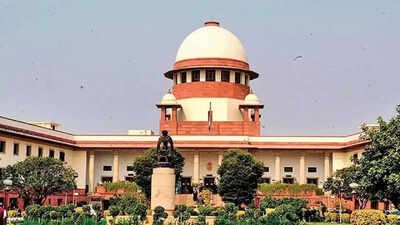
New Delhi: The Supreme Court of India has announced that a nine-judge Constitution Bench will begin final hearings on April 7 in a series of cases concerning discrimination against women at religious places, including the high-profile review of the Sabarimala temple verdict.
The decision was announced on Monday by a bench led by Chief Justice Suryakant, along with Justices Joymalya Bagchi and Vipul M. Pancholi. The court said the Chief Justice will formally constitute the nine-judge bench to adjudicate the matter, which involves complex constitutional questions related to gender equality, religious freedom, and fundamental rights.
Scope of the Hearing
The upcoming proceedings will not be limited to the Sabarimala issue alone. The court clarified that the nine-judge bench will examine all petitions raising questions about women’s exclusion or differential treatment at religious institutions, cutting across faiths and denominations.
At the center of the case is the review of the Supreme Court’s earlier judgment that allowed women of all age groups to enter the Sabarimala Temple, a hill shrine located in Kerala. The original verdict had struck down long-standing restrictions that barred women of menstruating age from entering the temple.
That ruling sparked widespread protests, political debate, and legal challenges, eventually leading to review petitions and the reference of broader constitutional questions to a larger bench.
Government Supports Review Petition
During Monday’s hearing, Tushar Mehta, appearing on behalf of the central government, informed the court that the government supports the review petitions challenging the Sabarimala verdict.
The court has directed all parties involved to submit their written arguments by March 14, ahead of the start of oral hearings.
Appointment of Nodal Counsels and Amicus Curiae
To ensure efficient handling of the large number of petitions and intervening parties, the Supreme Court appointed Krishna Kumar Singh as the nodal counsel for all parties supporting the review of the Sabarimala judgment.
For those opposing the review and supporting the original verdict, Shashwati Pari was appointed as nodal counsel.
In addition, the court named senior advocate K. Parameshwar and Shivam Singh as amicus curiae. Shivam Singh has been tasked with summarizing and presenting the collective positions of all stakeholders to assist the nine-judge bench in navigating the legal and constitutional issues involved.
Chief Justice Suryakant emphasized that strict adherence to the court’s schedule would be required to ensure timely completion of hearings.
Detailed Hearing Schedule
According to the Supreme Court’s order, the nine-judge bench will commence hearings at 10:30 a.m. on April 7, 2026.
- April 7–9: Arguments by review petitioners and parties supporting the review of the Sabarimala verdict
- April 14–16: Arguments by parties opposing the review
- By April 22: Final hearing expected to conclude
The court indicated that it aims to complete arguments within this timeline to avoid prolonged uncertainty on issues of constitutional importance.
Constitutional Significance
Legal experts say the outcome of the case could have far-reaching consequences for how courts balance religious practices protected under the Constitution with women’s right to equality and dignity.
The nine-judge bench is expected to examine whether religious customs can override fundamental rights, and to what extent courts can intervene in matters of faith when issues of discrimination arise.
The verdict is likely to serve as a constitutional precedent affecting religious institutions across India and shaping future jurisprudence on gender equality.