

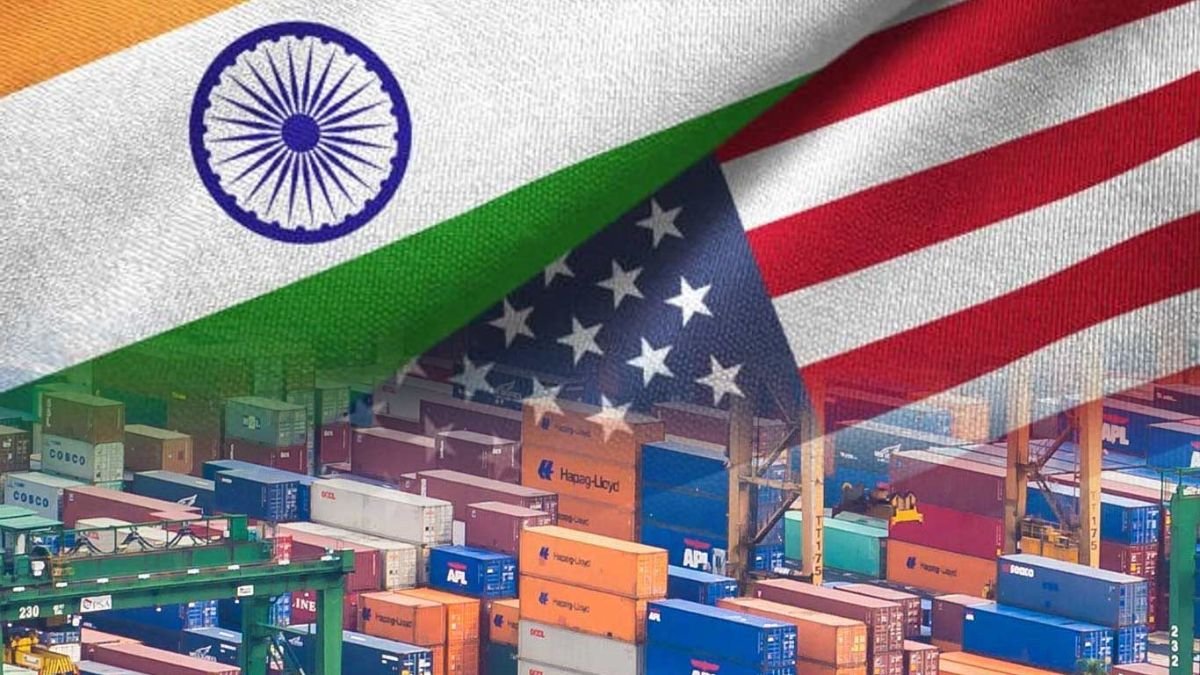
New Delhi : India and the United States are set to hold another round of high-level trade negotiations on January 13, officials said, as both sides seek to break the deadlock that has stalled a long-anticipated bilateral trade agreement. The talks come amid growing strategic cooperation on technology and supply-chain security.
In New Delhi on Monday, Sergio Gor, the newly appointed U.S. Ambassador to India, reiterated that Washington and New Delhi remain committed to resolving outstanding differences, including tariff and market access issues that have hindered progress on the trade deal. The discussions aim to strengthen economic ties between the two largest democracies, despite a period of tension marked by punitive U.S. tariffs on Indian exports.
“We are actively engaged and committed to continuing the dialogue,” Ambassador Gor said, adding that both countries were “resolving differences while deepening cooperation.”
In a fresh strategic signal, the U.S. envoy also confirmed that India will be invited next month to join the U.S.-led “Pax Silica” initiative as a full member. The invitation reflects Washington’s intention to enhance collaboration with India on critical supply chains, advanced technology and semiconductor ecosystems.
What Is Pax Silica?
The Pax Silica initiative is a U.S. strategic effort to build a secure, resilient and innovation-driven silicon and semiconductor supply chain that spans critical minerals, energy inputs, advanced manufacturing, artificial intelligence (AI) infrastructure, and logistics. According to U.S. officials, the grouping is intended to reduce economic dependencies on single sources and strengthen cooperation among key technology partners.
The name “Pax Silica” combines the Latin word “Pax” (peace, stability) with “Silica” (a foundational element in semiconductors), underscoring the initiative’s aim to foster stability and prosperity within a trusted supply-chain ecosystem.
Strategic Context
When it was launched in late 2025, Pax Silica included key technology and industrial partners such as Japan, South Korea, Singapore, the Netherlands, the United Kingdom, Israel, the United Arab Emirates and Australia. The initiative is designed to enhance collective capabilities in semiconductors, critical minerals and AI infrastructure — areas seen as pivotal in the evolving global technology competition, particularly with China.
India’s inclusion — formally expected to be announced next month — marks a significant adjustment in the U.S. approach, recognising New Delhi’s growing role in global technology and supply-chain dynamics. Analysts say this development underscores Washington’s desire to integrate India into broader technology and economic frameworks, even as trade negotiations continue.
Bilateral Trade and Wider Ties
The push to resume trade talks follows months of friction over trade barriers, including steep U.S. tariffs that have impacted Indian exports across key sectors. Despite these challenges, both governments have emphasised the importance of the broader bilateral relationship, which spans defence, energy, education, technology and geopolitical cooperation.
Prime Minister Narendra Modi and U.S. President Donald Trump have repeatedly stressed the depth of India–U.S. ties even as technical negotiations proceed. The upcoming talks on January 13 are widely seen in New Delhi and Washington as a step toward concluding a much-awaited trade agreement.