

New Delhi — The long-awaited Free Trade Agreement (FTA) between India and the United Kingdom is expected to come into force from April 2026, according to a senior government official. The landmark deal is projected to significantly boost bilateral trade and open the UK market widely to Indian labor-intensive industries.
Zero Duty on 99% of Indian Products
One of the most significant outcomes of the agreement is that 99 percent of Indian goods exported to the UK will enjoy zero customs duty. This move is expected to provide a major competitive advantage to Indian exporters, particularly in sectors such as textiles, gems and jewelry, leather goods, footwear, toys, and marine products.
With the removal of import duties, Indian products are expected to become more affordable in the British market, strengthening India’s position against competitors like Vietnam and Bangladesh.
Major Relief for IT Professionals
The agreement also delivers substantial gains in the services sector. India and the UK have signed a Double Contribution Convention (DCC), under which Indian professionals working temporarily in the UK for up to three years will be exempt from paying social security taxes there.
This exemption applies to both employees and employers, reducing operational costs for Indian IT and services companies and enhancing the global mobility of Indian professionals.
Lower Tariffs on Scotch Whisky and Cars
India, in turn, has agreed to ease market access for key British exports. Import duties on Scotch whisky will be reduced from 150 percent to 75 percent immediately, with a gradual cut to 40 percent by 2035. Import tariffs on British automobiles will also be lowered to 10 percent over the next five years.
In exchange, Indian electric and hybrid vehicles will receive a dedicated export quota in the UK market.
Trade Targets and Strategic Impact
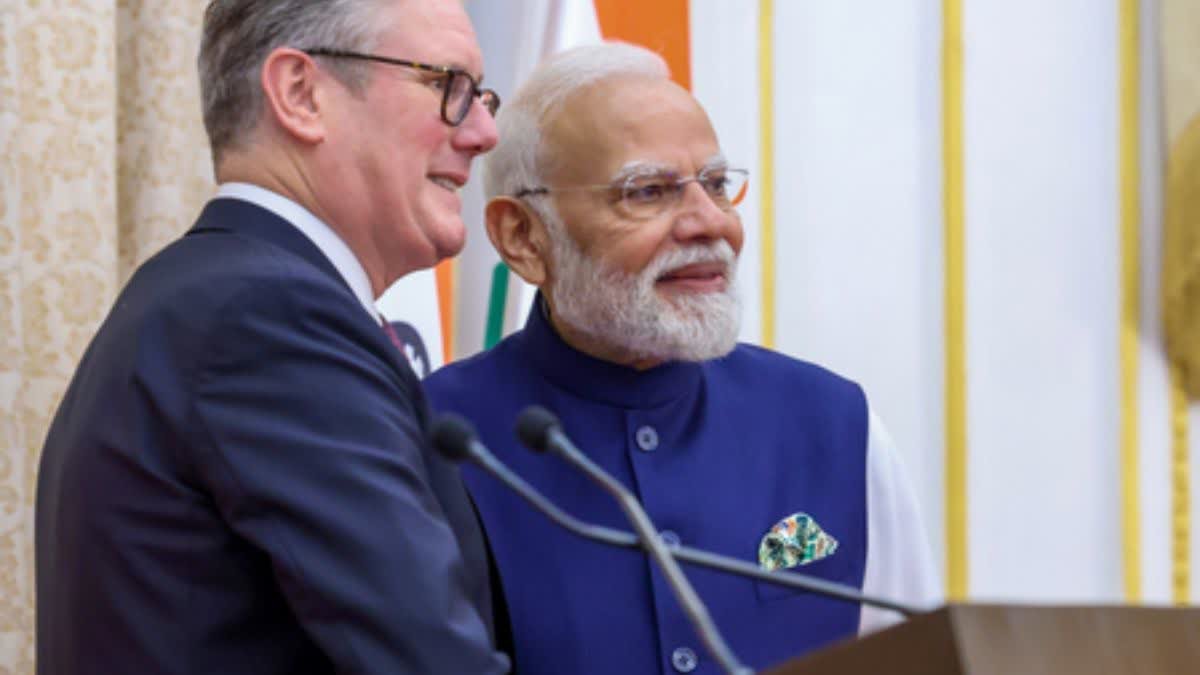
The agreement was finalized in May 2025 by Indian Prime Minister Narendra Modi and UK Prime Minister Keir Starmer. It is currently undergoing the ratification process in the British Parliament.
Both countries aim to increase bilateral trade from the current $60 billion to over $100 billion by 2030. Economic experts believe the FTA will play a crucial role in strengthening India’s manufacturing base and reinforcing its ambition to emerge as a global manufacturing hub.