

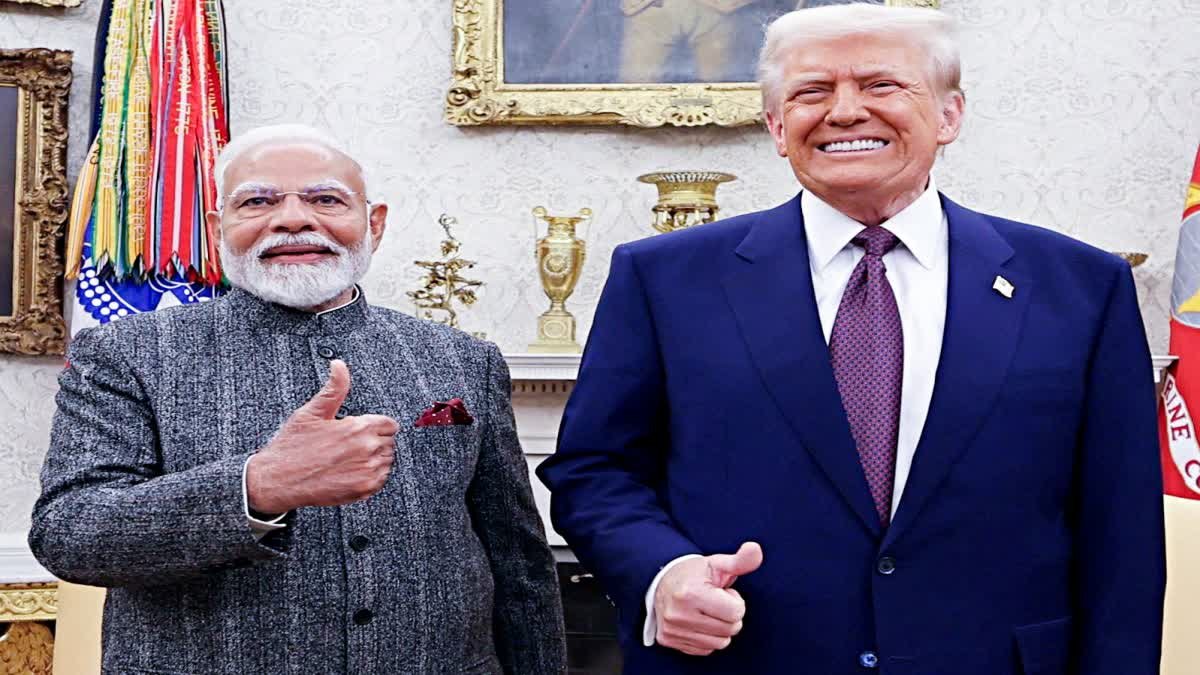
New Delhi: Senior leaders in India have welcomed the newly finalized India–United States trade agreement, calling it a historic step that will significantly strengthen bilateral economic relations between the two democracies.
Under the agreement, the United States has decided to reduce tariffs on Indian imports from 25 percent to 18 percent. The decision followed high-level discussions between U.S. President Donald Trump and Indian Prime Minister Narendra Modi earlier this week. The move is being viewed as a major breakthrough in trade ties between the two countries.
India’s Defense Minister Rajnath Singh praised the agreement, describing it as a landmark moment in India–U.S. relations. In a post on social media platform X, Singh said the deal would elevate bilateral economic cooperation to new heights and deepen strategic collaboration. He congratulated Prime Minister Modi and President Trump for reaching what he termed a “decisive and visionary agreement” that would bring tangible benefits to people in both nations.
Home Minister Amit Shah also welcomed the development, calling the day “very significant” for India–U.S. relations. He said the tariff reduction would pave the way for stronger trade ties and shared growth, adding that the agreement reinforces the strategic partnership between the two countries.
Commerce and Industry Minister Piyush Goyal highlighted the broader economic impact of the deal, stating that it would create unprecedented opportunities for Indian farmers, MSMEs, entrepreneurs, and skilled workers under the “Make in India” initiative. He noted that the agreement would also help India gain access to advanced U.S. technologies and accelerate the country’s journey toward its long-term development goals.
Parliamentary Affairs Minister Kiren Rijiju described India and the United States as “natural partners” bound by shared democratic values. He said the trade partnership reflects growing mutual trust and opens new opportunities for citizens, youth, farmers, and industries in both countries.
Agriculture Minister Shivraj Singh Chouhan echoed similar sentiments, calling the agreement a historic day for India–U.S. economic cooperation. He said the deal would strengthen trust, collaboration, and shared prosperity, particularly benefiting farmers, startups, and young entrepreneurs.
Meanwhile, a White House official confirmed to ANI that the U.S. administration would also remove an additional 25 percent tariff imposed on certain Indian imports linked to India’s purchase of Russian oil. The official stated that Washington expects New Delhi not only to reduce but eventually halt its procurement of Russian crude.
The trade agreement is being seen as a turning point that could reshape India–U.S. economic engagement and set the stage for deeper cooperation across multiple sectors in the coming years.