

Hyderabad — Global Markets
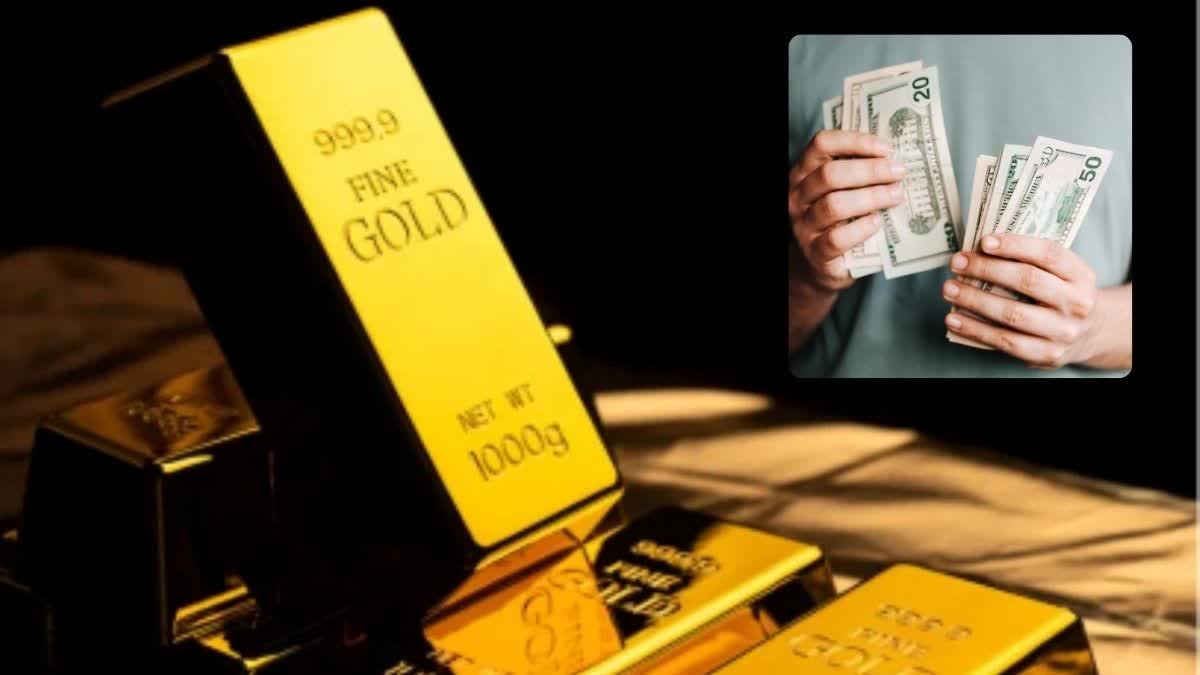
Global financial markets saw sharp moves in the latest trading session as the U.S. dollar staged its strongest one-day rally since July, sending shockwaves through commodities, currencies, and bonds. The sudden strength in the dollar pushed gold and silver sharply lower, reigniting debate over whether a political signal from Washington was the tipping point.
The U.S. Dollar Index jumped nearly 1%, climbing to around the 97 level, a move that caught traders off guard and quickly altered risk sentiment across asset classes.
Precious Metals Under Pressure
As the dollar surged, gold and silver prices fell sharply in global markets. Silver bore the brunt of the selling, posting steeper losses and dragging down overall precious-metal sentiment.
Market analysts say the selloff reflects a classic shift in positioning. When investors move away from traditional safe havens like gold and silver, capital often rotates into the U.S. dollar, reinforcing its strength. That dynamic played out aggressively in this session.
Commodity Currencies Feel the Heat
The decline in precious metals also weighed on so-called “commodity currencies.” Currencies such as the Australian dollar and the Canadian dollar—closely linked to exports of metals and raw materials—came under pressure as commodity prices weakened.
As these currencies softened, the dollar benefited further, creating a feedback loop that amplified moves across foreign exchange markets.
Political Signal Boosts Dollar Confidence
Beyond commodity weakness, traders point to a key political development in the U.S. as a catalyst for the dollar’s surge. President Donald Trump announced Kevin Warsh as his choice for the next Chair of the Federal Reserve.
Warsh is widely viewed by markets as a proponent of tighter monetary policy and a strong dollar stance. The announcement reinforced expectations that U.S. monetary policy could remain restrictive for longer, boosting demand for dollar-denominated assets.
Following the news, buying interest in the dollar intensified, pushing the Dollar Index sharply higher.
Strong Dollar, Weak Commodities: A Familiar Pattern
Historically, a rising dollar tends to weigh on commodities such as gold and silver, which are priced globally in U.S. dollars. A stronger dollar makes these assets more expensive for investors using other currencies, dampening demand.
That pattern held true once again, with dollar strength and precious-metal weakness reinforcing each other throughout the session.
Fed Policy Speculation Drives Volatility
Uncertainty around the Federal Reserve’s future direction has increased volatility in both currency and bond markets. Investors are increasingly pricing in the possibility that interest rates could remain elevated, or that policy easing may be delayed.
This expectation has supported U.S. Treasury yields and the dollar, while pressuring assets that typically benefit from lower rates, including precious metals.
Why This Matters for Indian Investors
A stronger dollar can have ripple effects for emerging markets, including India. Dollar strength often puts pressure on the rupee, raises import costs, and influences foreign investment flows.
At the same time, ongoing volatility in gold and silver—assets traditionally favored by Indian households—adds another layer of complexity for investors trying to position portfolios.
What Comes Next?
Taken together, the combination of falling precious metals, weaker commodity-linked currencies, and hawkish signals around future Fed leadership has given the U.S. dollar a powerful boost.
This marks the dollar’s biggest single-day gain since July. The key question now is whether this move represents the start of a sustained trend—or a short-term reaction to political and policy speculation.
Markets will be closely watching upcoming Federal Reserve communications for confirmation.