
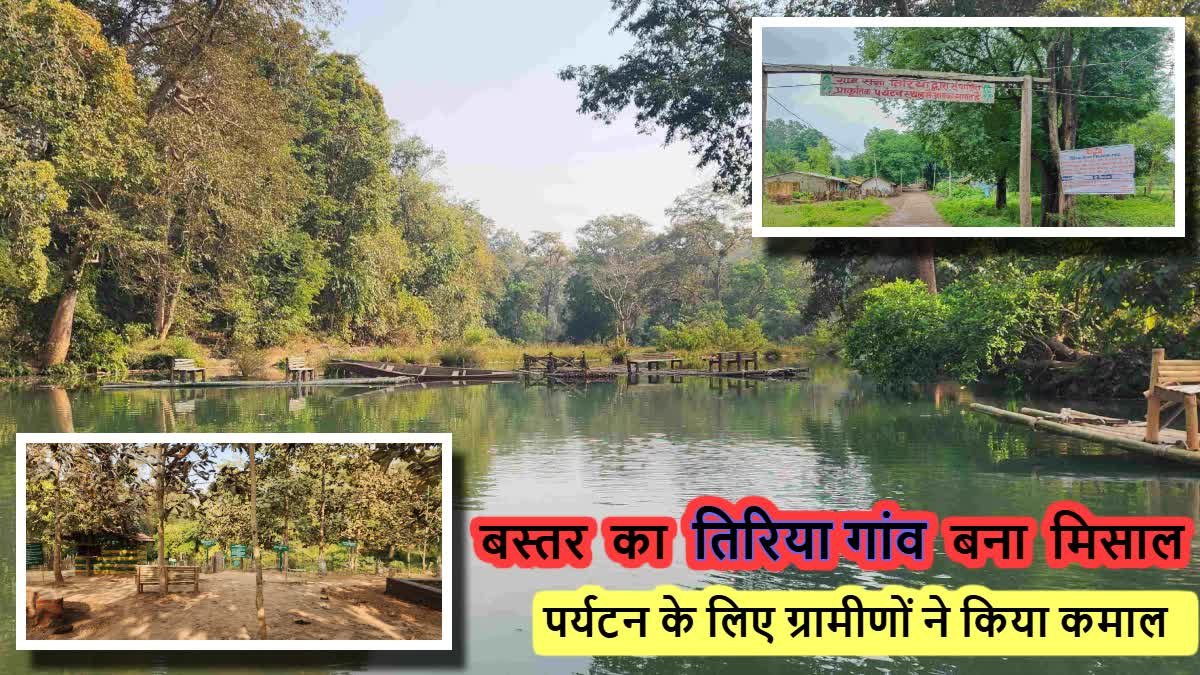
Bastar, India: Once known for fear and isolation due to Maoist influence, Tiriya village in India’s Bastar district has now transformed into a thriving eco-tourism destination—driven entirely by the power of its local Gram Sabha (village council). Much like the well-known Dhudmaras village, Tiriya is fast gaining recognition on the tourism map of Chhattisgarh and beyond.
Located about 25 miles (40 kilometers) from Jagdalpur, the divisional headquarters of Bastar, Tiriya lies deep within the Machkot forest range. Home to around 420 residents, the village is surrounded by dense forests, hills, waterfalls, and rich biodiversity. What makes Tiriya stand out is not just its natural beauty, but the community-led model that has reshaped its destiny.
Community Rights Changed the Village’s Future
In 2020, Tiriya village filed a community claim under India’s Forest Rights Act. As a result, the village was granted Community Forest Resource rights over 3,057.76 hectares of forest land. Along with these rights came the responsibility of forest protection and management—something the villagers embraced wholeheartedly.
According to core committee member Lukkuram Nag, the Gram Sabha formed three forest protection groups, each consisting of 23 members. A total of 69 villagers now patrol the forests in rotation. “Villagers carry food and water and stay in the forest for two days at a time. If there is any information about illegal logging, especially near the Odisha border, we respond immediately—day or night,” he said.
Eco-Tourism Born from the Gram Sabha
After securing forest rights, the Gram Sabha decided to develop eco-tourism, ensuring conservation alongside livelihood generation. Village head Jai Nag explained that Tiriya’s waterfalls, hills, and untouched forests have become major attractions for tourists.
“Eco-tourism has generated significant income for the village,” he said. “It has created local employment opportunities, especially for youth, allowing them to work in their own village instead of migrating elsewhere.”
The income generated runs into millions of rupees annually, helping fund village development while keeping nature intact.
Strict Rules for Sustainable Tourism
To preserve the fragile ecosystem, the village has enforced strict regulations. Plastic use is banned, alcohol consumption is prohibited, and loudspeakers are not allowed. The village follows an eco-friendly waste management system to ensure cleanliness and tranquility.
“These rules ensure that visitors can enjoy nature in a peaceful and safe environment,” villagers say.
A Model Drawing Global Attention
Tiriya’s forest management and development model is now attracting visitors and researchers from across India—and even abroad. Villagers regularly share their experiences and conduct training sessions, making Tiriya a learning hub for community-led conservation.
Tourists Speak
“I’ve traveled to 17 countries, but the peace and joy I experienced in Bastar is unmatched. Tiriya’s natural beauty is extraordinary,” said Sandeep Jain, a tourist.
“We visited with family for the first time and were completely mesmerized by the scenery. This kind of experience is rare,” said Amitabh Srivastava.
“People travel to Kashmir and Manali, but Bastar’s beauty is truly unique. Once you visit, you feel like coming back again,” added Rohit Trivedi.
A Beacon of Hope
Tiriya village stands today as a powerful example of how grassroots democracy, community rights, and environmental conservation can go hand in hand. From a region once marked by conflict, Tiriya has emerged as a symbol of resilience—showing the world how local communities can lead sustainable development.