

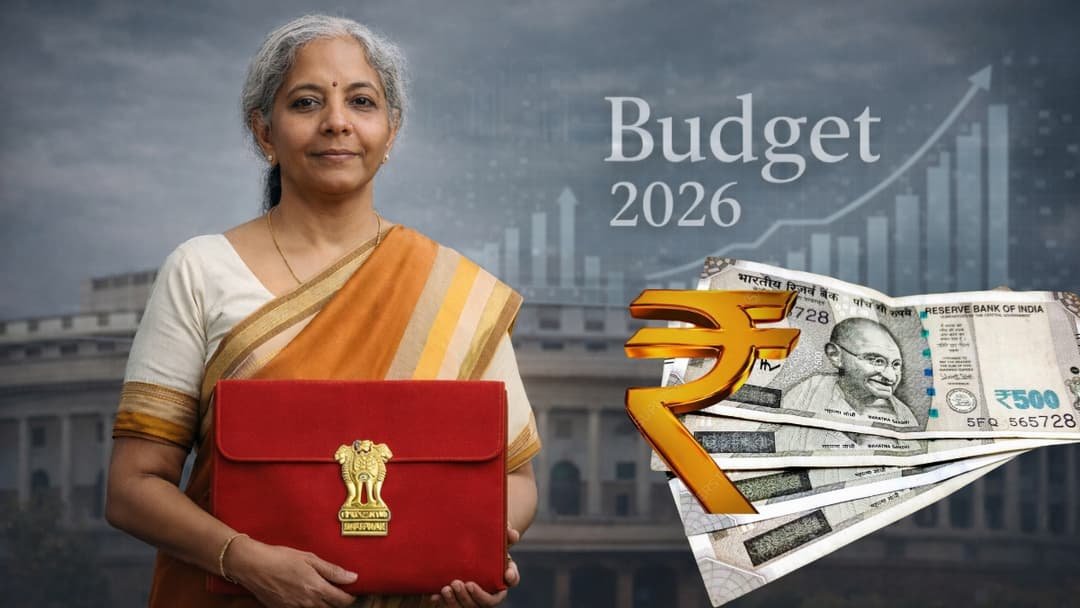
NEW DELHI — Finance Minister Nirmala Sitharaman’s Union Budget for 2026–27 marks a decisive break from decades of parliamentary tradition, with the government choosing to unveil its core reform agenda in Part B of the Budget speech—historically reserved for tax proposals—rather than in the policy-heavy Part A.
Officials have dubbed the approach the “Reform Express,” signaling New Delhi’s intent to push through deep structural changes aimed at boosting competitiveness, strengthening manufacturing, and insulating the economy from global uncertainty. At the same time, millions of salaried taxpayers are watching closely, hoping the ambitious vision is matched by meaningful income-tax relief.
A Strategic Shift in Budget Presentation
For the first time in 75 years, Part B is expected to carry the government’s primary economic roadmap. According to senior officials, the expanded section will go beyond routine tax amendments and lay out long-term reforms critical to India’s growth strategy.
Among the key measures likely to be announced:
- Customs Duty Reform: Simplification of India’s complex customs structure to reduce compliance burdens and support domestic manufacturing.
- Unified Manufacturing Zones: A proposal to merge Special Economic Zones (SEZs) and similar schemes into integrated manufacturing and export hubs designed to attract global investment.
“The objective is to use the Budget as a tool for structural transformation that improves competitiveness and reduces vulnerability to global shocks,” a senior government official said.
Middle Class Seeks Immediate Relief
While the reform narrative dominates the macroeconomic outlook, household finances remain a pressing concern. With inflation squeezing disposable incomes, salaried taxpayers are pushing for targeted relief—though economists caution that fiscal constraints may limit the scope for broad tax cuts.
Key expectations include raising the income threshold for the 30% tax bracket to ₹30 lakh, increasing the standard deduction, and extending home-loan tax benefits under the new tax regime. A significant hike in the Section 80C deduction limit, unchanged at ₹1.5 lakh for years, is considered unlikely.
What Markets Are Watching
Beyond tax policy, analysts are closely tracking two headline numbers:
- Fiscal Deficit: With the deficit already below 4.5% of GDP, attention is on the government’s next consolidation target.
- Capital Spending: Capital expenditure is expected to rise by 10–15% from ₹11.2 lakh crore, reinforcing the government’s role as the primary growth driver amid cautious private investment.
The Verdict
Budget 2026 is shaping up as a balancing act—one that must sell a credible long-term reform agenda for a “Developed India” while delivering tangible benefits to the country’s largest taxpayer base. How effectively Sitharaman bridges this divide between strategic ambition and everyday economic realities will determine the Budget’s political and market reception.