

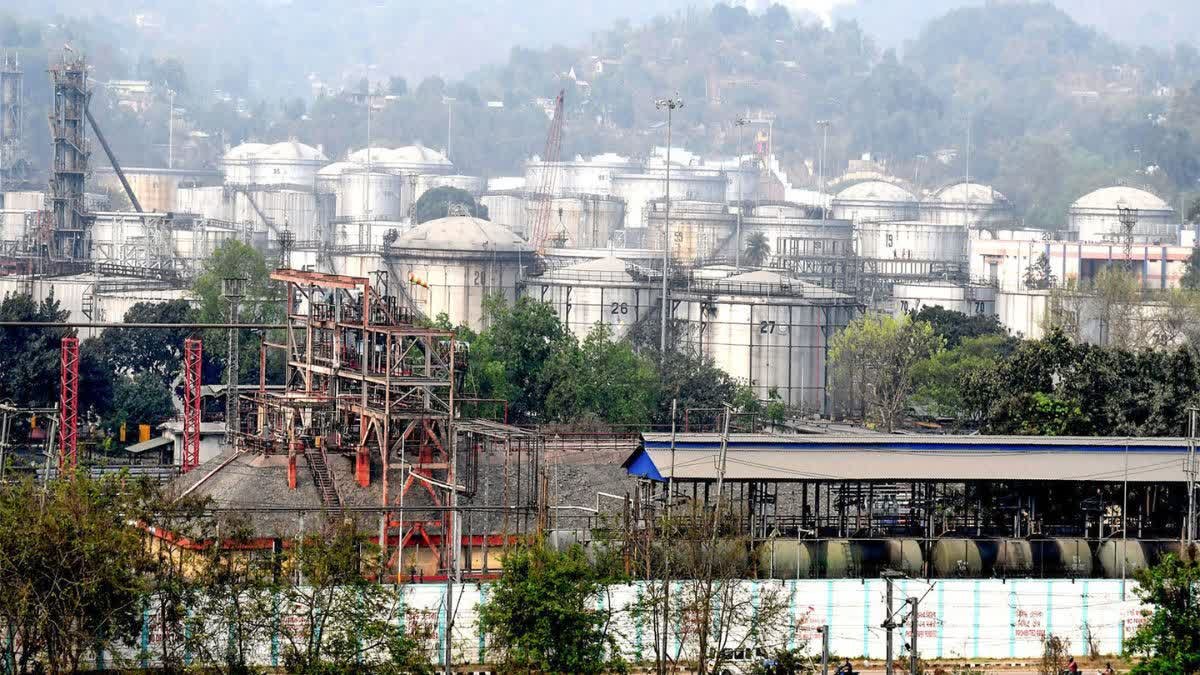
New Delhi — Global oil markets were thrown into turmoil on Thursday as Brent crude prices surged more than 4%, crossing $112 per barrel amid escalating military tensions between Israel and Iran. The sharp spike reflects growing fears of major disruptions to energy supplies from the Middle East, a region critical to the world’s oil and gas production.
Escalation Sparks Supply Fears
The latest surge follows reports that Israeli fighter jets targeted a key Iranian gas facility in Bushehr province, including infrastructure linked to the massive South Pars gas field—one of the world’s largest natural gas reserves shared between Iran and Qatar.
In retaliation, Iran launched ballistic missile strikes on Ras Laffan Industrial City in Qatar, one of the world’s largest liquefied natural gas (LNG) hubs. The attack triggered a massive fire and caused significant damage to critical infrastructure, according to statements from Qatari authorities and QatarEnergy. While no casualties have been reported, this marks the second strike on the facility within 12 hours, raising alarm across global energy markets.
Strategic Chokepoint at Risk
The conflict’s proximity to the Strait of Hormuz—a narrow passage through which nearly 20% of the world’s oil supply flows—has heightened investor anxiety. Any disruption in this corridor could severely constrain global supply, pushing prices even higher.
Market analysts warn that if hostilities intensify or spread further, Brent crude could climb to $120–$125 per barrel in the near term.
Global Economic Impact
The surge in oil prices is expected to ripple across the global economy, driving up transportation and manufacturing costs while fueling inflation. Energy-importing nations, including India, are particularly vulnerable, as higher crude prices directly impact domestic fuel costs such as gasoline and diesel.
Economists caution that prolonged instability could slow global economic growth, especially if energy supply chains remain under threat.
International Response Mounts
The United States and other major powers have issued strong warnings following the attacks. The U.S. President urged Iran to halt further strikes on energy infrastructure, warning of “serious consequences” if escalation continues.
Diplomatic channels remain active, but uncertainty looms large. Global markets are now closely watching whether negotiations can de-escalate tensions—or if the crisis will deepen, pushing oil prices to new highs.
Bottom Line:
The Israel–Iran conflict has rapidly evolved into a major geopolitical flashpoint with far-reaching consequences for global energy markets. As oil prices climb and supply risks grow, the world faces increasing economic uncertainty tied to the stability of the Middle East.