

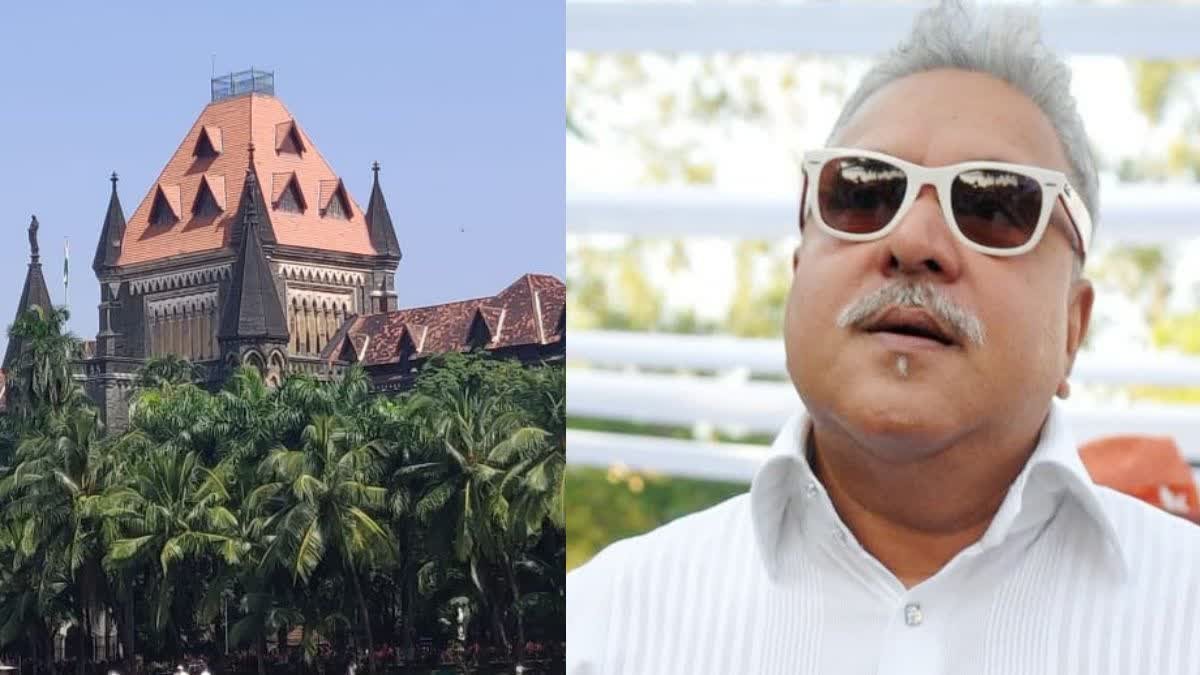
Mumbai: The Bombay High Court on Thursday made it clear that fugitive economic offender Vijay Mallya must first indicate his willingness to return to India before the court considers hearing his petition. The bench observed that there is little purpose in hearing a plea filed by someone who continues to stay abroad to evade Indian law.
A division bench comprising Chief Justice Shri Chandrashekhar and Justice Gautam Ankhad stated, “If Vijay Mallya is not prepared to return to India, why should this court hear his petition? What will be achieved by it?” The court added that it is giving Mallya one final opportunity to clarify whether he is willing to come back to India.
The Central Government echoed the same stand. Solicitor General Tushar Mehta told the court that Mallya should return to India and engage in discussions transparently. “What exactly is his claim? Which loans does he admit to, which does he deny, and how does he plan to repay the money? We are ready to listen, but he must come back,” Mehta said.
Court’s Observations and Directions
Senior advocate Amit Desai, appearing on behalf of Vijay Mallya, informed the court that his client is currently residing in London. The bench responded strongly, stating that individuals who flee the country after committing financial fraud should not expect Indian courts to entertain petitions while they remain abroad.
The Chief Justice asked Mallya’s counsel to clearly state when his client intends to return to India. The court emphasized that until a satisfactory response is provided, no legal relief will be granted. While refraining from outright dismissal at this stage, the bench described this as Mallya’s “last opportunity” and directed his lawyers to submit a clear timeline by the next hearing on February 18.
Extradition in Final Stage
The court was informed that the process to bring Vijay Mallya back to India from the United Kingdom is currently at an advanced stage. The government expressed concern that Mallya may be misusing legal proceedings in India to delay or obstruct his extradition.
On behalf of the Enforcement Directorate (ED), the Solicitor General urged the court to dismiss the petition, arguing that the Fugitive Economic Offenders (FEO) Act was enacted specifically to prevent offenders from escaping the Indian legal system by remaining abroad.
What Is Mallya’s Petition About?
Vijay Mallya has challenged the constitutional validity of provisions of the Fugitive Economic Offenders Act, under which he was declared a fugitive economic offender — the first person in India to receive this designation following amendments to the law.
Mallya’s counsel argued that the declaration has resulted in what they described as “economic civil death,” with all his properties being seized. The petition claims that investigative agencies have already attached assets worth more than the outstanding loan amount. Mallya has also stated that he is willing to repay the dues, including interest, which has reportedly increased from ₹6,000 crore to nearly ₹15,000 crore over time.
However, his lawyers argued that he is unable to do so because all his accounts and assets are currently under the custody of investigating agencies. Another plea seeking a hearing on these issues is still pending before the High Court.
Government’s Stand
The Centre maintained that under the FEO Act, immediate attachment of properties is necessary to deter economic offenders from fleeing the country. The law also mandates court oversight for every action taken by investigative agencies, which, according to the government, ensures adequate safeguards.
ED lawyers pointed out that the Act already provides a mechanism for the return of seized assets if a special court later rules that the accused is not a fugitive economic offender.
Vijay Mallya fled India after defaulting on bank loans amounting to nearly ₹9,000 crore taken in the name of Kingfisher Airlines. Since then, Indian authorities have been pursuing his extradition. The government reiterated before the court that Mallya should return to India, where he will be given a full and fair opportunity to present his case.