

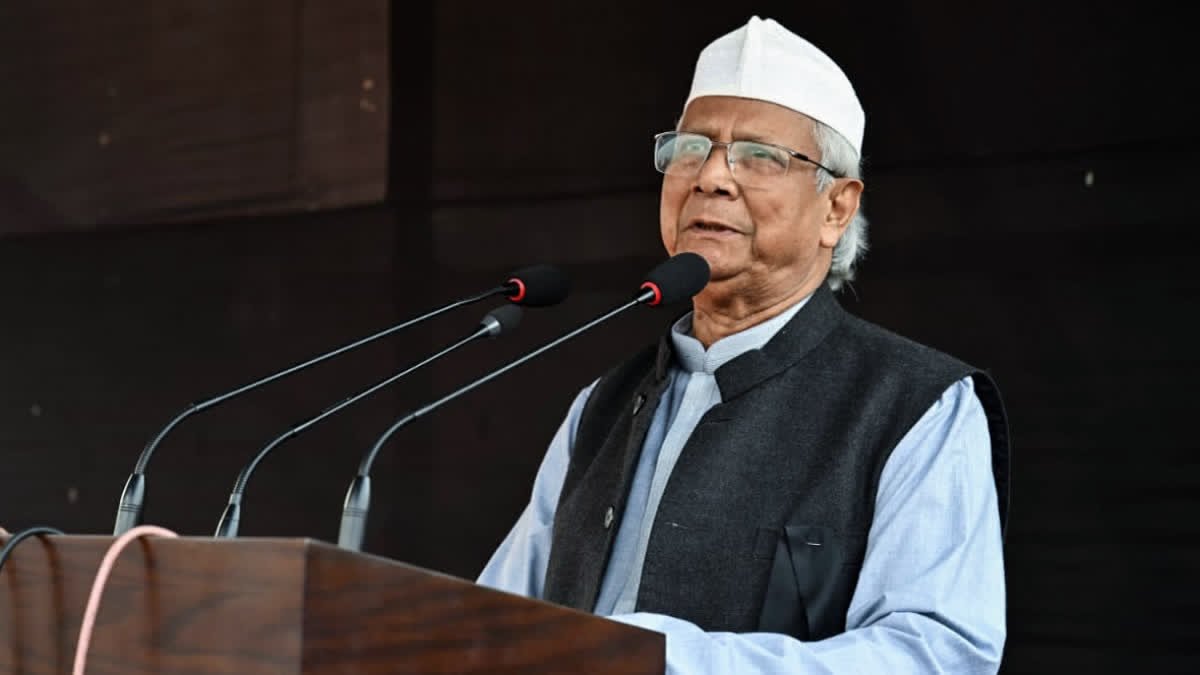
Dhaka, Bangladesh: As Bangladesh prepares for the swearing-in of a new elected government, interim chief Muhammad Yunus delivered his final address to the nation, asserting that the country has emerged stronger, more confident, and independent in its foreign and domestic outlook after 18 months under his leadership.
Speaking in a televised farewell address on Monday, Yunus said his interim administration had restored Bangladesh’s core external principles—“sovereignty, national interest, and dignity”—and declared that the country was no longer a submissive or externally guided state.
“Today’s Bangladesh is confident, proactive, and responsible in protecting its independent interests,” Yunus said, one day before stepping down from office.
End of Interim Rule, New Government to Take Charge
Yunus’ interim government came to power in August 2024 and will formally conclude on Tuesday with the swearing-in of a new prime minister following the country’s 13th parliamentary elections.
Bangladesh Nationalist Party (BNP) chairperson Tarique Rahman is set to take oath as prime minister after the BNP-led alliance secured 211 of 299 seats in the February 12 elections, according to official results.
Foreign Policy Reset and Regional Vision
In his address, Yunus emphasized that Bangladesh had moved away from a traditionally cautious foreign policy and was no longer dependent on instructions or advice from other nations. He said his administration had rebuilt the foundations of Bangladesh’s global engagement.
Highlighting regional cooperation, Yunus underscored the vast development potential of deeper connectivity with Nepal, Bhutan, and northeastern India, calling connectivity crucial for the country’s next phase of growth.
“Our open sea is not just a geographical boundary—it is a gateway to the global economy,” he said, stressing the importance of ports, logistics, and regional trade links.
Governance, Legal Reforms, and Economic Push
Yunus said his interim administration had worked to strengthen democratic rights and institutions, enacting nearly 130 new laws, amending existing legislation, and issuing more than 600 executive orders—about 84 percent of which have already been implemented.
He also defended agreements signed with international port management companies, which had earlier sparked protests by labor groups and criticism from political opponents. Yunus argued that expanding port capacity to global standards was essential to prevent Bangladesh from falling behind economically.
“If we fail to increase capacity, we will lose momentum in our economic progress,” he said.
Farewell Meetings and Transition
Earlier in the day, Yunus met senior bureaucrats and posed for photographs with staff at his office. He was also paid a farewell visit by Bangladesh Army Chief Waker-Uz-Zaman, whom Yunus thanked for the armed forces’ support in maintaining order during the general elections.
On Sunday, Yunus chaired the final meeting of the advisory council, effectively concluding the interim administration’s tenure.
“I call on everyone—regardless of party, faith, religion, ethnicity, or gender—to continue the struggle for a just, humane, and democratic Bangladesh,” Yunus said, adding that he was stepping down “with great hope.”