
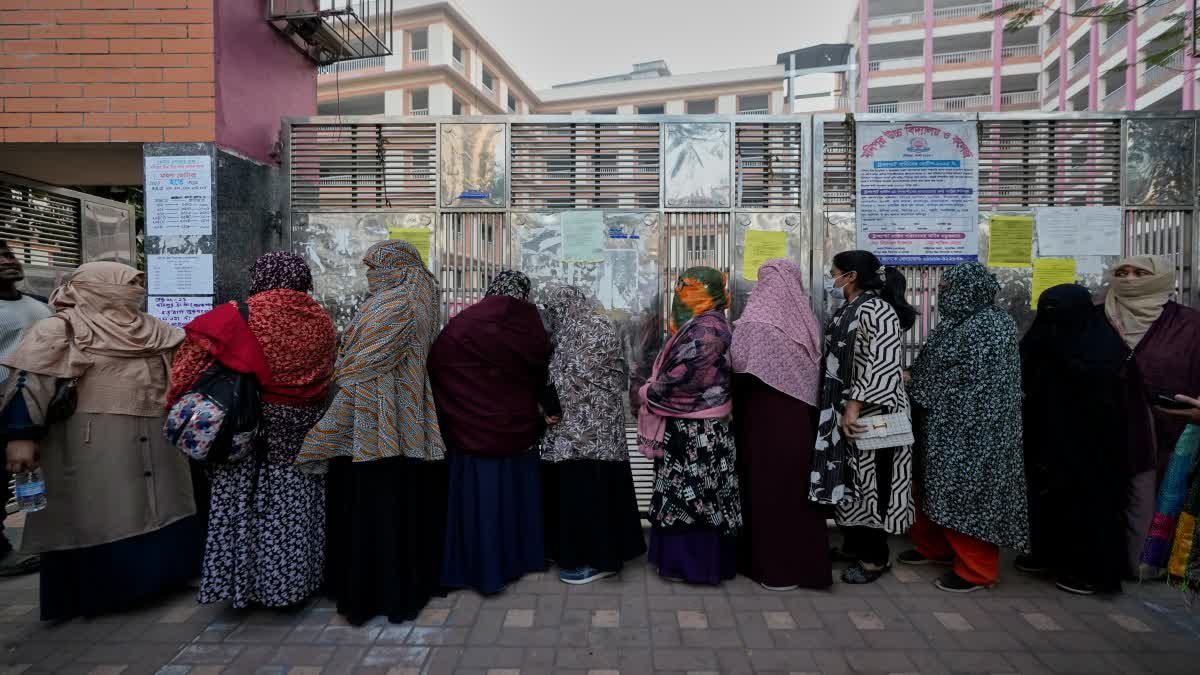
Dhaka: Bangladesh began voting on Thursday in one of the most consequential elections in its political history, with more than 127 million registered voters eligible to cast their ballots amid tight security arrangements across the country.
The election is being closely watched as a potential turning point for the South Asian nation, coming at a time of major political change. Former Prime Minister Khaleda Zia has passed away, while the long-dominant Awami League, led by her longtime rival Sheikh Hasina, has been barred from contesting the polls after its party registration was suspended last year.
Many analysts see this vote as marking the end of Bangladesh’s decades-long political era dominated by the rivalry between the two leaders, often referred to as the “Battle of the Begums.”
Heavy Security, Nationwide Preparations
According to The Daily Star, ballot papers and election materials were transported to polling stations nationwide under heavy security a day before voting. Law enforcement agencies, including the army, have been deployed to maintain order and ensure a peaceful polling process.
Polling began at 7:30 a.m. and will continue until 4:30 p.m. local time.
Youth Voters in Focus
Bangladesh, the world’s eighth most populous country, has a large youth electorate. Al Jazeera reports that nearly half of the voters are between 18 and 37 years old, including approximately 4.57 million first-time voters, making youth participation a critical factor in the outcome.
Political Landscape
Bangladesh currently has 59 registered political parties, though the Awami League is not among them. Of these, 51 parties are contesting the election. A total of 1,981 candidates are in the race, including 249 independent candidates.
Major parties contesting the polls include:
- Bangladesh Nationalist Party (BNP)
- Jamaat-e-Islami
- National Citizen Party (NCP)
- Jatiya Party (Kader faction)
- Jatiya Party (Ershad faction)
- Left Democratic Alliance
- Amar Bangladesh Party (AB Party)
Key Issues Driving the Vote
Bangladesh is a parliamentary republic where executive power rests with the elected government led by the prime minister and cabinet, while the president serves as the ceremonial head of state.
Voters are casting their ballots amid widespread public concern over corruption, inflation, unemployment, and economic development, which are widely seen as the key issues shaping the election.
In addition to the parliamentary polls, Bangladesh is also holding a referendum on the National Charter 2025, a document prepared by the interim government led by Nobel laureate Muhammad Yunus. The charter is expected to outline the framework for future governance reforms.
Warning Against Election Irregularities
Bangladesh’s Home Affairs Adviser, Lt. Gen. (Retd.) Mohammad Jahangir Alam Chowdhury, warned on Wednesday that any attempts at ballot box snatching, fake voting, or other irregularities would result in strict action against those responsible, including election officials and law enforcement personnel, according to the Dhaka Tribune.
Results Timeline
Vote counting will begin on February 12, and the Election Commission is expected to officially announce the final results on the morning of February 13, once counting is completed.