

Policy aims to ensure affordable fertilisers, improve soil health and boost sustainable agricultural productivity
New Delhi:
In a major step towards promoting balanced fertilisation and ensuring the long-term sustainability of Indian agriculture, the Union Government has approved the Nutrient-Based Subsidy (NBS) rates for the Rabi season 2025–26. The approved rates will remain effective from 1 October 2025 to 31 March 2026 and will apply to phosphatic and potassic (P&K) fertilisers, including widely used fertilisers such as Di-Ammonium Phosphate (DAP) and various NPK and NPKS grades.
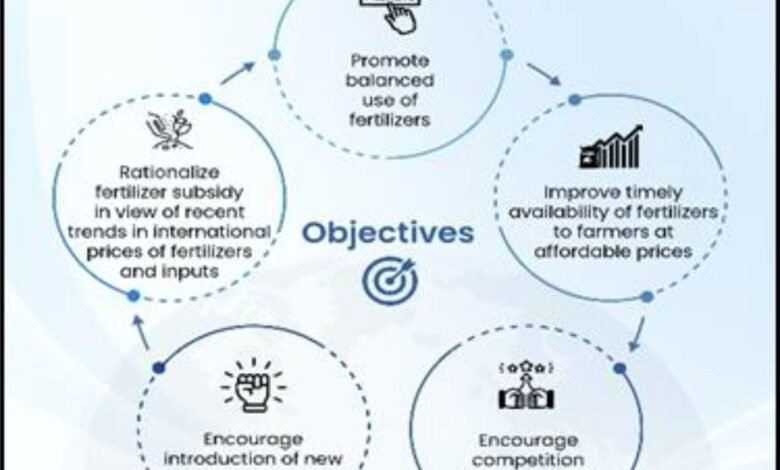
The decision reflects the government’s continued commitment to maintaining fertiliser affordability for farmers, controlling input costs, improving soil health, and enhancing agricultural productivity while ensuring fiscal prudence.
Budgetary Outlay and Financial Commitment
For the Rabi season 2025–26, the estimated budgetary requirement under the NBS scheme is ₹37,952.29 crore, which is around ₹736 crore higher than the allocation for the Kharif 2025 season. This increase takes into account prevailing international and domestic fertiliser prices, raw material costs, and logistics expenses.
Between 2022–23 and 2024–25, the Government of India has allocated more than ₹2.04 lakh crore under the NBS scheme. This sustained financial support has played a crucial role in ensuring uninterrupted availability of fertilisers at subsidised and affordable prices despite volatility in global fertiliser markets.
What is the Nutrient-Based Subsidy (NBS) Scheme?
The Nutrient-Based Subsidy (NBS) scheme, implemented from 1 April 2010, marked a significant policy shift in India’s fertiliser sector. Instead of subsidising fertilisers as products, the scheme provides subsidies based on the nutrient content of fertilisers.
Under the NBS framework, subsidies are fixed per kilogram of four major nutrients:
- Nitrogen (N)
- Phosphorus (P)
- Potash (K)
- Sulphur (S)
This approach encourages balanced nutrient application, reduces excessive dependence on any single fertiliser, and enables farmers to make informed choices based on crop requirements and soil health.
NBS Nutrient Subsidy Rates for Rabi 2025–26
The government has approved the following per kilogram subsidy rates for nutrients for Rabi 2025–26:
- Nitrogen (N): ₹43.02 per kg
- Phosphorus (P): ₹47.96 per kg
- Potash (K): ₹2.38 per kg
- Sulphur (S): ₹2.87 per kg
These rates will form the basis for calculating product-wise subsidies for different P&K fertiliser grades.
Product-Wise Subsidy Highlights
A total of 28 grades of P&K fertilisers are now covered under the NBS scheme. Key highlights include:
- DAP (18-46-0-0): ₹29,805 per metric tonne, significantly higher than ₹21,911 per metric tonne in Rabi 2024–25, offering major relief to farmers.
- Subsidies are also applicable to fertilisers such as MOP, SSP, MAP, TSP, NPS, NP and various NPK/NPKS grades.
- Ammonium Sulphate (both domestic and imported) has been included under the NBS scheme for Rabi 2025–26.
Additionally, fortified fertilisers enriched with micronutrients will receive extra subsidies, over and above the base NBS rates:
- Boron (B): ₹300 per metric tonne
- Zinc (Zn): ₹500 per metric tonne
This measure aims to promote the use of secondary and micronutrients to address widespread soil deficiencies.
Boost to Domestic Fertiliser Production
The NBS policy has significantly strengthened domestic fertiliser manufacturing and reduced reliance on imports. As a result of consistent policy support:
- Domestic production of P&K fertilisers (DAP and NPKS) increased from 112.19 lakh metric tonnes in 2014
- to 168.55 lakh metric tonnes by 30 December 2025,
marking a growth of over 50 per cent.
This expansion highlights the role of NBS in enhancing self-reliance and building long-term capacity in the fertiliser sector.
Impact on Soil Health and Crop Productivity
Balanced fertilisation under the NBS scheme has led to visible improvements in soil health and crop yields. The increased use of phosphatic, potassic and sulphur-based fertilisers has helped correct nutrient imbalances in soils.
As a result, foodgrain productivity has increased from 1,930 kg per hectare in 2010–11 to 2,578 kg per hectare in 2024–25, demonstrating the positive impact of scientific nutrient management on agricultural output.
Regulatory Oversight and Digital Monitoring
To ensure transparency, accountability and fair pricing, fertiliser companies are required to comply with strict regulatory norms:
- Submission of audited cost data and regular reporting of Maximum Retail Prices (MRPs)
- Any sale above the printed MRP is punishable under the Essential Commodities Act, 1955
- Profit margins are regulated, with ceilings fixed for manufacturers and importers
The entire fertiliser supply chain—from production and imports to transportation and retail distribution—is monitored through the Integrated Fertiliser Management System (IFMS). This digital platform enables real-time tracking, improves coordination with states, and ensures timely availability of fertilisers across the country.
Conclusion
The approval of Nutrient-Based Subsidy rates for Rabi 2025–26 reinforces the government’s resolve to balance farmer welfare, soil health, agricultural productivity and fiscal responsibility. By expanding fertiliser coverage, enhancing subsidies on critical inputs like DAP, promoting fortified fertilisers and strengthening digital monitoring, the NBS scheme continues to serve as a cornerstone of India’s agricultural and fertiliser policy.
With sustained financial support and a focus on balanced nutrient use, the NBS framework is expected to play a vital role in achieving sustainable, productive and self-reliant agriculture in the years ahead.