
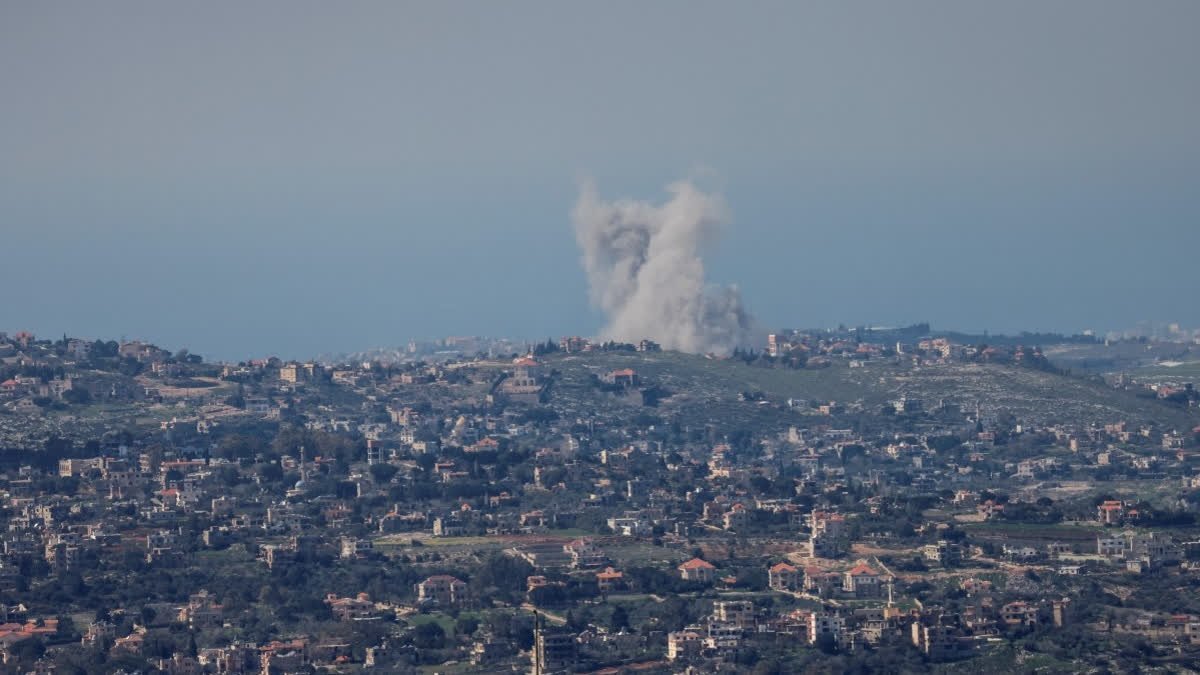
Tehran — The killing of Iran’s Supreme Leader, Ali Khamenei, in a joint U.S.-Israeli military campaign has triggered an unexpected political shift inside the Islamic Republic. Instead of accelerating regime collapse, the strike appears to have galvanized national sentiment, unifying segments of Iranian society that had been deeply divided just months earlier.
The operation, reportedly aimed at crippling Iran’s leadership and paving the way for potential regime change, has been framed by Tehran as a direct assault on Iranian sovereignty. State officials and clerical authorities have portrayed Khamenei’s death as martyrdom, fueling a surge of religious nationalism and public solidarity — even among citizens who had previously protested against the government.
From Domestic Unrest to National Unity
In recent years, Iran had experienced significant internal unrest, particularly following the death in custody of a young woman detained for allegedly violating mandatory headscarf rules. The protests, led largely by young Iranians, challenged the authority of the clerical establishment and the strict social codes enforced under Khamenei’s leadership. Security forces responded forcefully, drawing international condemnation.
However, analysts say that foreign military intervention has shifted public sentiment. “In moments of perceived external threat, even reform-minded or secular-leaning Iranians often rally behind the state,” said a regional affairs expert based in Europe. “National identity tends to outweigh political divisions.”
What began as widespread frustration with governance has, at least temporarily, transformed into a broader call for unity against foreign adversaries.
Complex Military Structure Remains Intact
Iran’s military and security architecture remains complex and multilayered. A central pillar is the Islamic Revolutionary Guard Corps (IRGC), which operates parallel to the regular armed forces and oversees the Basij militia — a volunteer paramilitary network activated during periods of crisis.
Though the strike reportedly eliminated several senior commanders, the decentralized and overlapping nature of Iran’s security apparatus may limit the long-term impact on operational continuity. The IRGC, in particular, is expected to play a critical role in managing internal stability and coordinating any external response.
Regional Fallout and Muslim Neighbors’ Dilemma
The broader Middle East is now bracing for potential escalation. Countries that allowed U.S. forces to use military bases during the campaign could face retaliatory threats from Tehran. Iran has historically relied on a network of regional allies and proxy groups — sometimes referred to as the “Axis of Resistance” — though that network has weakened in recent years amid conflicts in Gaza, Lebanon, and Syria.
Neighboring Muslim-majority nations now face a strategic crossroads: align more openly with Washington and Israel, maintain cautious neutrality, or attempt diplomatic mediation to prevent a wider regional war.
For Gulf states in particular, the risk calculus is delicate. Open confrontation with Iran could endanger energy infrastructure and maritime trade routes, while neutrality may strain ties with the United States.
Global Trade and Geopolitical Stakes
Iran’s geographic position amplifies the stakes. The country serves as a strategic land bridge linking Asia and Europe and is a participant in China’s Belt and Road Initiative. Any prolonged instability could disrupt key transit corridors and energy flows, raising global economic concerns.
Western officials have long argued that constraining Iran is necessary to curb its nuclear ambitions and regional influence. Yet critics contend that direct military action may have strengthened hardline elements within Tehran rather than weakening them.
An Uncertain Road Ahead
What was intended as a decisive blow to Iran’s leadership has instead produced a surge of national consolidation. Whether that unity proves durable remains uncertain. Much will depend on succession dynamics within Iran’s clerical establishment, the IRGC’s posture, and the choices made by neighboring states.
As the region watches closely, one question looms large: Will Iran’s neighbors double down on alliances with Washington and Jerusalem — or seek a path that avoids being drawn into a deepening conflict?