

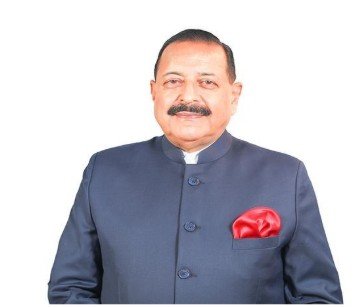

By Dr. Jitendra Singh
When the British began leaving India in 1947, they left behind a phrase that would remain embedded in the vocabulary of Indian administration—the “Steel Frame.” This was the term used for the Indian Civil Service, the administrative machinery through which the British Empire governed India.
Steel does not bend easily, and that was precisely the point. The administrative structure was designed to stabilise and control an empire, not to listen to the people it governed.
After Independence, India inherited much of this framework. We gave it new names, wrapped it in the symbolism of a free nation and told ourselves that it was now our own. But a structure designed primarily for control does not automatically become an institution designed for public service.
For decades after Independence, India continued to function within many of these inherited structures. Citizens filled the same forms in triplicate, stood in queues before imposing government offices and waited for a “sahib” to decide the fate of their applications.
I have spent much of my working life within this system—as a citizen, as a professional and later as the Union Minister entrusted with Personnel, Public Grievances and Pensions, the very department responsible for examining the functioning of the administrative framework and asking whether it needs to be rebuilt.
So when I am asked whether India has reformed its bureaucracy, my answer is neither a defence of an institution nor a condemnation of those who have left it. It is the answer of someone who has witnessed from within a quiet but determined reconstruction of the administrative system over the past twelve years.
Had Prime Minister Narendra Modi, known for his transformative approach to governance, not assumed office in 2014, much of this framework might have remained untouched.
From 157 Days to 15: Transforming Grievance Redressal
Consider where we began.
In 2014, resolving a grievance submitted to the Central Government could take an average of 157 days, according to the figures cited in the reform narrative. Citizens faced a system with limited accessibility, thousands of grievance officers spread across departments and little effective accountability for delivering outcomes within a defined timeframe.
A young person seeking employment, a widow trying to trace her husband’s pension file or a farmer attempting to understand why a crop-insurance claim had not been processed could all face the same bureaucratic reality: a system that made citizens wait and officials insufficiently accountable for outcomes.
That was not merely inefficiency. It was a surviving feature of an administrative culture designed around procedure rather than resolution.
The transformation today can be measured in numbers. Government data cited by the Ministry of Personnel, Public Grievances and Pensions shows that grievance redressal through CPGRAMS has expanded dramatically, from around 2 lakh complaints annually in 2014 to 25–30 lakh at present, while the average resolution time has fallen to around 12 days. More than 95 per cent of grievances are now being disposed of.
The Centralised Public Grievance Redress and Monitoring System (CPGRAMS) has evolved into a technology-enabled platform aimed at making government more accessible and responsive. Artificial intelligence and digital tools are increasingly being used to route grievances to the appropriate authorities.
The objective is simple: the citizen should not have to navigate the bureaucracy merely to find the right desk.
Digital access has also helped take grievance redressal closer to the last mile. Through Common Service Centres (CSCs), citizens in rural areas can access government services without repeatedly travelling to district offices.
The idea behind these reforms is not simply digitisation. It is the creation of a system in which government responds to citizens rather than citizens adjusting themselves to government.
From Rule-Based Administration to Role-Based Governance
But the deeper reform of the Steel Frame is not digital plumbing. It is the change in the philosophy through which we build and evaluate our civil servants.
For decades, government functioned predominantly through a “rule-based” culture. An official was often judged by whether the prescribed procedure had been followed rather than whether the citizen’s problem had actually been resolved.
In 2020, we launched Mission Karmayogi, the National Programme for Civil Services Capacity Building, to change this approach.
The objective is to create a “role-based” administrative culture, in which officials are trained and evaluated according to what their roles actually require rather than merely according to what an inherited rulebook prescribes.
The scale of this transformation is significant. The iGOT Karmayogi platform has crossed 1.63 crore users, with more than 4,770 courses available to government officials.
This represents a fundamental shift: continuous learning is no longer simply a desirable quality of a good officer; capacity building is increasingly being integrated into institutional performance and career development.
The ultimate goal is performance accountability—not as a slogan, but as an operating mechanism.
Removing Colonial Legacies from Recruitment
Alongside capacity building, reforms have also sought to remove several colonial-era practices from recruitment and government procedures.
Since 2016, interviews for certain lower and middle-level government positions, including Group C and non-gazetted Group B posts in Central Government offices, have been abolished. The objective was to reduce opportunities for discretion, favouritism and corruption in recruitment.
The government has also moved away from traditional requirements such as obtaining the countersignature or attestation of a gazetted officer for routine documents.
The underlying philosophy is important: citizens should not be treated as potential wrongdoers unless they prove otherwise.
Similarly, procedural reforms have sought to reduce delays between selection and appointment, including allowing successful candidates to join their posts provisionally while police verification is completed.
The broader reform agenda has also included the removal of obsolete rules and laws. Nearly 2,000 obsolete rules have been removed or scrapped over the reform period, according to recent government statements.
These may appear to be small administrative changes, but together they challenge a much larger legacy—the idea that government exists primarily to regulate citizens rather than facilitate their lives.
From North Block to Kartavya: A Change in Administrative Mindset
When the Ministry moved from North Block to Kartavya Bhavan, the significance was not limited to a change of address.
North Block represented the physical architecture of an earlier administrative era. Kartavya Bhavan represents a different idea—the idea of duty.
The distinction is important.
The administrative vocabulary of the colonial state was largely shaped by authority, hierarchy and control. The vocabulary of a democratic republic must be shaped by duty, accountability and service.
That change in mindset is perhaps the most difficult reform of all.
When I meet young officers, I tell them that one of the biggest reforms still required is to remove the “colonial mindset” that can survive even after colonial institutions have disappeared.
The buildings may change quickly. Institutional attitudes take longer.
Reforms for Women in Government Service
There has also been a quieter transformation—one focused not on citizens outside government offices but on the women who work inside them.
For much of independent India’s history, women government employees had limited institutional support in situations such as pregnancy, childbirth and family responsibilities.
Reforms have introduced measures intended to make government service more responsive to the needs of women employees.
These include 60 days of special maternity leave in specified circumstances, expanded access to Child Care Leave, and provisions intended to support women dealing with responsibilities arising from surrogacy and other family circumstances.
Child Care Leave can also be used for certain travel requirements, while single mothers receive enhanced flexibility in availing themselves of the facility.
A woman who reports sexual harassment at the workplace is also entitled to special leave for the period during which the complaint is investigated, subject to applicable rules.
There are additional measures for women employees with disabilities, including support related to childcare, while education allowances for children with disabilities of government employees have also been enhanced.
These measures may not appear on a GDP chart. But they matter in another important measure: whether women can enter, remain and progress in public service without being forced out by institutional barriers.
Gender equality cannot exist merely on banners and annual observances. It must be reflected in the rules that govern everyday working life.
Employment, Training and Citizen-Centric Services
Ultimately, none of these reforms matter unless they produce a tangible difference in the lives of ordinary citizens.
That change can be seen in several areas.
Through Rozgar Melas, more than 12 lakh appointment letters have been distributed over the past few years, according to the figures cited in the article.
The Common Foundation Course at Mussoorie brings officers from different services together during their formative training. An IAS officer and an IPS officer, rather than remaining confined to separate institutional silos, learn alongside one another.
The purpose is straightforward: when these officers eventually encounter citizens, they should be capable of functioning as one government rather than as competing departments.
Pensioners, too, have benefited from digital transformation. The Digital Life Certificate system allows pensioners to complete an important annual requirement without physically visiting a bank or government office. More than 40 lakh pensioners used face-recognition-based Digital Life Certificates in 2024 alone, while cumulative usage across digital life-certificate systems has crossed 10 crore, according to government figures.
For students and young aspirants, digital systems are reducing repetitive paperwork and simplifying access to government recruitment processes.
These changes may appear disconnected when viewed individually. Together, however, they represent a broader transformation towards citizen-centric, technology-enabled and accountable governance.
Representation and a More Inclusive Civil Service
Administrative reform must also be about representation.
The objective is not merely to make government faster but to ensure that its institutions reflect the diversity of the society they serve.
The article highlights the increase in OBC representation in government service, from around 19 per cent in 2014 to 27 per cent.
A representative bureaucracy is essential to a democratic state because public institutions must not only deliver services efficiently—they must also inspire confidence among citizens that the state belongs to them.
Rebuilding, Not Destroying, the Steel Frame
The Steel Frame left behind by the British was never going to disappear overnight—and perhaps it should not.
Institutions carry memory, and institutional memory has its own value. The challenge is not to destroy the administrative framework but to reconstruct it around the constitutional promise of democratic governance.
Over the past twelve years, the effort has been to rebuild that framework through changes in digital governance, grievance redressal, capacity building, recruitment, performance evaluation, pension services, gender-sensitive policies and administrative procedures.
Recent government data reinforces the scale of this transition. CPGRAMS now handles 25–30 lakh grievances annually, with average resolution time around 12 days, while iGOT Karmayogi has more than 1.63 crore users and thousands of training courses.
The real measure of reform, however, is not the number of platforms created or rules removed. It is whether a citizen experiences the state differently.
The old administrative model asked citizens to adjust themselves to government.
The emerging model asks government to adjust itself to the needs of citizens.
That is the real reconstruction of the Steel Frame: transforming an architecture once designed for ruling an empire into an institution capable of serving a constitutional democracy.
The ultimate objective is clear—to create a government that does not merely administer, but responds; that does not merely control, but facilitates; and that does not merely exercise authority, but accepts responsibility and accountability to the people.
The Steel Frame, therefore, is not being dismantled. It is being rebuilt for a new purpose: from governance by control to governance by service.
The author, Dr. Jitendra Singh, is Union Minister of State (Independent Charge) for Science and Technology and Earth Sciences, and Minister of State in the Prime Minister’s Office, Personnel, Atomic Energy and Space.