

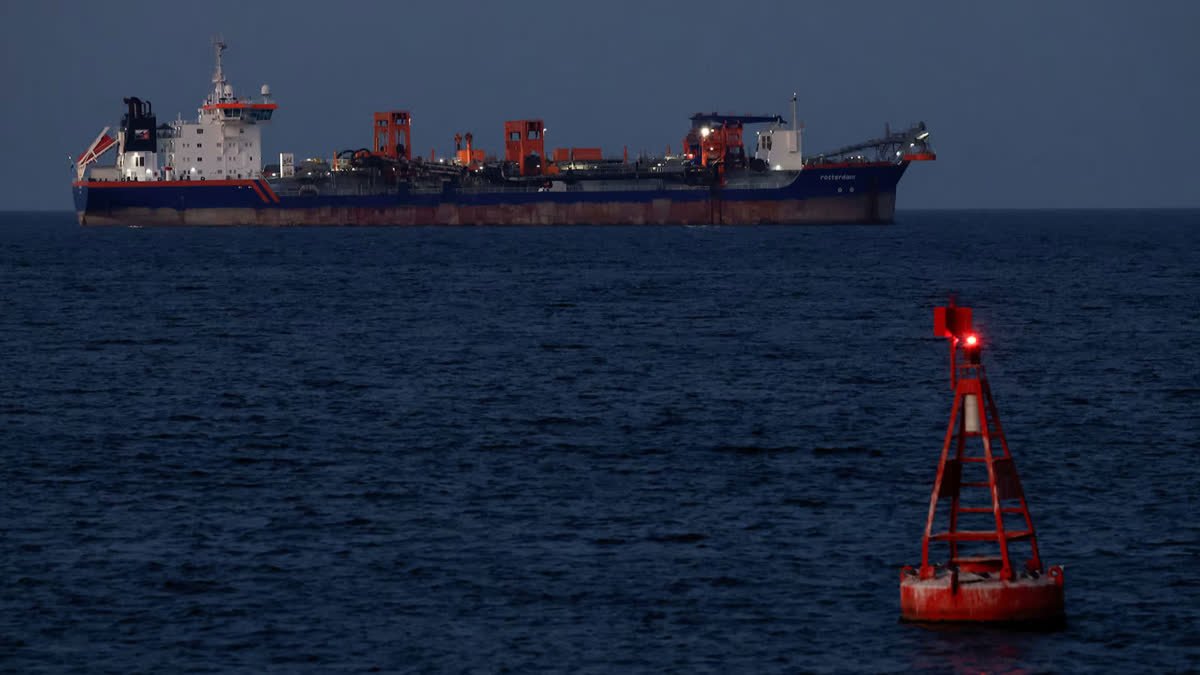

Tehran: In the midst of the escalating conflict in West Asia, India has received a major relief after Iran allowed two Indian vessels carrying liquefied petroleum gas (LPG) to safely pass through the strategically vital Strait of Hormuz.
According to India’s Ministry of Ports, Shipping and Waterways, Iranian authorities granted permission to the vessels to navigate the crucial maritime route despite rising tensions in the region. One of the ships, Shivalik, was last tracked in the Gulf of Oman, as per maritime monitoring platform MarineTraffic. The vessel is expected to reach its destination by March 21.
The ministry also provided an update on the safety of Indian vessels and seafarers operating in the region. Currently, 24 Indian ships are active in the Persian Gulf, carrying a total of 668 Indian sailors. Additionally, three ships with 76 Indian crew members are positioned in the eastern section of the Strait of Hormuz.
Authorities said the Directorate General of Shipping (DG Shipping) is maintaining close coordination with ship owners, maritime agencies, and Indian embassies to monitor the situation and ensure the safety of Indian vessels and crew members.
A 24-hour control room has been set up to respond to emergencies. So far, the system has handled more than 2,425 calls and 4,441 emails, while facilitating the safe return of over 223 stranded Indian sailors.
Meanwhile, Iran’s Ambassador to India, Mohammad Fattali, confirmed that Iranian authorities would allow Indian ships to safely transit the Strait of Hormuz despite the ongoing tensions. Emphasizing the long-standing relationship between the two nations, he said Iran considers India a close partner.
“We are friends with India. Our future and interests are closely connected,” he said, adding that both countries share a sense of responsibility toward each other.
At the same time, Abdul Majid Hakim Elahi stated that Iran never intended to close the strategic waterway, although tensions have disrupted shipping activity.
The latest developments come amid a major escalation in the region since February 28, involving the United States and Israel on one side and Iran on the other. The conflict intensified following the reported death of Iran’s Supreme Leader Ali Khamenei in joint military strikes, triggering retaliatory attacks by Iran on U.S. and Israeli assets across the Gulf region.
The ongoing tensions have disrupted maritime routes and raised concerns over global energy supplies, as the Strait of Hormuz is one of the world’s most critical oil and gas shipping lanes.