


Alipur, Karnataka — As tensions escalate in the Middle East following reports of the killing of Iran’s Supreme Leader, Ayatollah Ali Khamenei, grief has reached far beyond Tehran — all the way to a small village in southern India.
Nearly 90 kilometers from Bengaluru, in the Gauribidanur taluk of Karnataka, the Shia-majority village of Alipur has long shared a unique religious, cultural, and emotional bond with Iran — and with Khamenei himself.
When news of his death spread, residents say shops shuttered, work paused, and special prayers were offered in his memory. For many in this village of roughly 25,000 people, Khamenei was not just a distant political figure, but someone they felt personally connected to.
A Visit That Forged a Lasting Bond
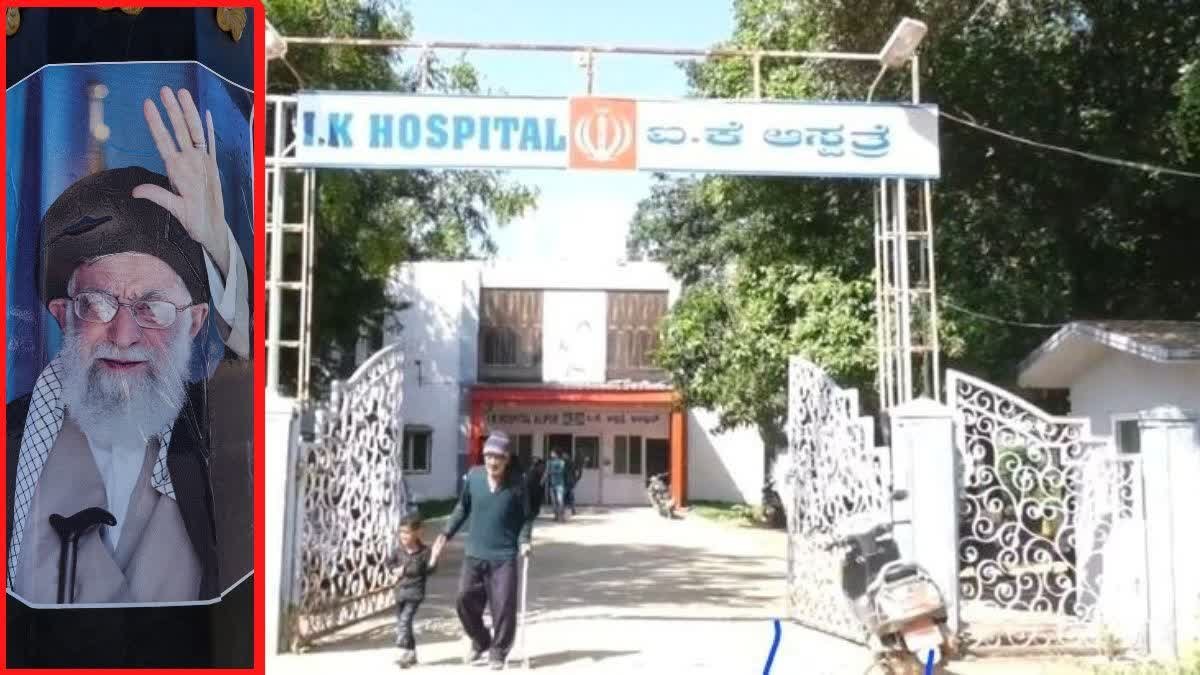
According to local historian and writer Syed Natiq Alipuri, Khamenei visited Alipur in 1980, shortly after Iran’s Islamic Revolution. During that visit, he laid the foundation for what would later become a key community institution — a hospital that continues to serve the region decades later.
“It was not just a symbolic visit,” Alipuri said. “It was a promise that turned into reality.”
That promise materialized in the form of the Imam Khomeini Hospital, operated by the Imam Khomeini Medical Trust. Built with support linked to Khamenei’s outreach, the hospital has since become a lifeline for thousands of families in Alipur and surrounding areas. Residents say it provides care regardless of religion or caste, embodying a broader humanitarian vision.
A Village With Iranian Street Names
Alipur’s ties to Iran go beyond a single visit. Several streets in the village are named after Iranian cities such as Tehran, Qom, and Shiraz. Many families send their children to Iran for religious studies and higher education, including medical programs that residents describe as both affordable and culturally familiar.
Urdu is widely spoken here, some residents are fluent in Persian, and elements of Iranian style — including certain forms of hijab — blend with Indian Muslim traditions.
“Our connection with Iran is civilizational, historical, emotional, and economic,” Alipuri explained. “It goes far beyond sectarian identity.”
Trade, Education, and Uncertainty
Alipur is also known for its gemstone trade, which began expanding in the 1970s as the village shifted from agriculture to precious stone commerce. Today, the Alipur Gems and Jewelry Traders Association includes more than 270 registered traders and supports over 2,000 families.
Local traders maintain links with markets across India and internationally, including Dubai, Sri Lanka, and Southeast Asia. However, the ongoing regional conflict has disrupted shipments and created uncertainty.
“We’ve moved operations into smaller home-based units,” said Syed Inayat Ibn-e-Hasan, a local gemstone businessman. “Delays are increasing, and orders are unpredictable. We’re managing, but it’s difficult.”
The conflict has also affected students from Alipur studying in Iran, with some returning home due to safety concerns while others reconsider their plans.
Mourning Across Borders
Residents describe Khamenei as a voice for marginalized communities, particularly in the Palestinian cause. Many expressed sorrow not only over his reported killing but also over the broader violence unfolding in the region.
“When children are killed in bombings, it is not just an attack on a country — it is an attack on humanity,” Alipuri said, condemning violence against civilians.
As global tensions mount, Alipur stands as an example of how international political figures can leave deeply personal imprints far from their own borders. For this quiet Karnataka village, the news from Tehran is not just geopolitics — it is the loss of someone woven into their own community’s story.
In the shadow of global conflict, Alipur is mourning both a world leader and a chapter of its shared history.