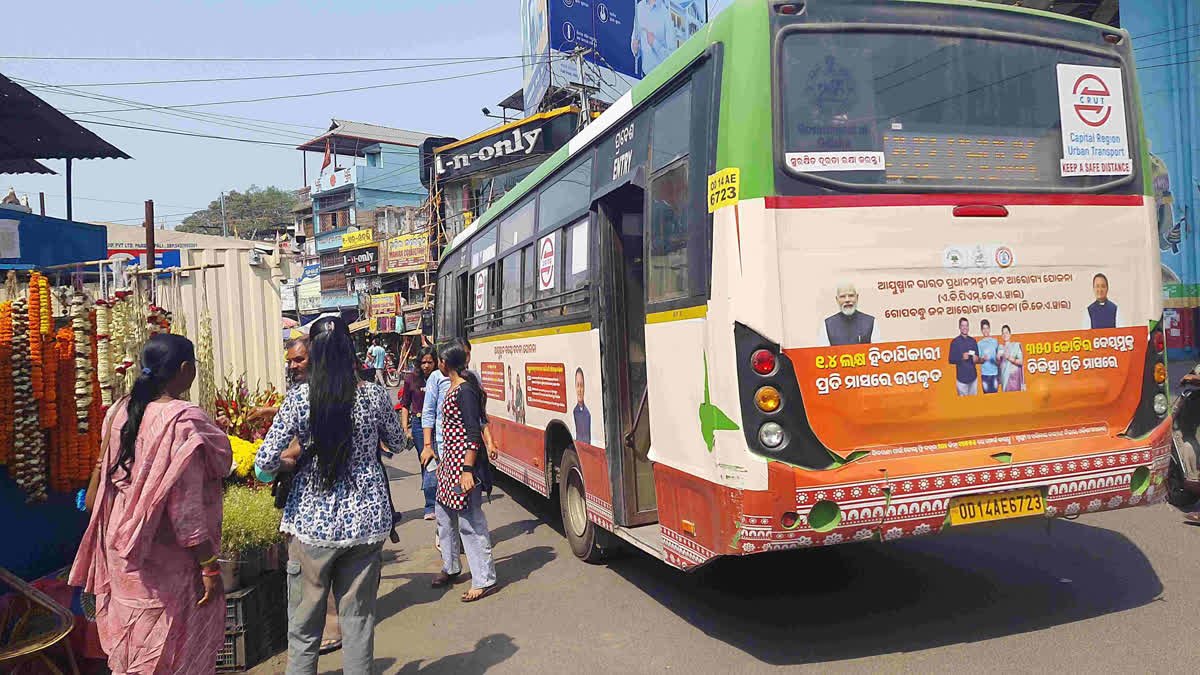
Sambalpur — Despite operating a fleet of 50 town buses, residents of Sambalpur continue to face daily hardship due to the absence of designated bus stops or passenger shelters, highlighting a critical gap in the city’s public transport infrastructure.
Often described as the cultural and administrative soul of western Odisha, Sambalpur has witnessed rapid urban expansion over the past decade. However, basic amenities for public transport users have failed to keep pace. The Odisha government currently runs 50 city buses—25 electric and 25 diesel—connecting major localities within Sambalpur as well as Burla and Hirakud. Yet, there are no formal waiting areas for passengers anywhere along these routes.
As a result, commuters are forced to wait along busy roadsides and, in some cases, dangerously close to moving traffic. Narrow roads and congested urban infrastructure have further compounded safety concerns. Officials estimate that more than 5,000 passengers rely on the town bus service daily.
Granted municipal status in 2014, Sambalpur has since emerged as a major educational hub, hosting seven universities and institutions of national importance. Thousands of students depend on public buses for daily travel, making the lack of basic facilities particularly acute.
The situation worsens during peak summer months. Temperatures in Sambalpur often soar to 48 degrees Celsius (118°F), leaving commuters—especially senior citizens—exposed to extreme heat while waiting in the open.
“With summer approaching, the absence of bus shelters becomes a serious health concern,” said Prafulla Hota, vice-president of the Western Odisha Senior Citizens Association. “The government has introduced buses, but without bus stops or shade, the service remains incomplete. We urge the state government and district administration to immediately provide passenger waiting areas.”
With a population of nearly half a million and a demographic dominated by youth and students, civic groups say Sambalpur urgently needs structured bus stops, shelters, and safer boarding points to make public transport viable, inclusive, and humane.
Urban planners warn that unless these basic amenities are addressed soon, the effectiveness of the city’s public transport system will remain severely undermined—despite investments in modern buses, including electric vehicles.