

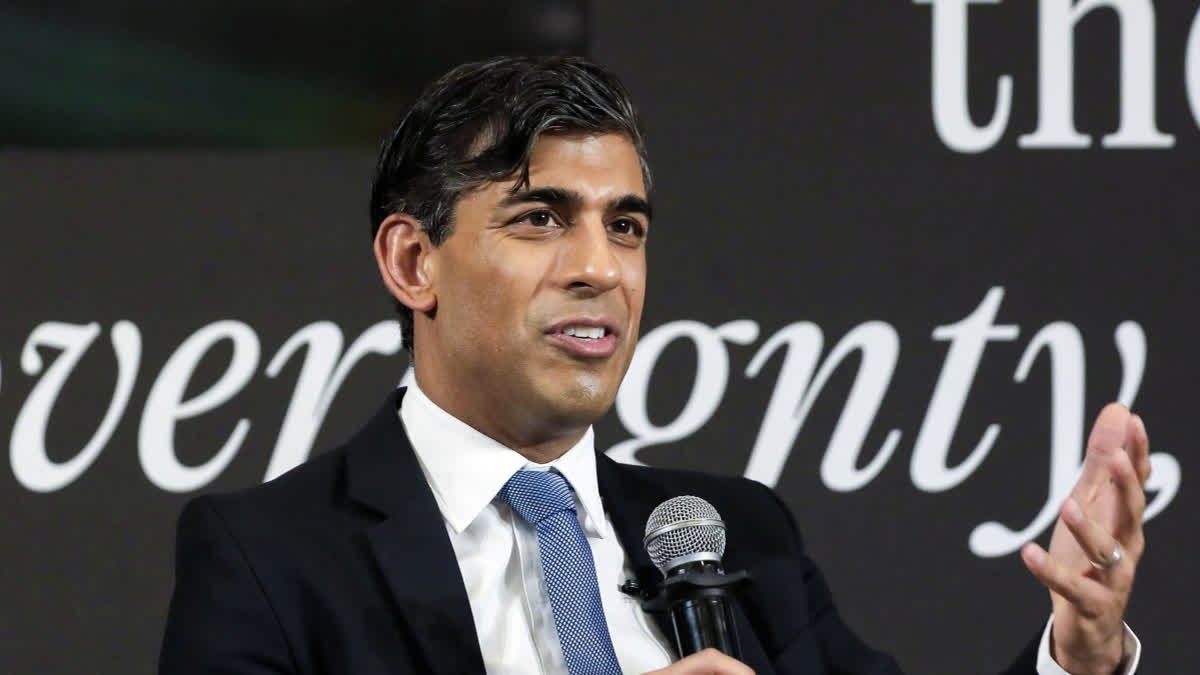

New Delhi: Former UK Prime Minister Rishi Sunak on Wednesday said that India is uniquely positioned to emerge as a global leader in artificial intelligence (AI), citing the country’s deep talent pool, strong digital public infrastructure, and widespread public trust in technology.
Speaking at the “Governing in the Age of AI: Sovereignty, Impact and Strategy” event during the ongoing AI Impact Summit 2026 in New Delhi, Sunak highlighted a sharp contrast in global attitudes toward AI. He noted that while India shows “incredible optimism and trust” in artificial intelligence, many Western countries are currently marked by anxiety and uncertainty.
AI Must Be Central to Governance
Sunak emphasized that AI can no longer be treated as a niche or technical subject by governments. “AI can’t be some specialist subject on the side,” he said. “It has to become the central responsibility of government.”
He stressed that the global conversation on AI has evolved over time. “The debate has shifted from technology to strategy — from what these tools can do, to what countries choose to do with them,” he added.
Lessons From the AI Safety Summit
Reflecting on the AI Safety Summit held in the UK in 2023 during his tenure, Sunak said the event helped bring together political leaders, innovators, and entrepreneurs, despite early skepticism. One of its key outcomes was the creation of AI safety and security institutes to address risks and build public confidence in emerging technologies.
India’s Focus on Deployment
Sunak said India’s approach to AI leadership is not limited to innovation alone but is centered on large-scale adoption and deployment. He pointed out that countries do not necessarily need to invent a technology to benefit most from it — success depends on how effectively it is used.
Backed by digital platforms, skilled professionals, and public support, India is well placed to demonstrate how AI can be integrated into everyday life, he said.
Global Recognition
Citing international recognition, Sunak noted that India has moved into third place in global AI competitiveness rankings, according to Stanford University’s Global AI Vibrancy Index. He said this reflects India’s strong focus on applying AI to deliver real-world impact at scale.
Trust in AI Starts With Public Services
Sunak argued that public trust in AI will ultimately be won in the public sector. He said when citizens experience better healthcare, improved education, and more efficient government services powered by AI, the debate shifts from abstract fears to tangible benefits.
“Closing the confidence gap around AI is a policy challenge, not just a technological one,” he said.
Jobs, Education, and the Future
Addressing concerns over employment, Sunak acknowledged that AI will reshape labor markets. While some jobs may disappear, many more will be redesigned. He stressed that governments must focus on reskilling and supporting workers through this transition rather than slowing innovation.
He concluded by saying that while AI will bring unprecedented access to knowledge, wisdom and human judgment must remain central. “AI can raise the ceiling,” he said, “but it also has the power to lift the floor — and that is what makes it truly transformative.”