


Raipur, Chhattisgarh — Politics in Chhattisgarh is undergoing a clear generational shift. Traditional election issues such as farmers, paddy procurement, and welfare schemes have taken a back seat as youth voters emerge as the primary political battleground ahead of the 2028 state assembly elections and the 2029 general elections.
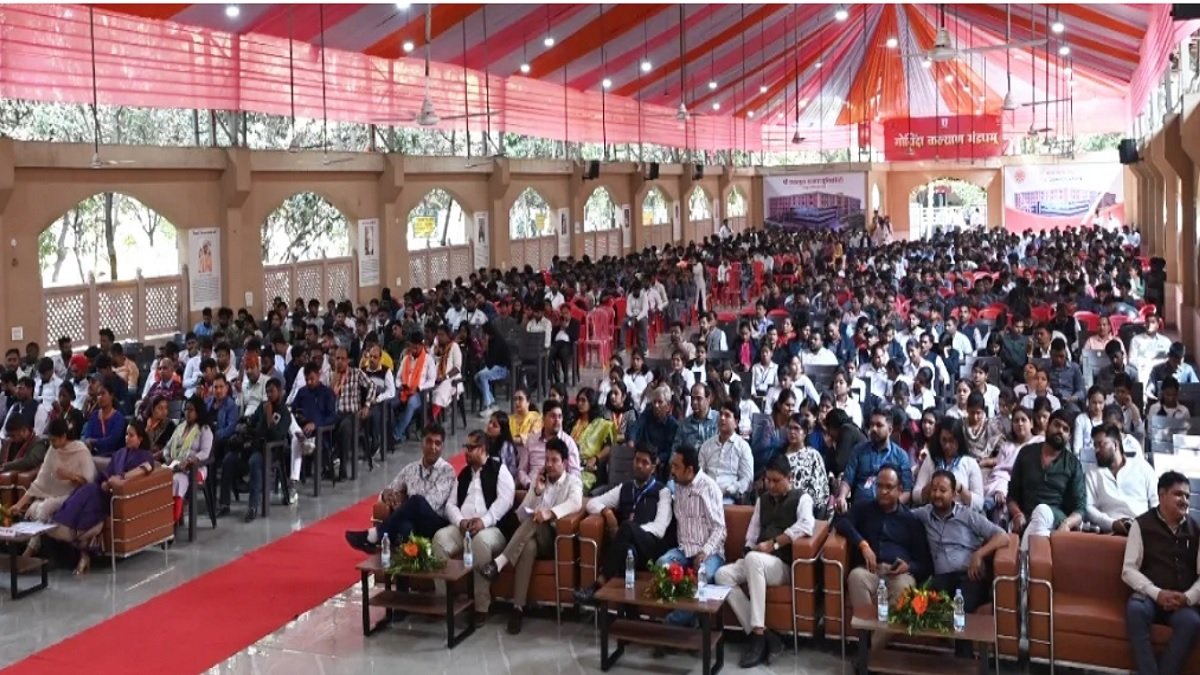
Both the ruling Bharatiya Janata Party (BJP) and the opposition Indian National Congress (Congress) have launched parallel mass outreach programs in Raipur—BJP’s Yuva Samvad (Youth Dialogue) and Congress’s Yuva Mahapanchayat—signaling that the state’s demographic dividend is now central to their electoral strategies.
A Battle of Narratives
The political contest is no longer confined to rural fields but has moved into college campuses, job centers, and urban neighborhoods. While BJP projects youth as partners in a long-term development vision, Congress frames them as victims of unemployment and economic stress.
The BJP’s Yuva Samvad, organized by its youth wing, positions recent budgetary measures as proof of future security for young Indians. Party leaders highlighted tax relief, startup incentives, and entrepreneurship programs to appeal to the aspirational middle class—those looking beyond traditional government jobs toward private enterprise and technology-driven careers.
Political observers describe this approach as micro-targeting—a calculated attempt to create a quiet but decisive youth vote bank ahead of 2028.
Congress Strikes Back with Street Politics
Congress, meanwhile, has adopted a more confrontational tone. Its Yuva Mahapanchayat focused heavily on employment guarantees, proposed changes to the rural job scheme (MGNREGA), and rising costs of living. Party leaders accused the central government of undermining employment security, particularly for rural, tribal, and economically weaker youth.
By mobilizing thousands of young representatives from regions such as Surguja and Sukma, Congress sought to revive its grassroots energy after its 2023 electoral defeat, projecting youth-led dissent as the face of anti-incumbency politics.
Escalating Political Rhetoric
The youth-focused rivalry has also intensified verbal sparring. BJP leaders mocked the opposition’s mobilization efforts, while Congress accused the ruling party of relying on slogans without delivering on key promises, including youth travel allowances and job creation targets.
Senior journalists and political analysts caution that symbolic events alone will not sway Chhattisgarh’s young voters. According to analysts, the state’s electorate is increasingly pragmatic, evaluating parties based on tangible economic outcomes rather than ideological positioning.

The Road to 2028 and Beyond
As Chhattisgarh heads toward a high-stakes electoral cycle, the youth vote is emerging as the ultimate power broker. The BJP pitches a long-term vision aligned with “Developed India 2047,” while Congress channels present-day frustrations over unemployment and inflation.
The party that successfully balances economic delivery with political credibility is likely to shape not only the 2028 state verdict but also Chhattisgarh’s influence in the 2029 national elections.
For now, the state’s political future appears firmly in the hands of its youngest voters—and both parties know it.