
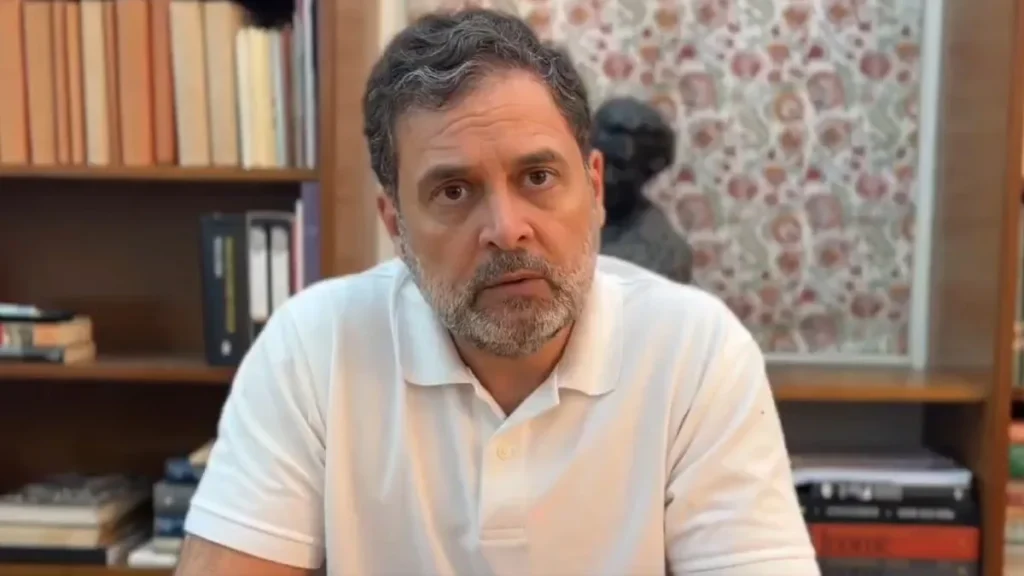
New Delhi: India’s Leader of Opposition Rahul Gandhi on Saturday sharply criticized the Narendra Modi-led government over the interim India–U.S. trade deal, alleging that it unfairly harms India’s cotton farmers and textile exporters while favoring foreign interests.
In a video statement posted on X, Gandhi accused the government of “spreading confusion” about tariff structures and claimed that Indian garment exports to the United States are being subjected to an 18 percent tariff, while neighboring Bangladesh enjoys zero tariffs on similar exports.
According to Gandhi, the tariff-free access granted to Bangladesh comes with a condition that its textile industry imports cotton from the U.S. “Bangladesh is getting a 0% tariff benefit on garment exports to the U.S.—the only condition is that they import American cotton,” he said.
Allegations of Unequal Terms
The Congress leader said that when he raised the issue in Parliament, a minister from the Bharatiya Janata Party-led government responded that India would also need to import American cotton to secure similar tariff concessions.
“Why was this fact hidden from the country until now?” Gandhi asked. “Is this really a choice, or is it a trap—one where there’s a well in front and a ditch behind?”
He warned that both options would hurt India’s core economic sectors. “If we import American cotton, our own farmers will be ruined. If we don’t, our textile industry will be pushed behind and destroyed,” Gandhi said.
Warning of Job Losses
Calling cotton farming and textiles the backbone of livelihoods in India, Gandhi said millions of families depend on these sectors. He also claimed that Bangladesh is signaling it may reduce or stop importing cotton from India altogether.
“An attack on cotton farmers and the textile sector means pushing millions into unemployment and economic crisis,” he said, adding that a government acting in the national interest would have negotiated a deal that protected both farmers and exporters.
Political Fallout
Gandhi accused Prime Minister Narendra Modi and his cabinet of agreeing to terms that could cause “deep and lasting damage” to Indian agriculture and manufacturing. He also sent a pointed message to U.S. President Donald Trump, saying India should engage in trade talks “as equals.”
The India–U.S. trade agreement, announced earlier this month, has been praised by the government as a major diplomatic and economic achievement. However, the Opposition has raised concerns about its impact on agriculture, textiles, and long-term strategic interests, setting the stage for a heated political debate in the weeks ahead.