

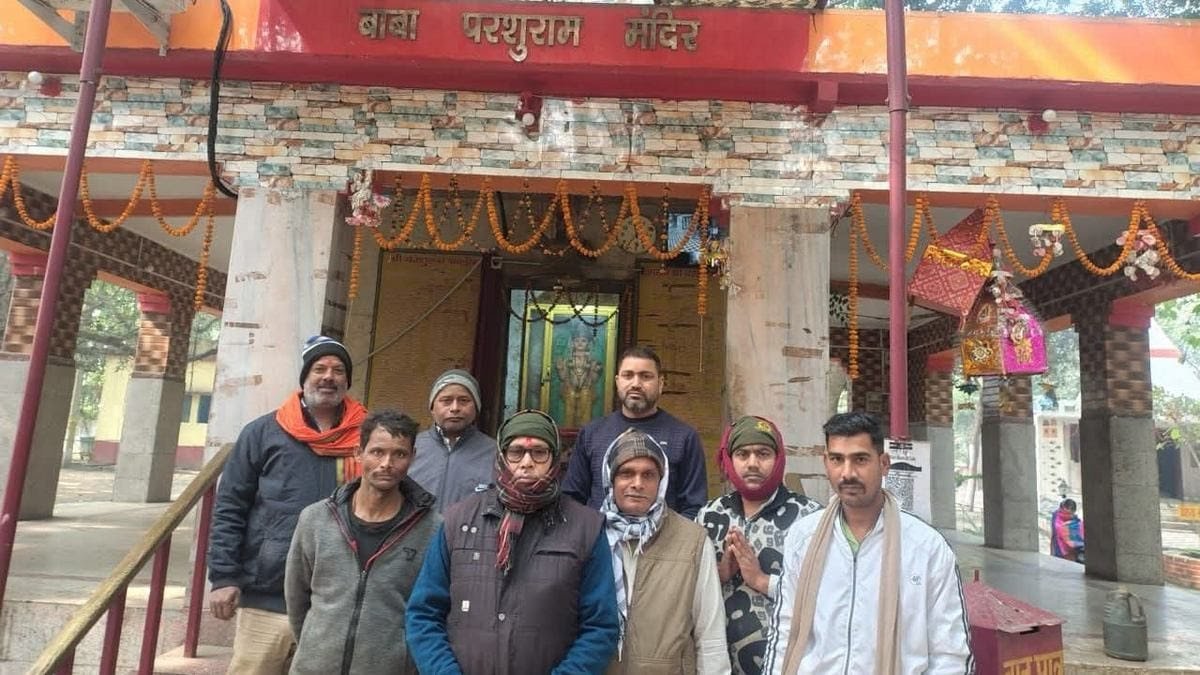

Begusarai/Patna | The S Bharat A new social churn is unfolding in Bihar, with its epicenter in Begusarai—once known as the “Leningrad of Bihar” for its Leftist politics and now a BJP stronghold. This time, the battle is not ideological or electoral, but existential. At stake is the identity of one of Bihar’s most politically influential castes: the Bhumihars.
The community is divided over a fundamental question—who are we?
For one section, the demand is clear: restore the official caste nomenclature “Bhumihar Brahmin,” a status granted during the British-era 1931 caste census. For another, the push is in the opposite direction—recognition as an Other Backward Class (OBC), citing present-day economic distress and the need for affirmative action.
A Fight Against Erasure
At village chaupals across Begusarai, chants of “Brahmin jaati bahaal karo” (restore Brahmin caste status) are growing louder. Community members argue that a 2015 report by Bihar’s Savarna Ayog, which used only the term “Bhumihar,” amounted to a clerical downgrade.
With the Centre announcing caste enumeration for the 2027 Census—the first nationwide caste count since Independence—Bhumihars fear that losing the “Brahmin” suffix now could permanently alter their social standing.
“We don’t want others defining us,” said Vikram Singh, a 26-year-old resident of Bihat village. “Our ancestors were scholars, warriors, and landowners. If this moment passes, our identity may be lost forever.”
Courts, Commissions, and Colonial Records
The issue reached the Patna High Court in 2023 after journalist Dhirendra Kumar challenged the state’s caste survey classification. The court directed him to approach the Savarna Ayog, which has since received hundreds of petitions—many backed by colonial-era land records listing caste as “Bhumihar Brahmin.”
The Ayog has forwarded its recommendations to the Bihar government, but a final decision is pending.
Beyond symbolism, land ownership is a major concern. Bihar’s digitized land records currently list caste as “Bhumihar,” raising fears of legal complications in property disputes—already a major source of conflict in the state.
The Counter-Movement: Demand for OBC Status
While elite groups campaign for Brahmin restoration, a growing faction within the community argues that clinging to past privilege ignores current realities.
According to Bihar’s 2023 caste survey, 27.58 percent of Bhumihars earn less than ₹6,000 a month, placing them among the most economically distressed groups after SCs, STs, and extremely backward classes.
“This image of the Bhumihar as a powerful zamindar no longer reflects the truth,” said Alok Kumar Singh, founder of the Bhumihar OBC Sangharsh Morcha. “Land has fragmented, agriculture is no longer profitable, and young people need jobs—not pride.”
The demand for OBC status, however, faces stiff resistance within the community, where social prestige still outweighs the promise of reservations.
Pride Politics in the Digital Age
From grand caste gatherings in Delhi and Ghaziabad to Instagram reels flaunting SUVs and slogans of dominance, Bhumihar identity assertion has taken on a new, aggressive digital form. Bhojpuri songs celebrating Bhumihar power and social media posts equating caste with royalty reflect a defiant rejection of “backward” labels.
Yet sociologists say this tension is not new.
“The colonial census turned caste into a political battlefield,” said Aniket Nandan, a sociologist. “Bhumihars were among the earliest groups to mobilize upward caste claims. Today, the same census logic is producing anxiety and fragmentation.”
A Community at the Crossroads
As Bihar prepares for another historic caste enumeration, the Bhumihars find themselves torn between ancestral prestige and present-day precarity, between status and survival.
Whether the state recognizes them as Brahmins, OBCs, or something in between, the debate reveals a deeper truth: in modern India, caste is no longer just about hierarchy—it is about negotiating relevance in a rapidly changing social order.
And for Bihar’s Bhumihars, the question remains unresolved: Who are we, really?