
Mumbai: In a major scientific and ethical breakthrough, a pilot project supported by Coal India and developed at IIT Bombay has successfully demonstrated a non-violent method of silk production that allows silkworms to complete their natural life cycle.
The project, titled ‘Jeevodaya’, has been developed by IIT Bombay’s Centre for Technology Alternatives for Rural Areas (C-TARA) with sustained support from Coal India Limited under its Corporate Social Responsibility (CSR) initiative. After three years of continuous research and experimentation, the team has created a silk-making technique that does not require killing silkworms—a practice traditionally considered unavoidable in silk production.
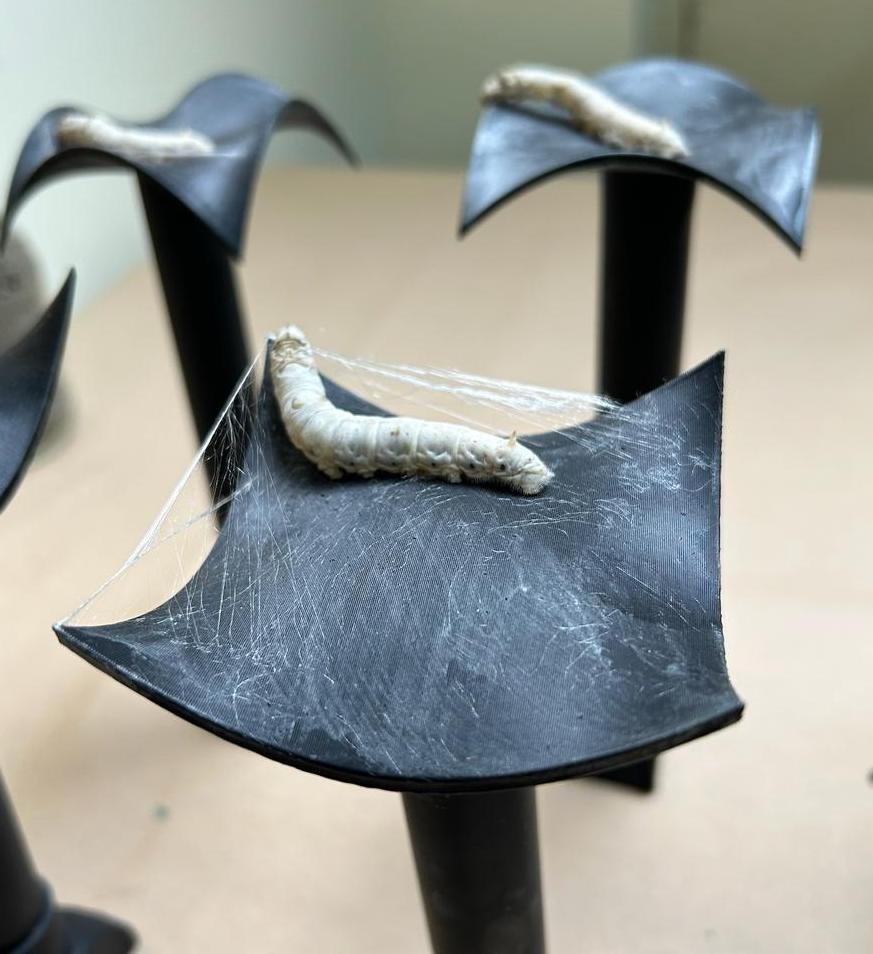
Conventional silk extraction involves boiling silkworm cocoons, a process that results in the death of millions of silkworms. Challenging this centuries-old method, researchers under the Jeevodaya project have successfully trained silkworms to lay silk threads on flat surfaces instead of spinning cocoons around themselves. This innovation enables the worms to later transform into moths and complete their life cycle naturally.
The ethically produced material has been named ‘Jeevodaya Silk’, reflecting its humane philosophy. The project draws inspiration from the ancient Indian ideal, “Mā kaścid duḥkhabhāg bhavet”—meaning “may no one suffer.”
Officials involved in the initiative said the breakthrough represents a rare convergence of scientific innovation, compassion, and sustainability. Beyond its ethical value, the technology also holds promise for improving rural livelihoods by offering silk farmers a sustainable and potentially more inclusive production model.
Coal India’s consistent CSR support played a crucial role in taking the project from concept to implementation. With the successful completion of the pilot phase, researchers believe Jeevodaya Silk has strong potential for wider adoption, paving the way for a more humane and sustainable future for the silk industry.