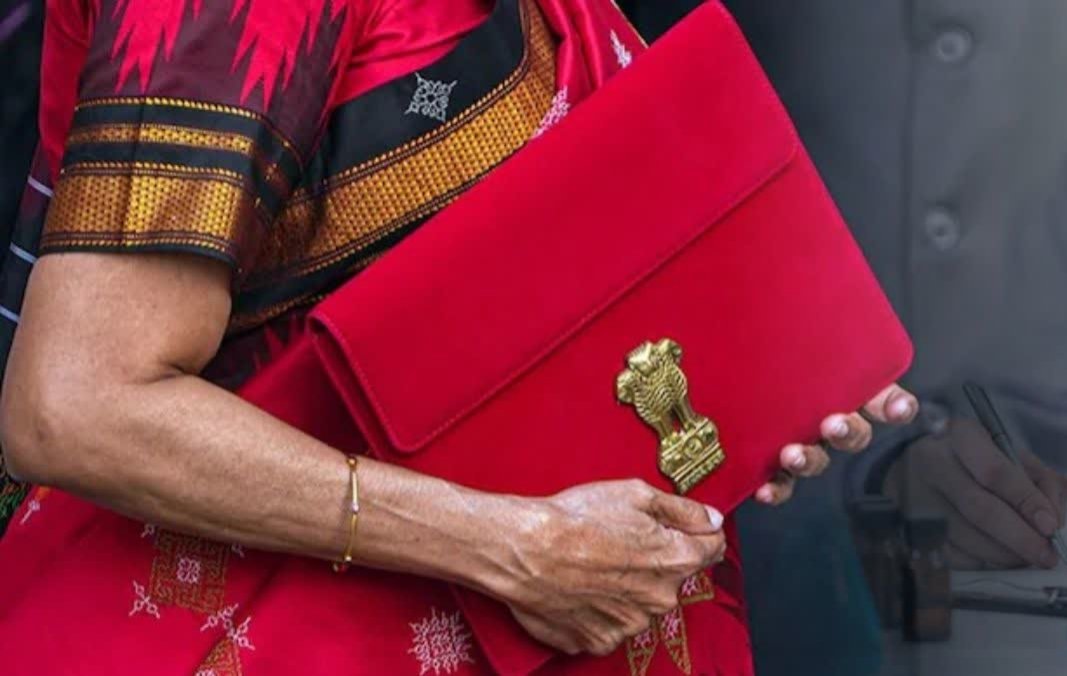
Hyderabad: As Finance Minister Nirmala Sitharaman presents her ninth Union Budget today, bringing her close to Morarji Desai’s record of presenting 10 budgets, attention has once again turned to some of the lesser-known but dramatic chapters in India’s budgetary history. One such episode dates back to 1950—just three years after Independence—when a budget leak triggered a political storm and led to the resignation of the then finance minister.
In 1950, India was governed by the Congress party, with Prime Minister Jawaharlal Nehru at the helm and John Mathai serving as the Union Finance Minister. Mathai was scheduled to present the Union Budget on February 28. At the time, budget documents had to be printed well in advance under strict secrecy.
Printing at Rashtrapati Bhavan
Back then, the printing of confidential government documents, including the Union Budget, was carried out at the press inside Rashtrapati Bhavan (the President’s House). The facility was considered highly secure, and the entire process was conducted under tight confidentiality.
However, ahead of the 1950 budget presentation, several crucial budget pages being printed at the Rashtrapati Bhavan press were leaked. The disclosure raised fears that sensitive financial information could be misused, particularly in markets and political circles.
Political Fallout and Embarrassment
The leak caused a major embarrassment for the government. It was the first such incident since Independence and led to widespread criticism. As a result, printing of the Union Budget was immediately removed from Rashtrapati Bhavan and shifted to a government press on Mint Road.
Despite the fact that the 1950 budget was India’s first surplus budget—with revenues of ₹347.5 crore against expenditures of ₹337.88 crore—the achievement was overshadowed by the controversy. The political pressure eventually forced Finance Minister John Mathai to resign.
Tighter Rules After the Leak
Following the incident, the government introduced stringent safeguards to ensure that such a breach would never happen again. A “lock-in period” rule was enforced, under which officials involved in budget preparation and printing were isolated to prevent any information leaks. Printing protocols were tightened, access was restricted, and security measures were significantly upgraded.
In 1980, to further strengthen confidentiality, budget printing was shifted to the basement of North Block, where it continues to take place even today. As part of these measures, officials involved in budget preparation remain cut off from the outside world, with personal phones confiscated until the budget is presented. The tradition of the “halwa ceremony,” held shortly before the budget, marks the start of this lock-in period.
An Earlier Leak in 1947
Interestingly, media reports have also suggested that limited budget information may have leaked in 1947, when R.K. Shanmukham Chetty presented independent India’s first budget. However, that episode did not attract as much attention as the 1950 leak.
Since the introduction of strict confidentiality rules after 1950, there has been no major leak of Union Budget documents—making the incident a turning point in the history of India’s budget-making process.