
Every year, on the Friday following Thanksgiving in the United States, millions of shoppers across the world rush to secure discounts on everything from electronics and clothing to household appliances and luxury goods. Retailers roll out elaborate promotional campaigns, online marketplaces announce limited-period offers, and consumers begin preparing their shopping lists weeks in advance. In 2026, Black Friday fell on November 27.
Although Black Friday is now synonymous with consumerism and discounted merchandise, its origins had little to do with bargain hunting or corporate profitability. The term has historically been associated with financial turmoil, workplace absenteeism and the difficulties faced by police officers managing overcrowded streets. Its transformation into a global shopping phenomenon is a fascinating chapter in the history of modern retail.
𝗔 𝗳𝗶𝗻𝗮𝗻𝗰𝗶𝗮𝗹 𝗰𝗿𝗶𝘀𝗶𝘀 𝗶𝗻 𝟭𝟴𝟲𝟵
One of the earliest prominent uses of the term Black Friday in American financial history dates back to September 24, 1869, when the United States gold market witnessed a dramatic collapse.
Two influential American financiers, Jay Gould and James Fisk, attempted to gain control of the gold market by accumulating large quantities of the precious metal to artificially inflate its price. Their speculative operation unravelled when the federal government intervened by releasing gold into the market, triggering a sharp decline in prices.
The resulting financial panic affected investors, businesses and agricultural producers. The day became known as Black Friday, although this episode had no direct connection with the shopping tradition that emerged several decades later.
𝗧𝗵𝗲 𝗧𝗵𝗮𝗻𝗸𝘀𝗴𝗶𝘃𝗶𝗻𝗴 𝗰𝗼𝗻𝗻𝗲𝗰𝘁𝗶𝗼𝗻
The foundations of Black Friday as a shopping event can be traced to the emergence of the Christmas shopping season in the United States during the late 19th and early 20th centuries.
Department stores increasingly recognised Thanksgiving as an opportunity to encourage consumers to begin purchasing Christmas gifts. Festive window displays, elaborate decorations and public celebrations became important instruments of retail marketing.
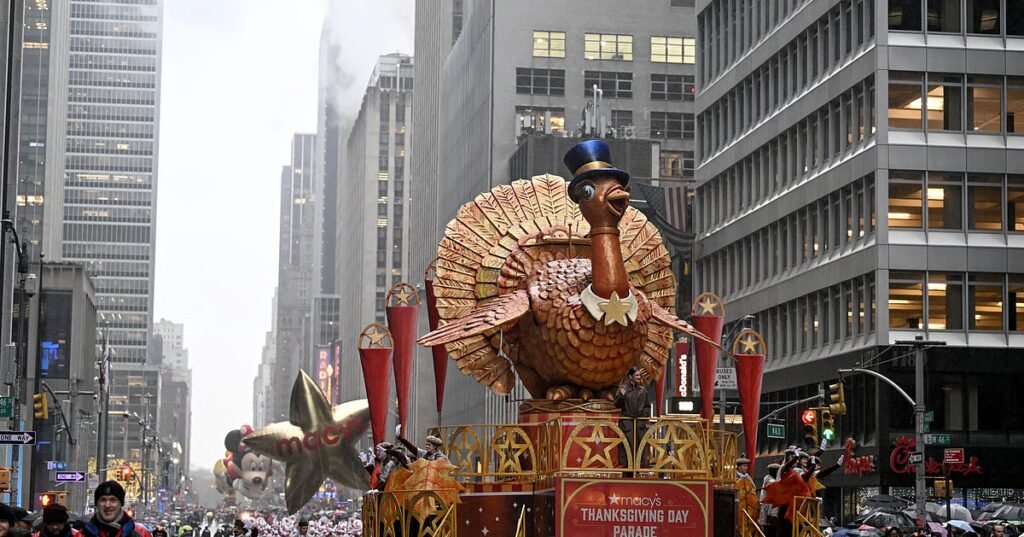
In 1924, American department store Macy’s organised its first Thanksgiving Day parade in New York. Originally promoted as a Christmas parade, the event featured animals, performers and Santa Claus, signalling the beginning of the festive shopping season.
The growing economic significance of Christmas shopping even influenced the American holiday calendar. In 1939, amid the economic difficulties of the Great Depression, President Franklin D Roosevelt moved Thanksgiving a week earlier, hoping to provide retailers with a longer shopping season and stimulate consumer spending.
The decision generated considerable controversy, with different states observing Thanksgiving on different dates. In 1941, the US Congress settled the matter by establishing the fourth Thursday of November as Thanksgiving Day, effectively fixing the calendar around which Black Friday would subsequently develop.
𝗪𝗵𝘆 𝗶𝘁 𝘄𝗮𝘀 𝗰𝗮𝗹𝗹𝗲𝗱 𝗕𝗹𝗮𝗰𝗸 𝗙𝗿𝗶𝗱𝗮𝘆
According to research by the Oxford English Dictionary, the earliest documented association of Black Friday with the day following Thanksgiving appeared in November 1951 in the American trade publication Factory Management and Maintenance. The expression referred to employees calling in sick after Thanksgiving to enjoy an extended four-day weekend, leaving factories struggling with absenteeism.
The shopping-related meaning, however, emerged in Philadelphia during the 1950s and early 1960s. The city traditionally attracted large crowds ahead of the annual Army-Navy football game, which coincided with the Thanksgiving weekend. Thousands of visitors descended upon Philadelphia, many combining their visits with Christmas shopping.
The resulting traffic congestion, overcrowded pavements and incidents of shoplifting placed considerable pressure on local police officers. For the police, the day meant extended working hours, difficult crowd management and little opportunity to enjoy the holiday. Officers began referring to it as Black Friday.
By 1961, the expression had become sufficiently established for local merchants to attempt to rebrand the occasion as Big Friday, hoping to eliminate its negative associations. The campaign failed, but retailers would eventually discover a way to turn the unfavourable name into a commercial advantage.
𝗙𝗿𝗼𝗺 𝗿𝗲𝗱 𝗶𝗻𝗸 𝘁𝗼 𝗯𝗹𝗮𝗰𝗸
One of the most widely circulated explanations of Black Friday is that businesses traditionally operated at a loss for much of the year before becoming profitable during the Christmas shopping season.
Under conventional bookkeeping practices, accountants used red ink to record losses and black ink to record profits. According to this explanation, the surge in sales following Thanksgiving helped businesses move from the red into the black.
However, historical evidence suggests that this interpretation emerged considerably later. Researchers have traced an early documented version of the accounting explanation to a 1981 newspaper article in Philadelphia.
During the 1980s, the retail industry increasingly embraced this more favourable interpretation, transforming what had once been an expression of frustration into a celebration of commercial prosperity. There is no evidence, however, that retailers universally became profitable on this particular day.
Another widely circulated claim on social media connects Black Friday with the discounted sale of enslaved people in the United States. Historians and fact-checkers have found no evidence supporting this claim.
𝗧𝗵𝗲 𝗿𝗶𝘀𝗲 𝗼𝗳 𝘁𝗵𝗲 𝘀𝗵𝗼𝗽𝗽𝗶𝗻𝗴 𝗳𝗿𝗲𝗻𝘇𝘆
During the 1980s and 1990s, competition among American retailers increasingly intensified. Department stores and supermarket chains began offering substantial discounts on popular merchandise, particularly televisions, electronic appliances, toys and clothing.
Retailers introduced limited-stock promotional offers, popularly known as doorbuster deals, designed to attract customers into stores as early as possible. Opening hours gradually shifted from the morning to midnight, while shoppers began gathering outside stores hours before businesses opened.
The spectacle of customers camping outside shopping centres and rushing through store entrances became a defining image of American consumer culture.
Interestingly, Black Friday was not historically the busiest shopping day of the year. For much of the 20th century, consumers concentrated their Christmas purchases closer to December 25. It was sustained promotional activity and changing shopping habits that helped establish Black Friday as a major retail occasion.
𝗧𝗵𝗲 𝗯𝗶𝗿𝘁𝗵 𝗼𝗳 𝗖𝘆𝗯𝗲𝗿 𝗠𝗼𝗻𝗱𝗮𝘆
The expansion of internet connectivity and online retail introduced another significant chapter in Black Friday’s evolution.
In 2005, Shop.org, a division of the US National Retail Federation, introduced the term Cyber Monday after observing a recurring increase in online purchases on the Monday following Thanksgiving.
At the time, many Americans had access to faster internet connections at their workplaces than at home. Returning to their offices after the Thanksgiving weekend provided an opportunity to browse products and complete purchases online.
What began as a marketing expression eventually developed into a major shopping event in its own right. The distinction between Black Friday and Cyber Monday has since become increasingly blurred, with both physical and online retailers extending promotional campaigns across several days or even weeks.
𝗔 𝗺𝘂𝗹𝘁𝗶𝗯𝗶𝗹𝗹𝗶𝗼𝗻-𝗱𝗼𝗹𝗹𝗮𝗿 𝗽𝗵𝗲𝗻𝗼𝗺𝗲𝗻𝗼𝗻
The scale of contemporary Black Friday shopping demonstrates how dramatically the occasion has evolved.
According to Adobe Analytics, American consumers spent $11.8 billion online on Black Friday in 2025, representing an increase of 9.1 per cent over the previous year. Cyber Monday generated another $14.25 billion in online expenditure.
The five-day shopping period beginning on Thanksgiving and ending on Cyber Monday generated $44.2 billion in US online sales in 2025, an annual increase of 7.7 per cent.
Black Friday online expenditure in the United States stood at $9 billion in 2020, $8.9 billion in 2021, $9.12 billion in 2022, $9.8 billion in 2023 and $10.8 billion in 2024, before reaching $11.8 billion in 2025. These figures exclude purchases made at physical retail stores.
Shopping habits are also changing with the arrival of artificial intelligence. In 2025, traffic driven by AI tools to retail websites increased by 805 per cent compared with the previous Black Friday, reflecting the growing use of technology to discover products and compare prices.
𝗛𝗼𝘄 𝗕𝗹𝗮𝗰𝗸 𝗙𝗿𝗶𝗱𝗮𝘆 𝗿𝗲𝗮𝗰𝗵𝗲𝗱 𝗜𝗻𝗱𝗶𝗮
Unlike the United States, India has no traditional connection with Thanksgiving. Its major shopping seasons have historically revolved around festivals such as Diwali, Dussehra, Durga Puja and Eid, besides the wedding season.
However, the expansion of international retail brands, global e-commerce platforms and digital marketing has helped introduce Black Friday to Indian consumers.
For retailers in India, Black Friday provides an additional commercial opportunity between the traditional festive shopping season and the year-end holidays. Fashion, beauty, electronics and lifestyle brands increasingly use the occasion to stimulate demand through promotional campaigns.
Its adoption demonstrates how globalisation has enabled commercial traditions to travel across geographical and cultural boundaries, even when their original social or religious context is absent.
𝗧𝗵𝗲 𝗽𝘀𝘆𝗰𝗵𝗼𝗹𝗼𝗴𝘆 𝗼𝗳 𝗮 𝗯𝗮𝗿𝗴𝗮𝗶𝗻
The success of Black Friday rests not merely on discounted prices but also on consumer psychology. Limited-time offers, countdown timers, exclusive deals and warnings about diminishing stocks create a sense of urgency that encourages immediate purchases.
The fear of missing out, combined with the perception of scarcity, can influence consumers to purchase products they had not originally intended to buy. Critics have also raised concerns about excessive consumption, misleading discounts, packaging waste and the environmental consequences of increasingly frequent shopping festivals.
More than six decades after Philadelphia police used the expression to describe a particularly difficult working day, Black Friday has become an institution of global consumer culture. Its evolution from a local administrative headache into a multibillion-dollar commercial event illustrates the extraordinary ability of the retail industry to transform language, popular behaviour and even an ordinary date on the calendar into an economic opportunity.