
BMW Group’s British luxury car brand Mini expects its India sales to grow by over 70 per cent in calendar year 2026, driven by the localisation of its petrol-powered Countryman C, network expansion, and new product launches. The company expects electric vehicles (EVs) to initially account for 15-20 per cent of its India sales.
Mini on Friday launched its new-generation all-electric Cooper SE at ₹53.9 lakh, along with three special editions developed in collaboration with British fashion designer Sir Paul Smith, priced between ₹55.75 lakh and ₹61.5 lakh (ex-showroom).
Having sold around 730 cars last year, Mini could cross 1,240 units in 2026. Its sales grew 70 per cent year-on-year (Y-o-Y) to 504 units in the first half of the calendar year.
Hardeep Singh Brar, president and chief executive officer (CEO) of BMW Group India, told Business Standard that Mini could end the year with growth slightly higher than 70 per cent, aided by the availability of new models in December, traditionally a strong month for luxury car sales.
Globally, fully electric cars accounted for 37.2 per cent of Mini’s sales of 2.2 lakh units during January-September 2026, according to BMW Group’s quarterly statement. In India, EVs currently account for around 26 per cent of BMW’s sales.
“I think it’s too early because we have just announced the prices today. But I think, to begin with, about 15–20 per cent,” Brar said, when asked about the potential share of EVs in Mini’s India sales.
While Mini customers have traditionally preferred petrol-powered cars for their driving characteristics, the company is now seeing a shift towards electric vehicles, he said.
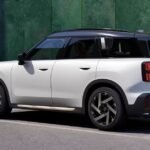
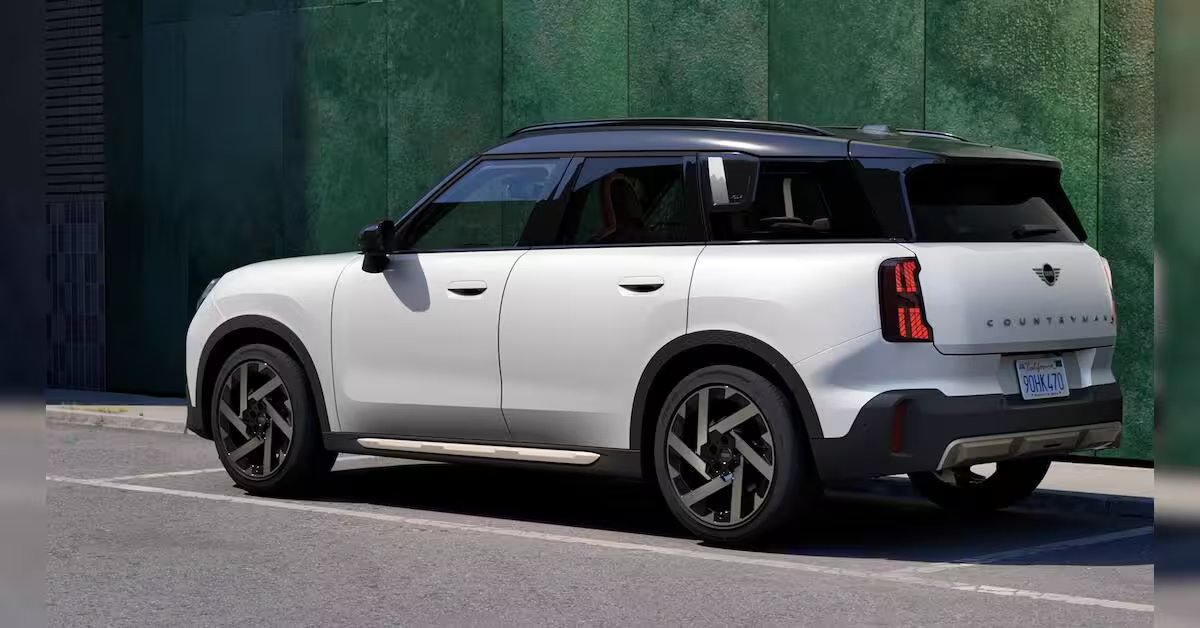
Local manufacturing of the petrol-powered Countryman C, launched at ₹47.5 lakh earlier this year, has helped drive volumes. The company has no immediate plans to localise its electric models.
Brar said the anticipated benefits of the India-United Kingdom (UK) free trade agreement (FTA) had already been factored into the pricing of the relevant UK-sourced models, alongside adverse foreign exchange movements and commodity costs.
Mini has also expanded its presence from eight cities last year to around 19 cities, leveraging BMW’s existing dealership infrastructure. While there are no immediate plans for further network expansion next year, the company will evaluate demand from smaller markets.
India remains a relatively small market for Mini globally. Brar said the brand had until recently operated with a limited product portfolio in the country and expects a wider model range to drive volumes in the coming years.
Around 25-30 per cent of Mini’s customers in India are first-time luxury car buyers, while the majority already own luxury vehicles and buy a Mini as an additional car. Purchases are often occasion-driven, ranging from anniversary and graduation gifts to additions to existing luxury car collections, Brar said.
The new electric Cooper SE, imported as a completely built-up unit (CBU), comes with a 54.2 kWh battery offering a range of 402 km under the Worldwide Harmonised Light Vehicles Test Procedure (WLTP), against the 270 km offered by its predecessor. Deliveries will begin immediately.
The Paul Smith editions are available across three models — the petrol-powered Cooper S at ₹55.75 lakh, the electric Cooper SE at ₹56.4 lakh, and the Convertible at ₹61.5 lakh. The special editions feature exclusive exterior colours and interior styling inspired by the British designer.