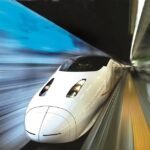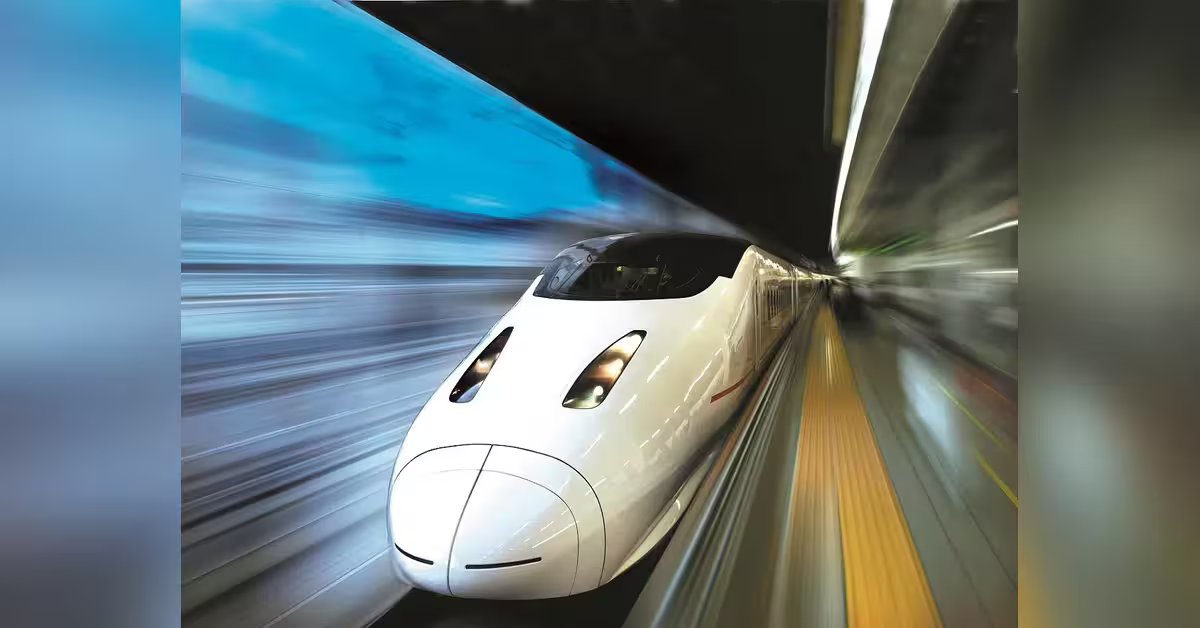

India’s first bullet train may start its trial runs by May 2027 on a small part of the 508-kilometre-long Mumbai-Ahmedabad stretch, a top government official said on Monday.
This comes as a nearly 50-km section between Billimora and Surat in Gujarat has been fully electrified, and the tracks will be ready for trial runs by January after the signalling work is completed.
“The train will be available for trial runs by April or May,” he said.
The trainsets are being developed by state-owned manufacturer BEML at its facility in Bengaluru. The B28 train will be capable of running at speeds of up to 280 km per hour.
The tracks are currently being equipped with the Level-2 European Train Control System (ETCS) by a joint venture between German manufacturer Siemens AG and Indian developer DRA Infracon, which secured the contract for around Rs 4,100 crore.
The government has a target of flagging off the high-speed rail corridor by August 2027.
The project has been mired in controversy over delays and cost escalation, which Vaishnaw has previously attributed to political issues, particularly regarding land acquisition in Maharashtra.
The project’s cost has risen to nearly Rs 2 trillion, almost double the initial cost estimate of Rs 1.08 trillion, while the initial deadline of 2022 was missed nearly five years ago.
Concerns over India-Japan coordination had also begun surfacing after a former minister in the Japanese government blamed India for the delays.
Freight Reforms Bearing Fruit
According to ministry officials, freight reforms introduced by the national transporter, including containerisation of commodities and rationalisation of freight rates, have led to an increase in volumes of between 10 and 70 per cent from April to October.
“This addition has resulted in an incremental revenue of Rs 1078 crore in commodity classes where reforms were undertaken,” said the official.
Railways, which has historically been overly dependent on coal and iron ore traffic (60 per cent of freight volumes), is trying to capture the transportation market in other commodities. So far, it has simplified regulations and moved away from slab-based rate systems in key commodities like salt, foodgrains, fertilisers, cement and containers.
“Between sub-classes of major commodities, around 120 classes have been the subject of reforms, while another 100 will be covered soon,” a second official said.
The official also added that passenger volumes would recover to pre-Covid levels for the first time since the pandemic in 2026-27. A total of 2,500 additional train services have been introduced since the Covid-19 pandemic, and passenger volumes are likely to cross 8 billion this financial year.
Of the 70 divisions, 38 have now begun reporting punctuality of over 95 per cent, the official added.