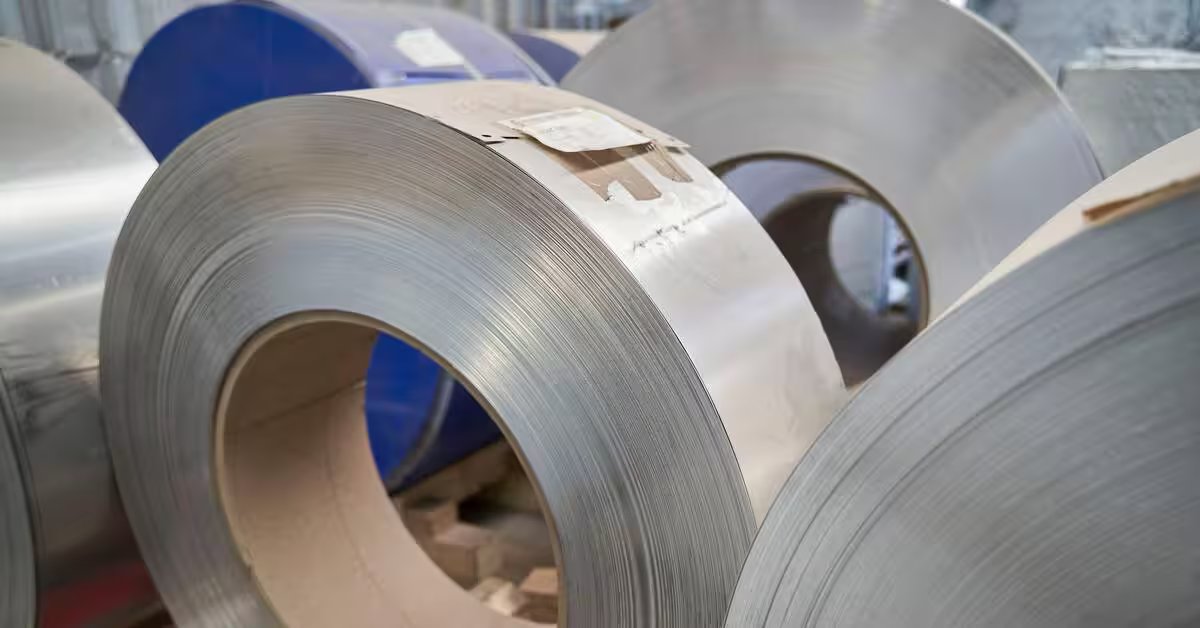

Ahead of the Union budget for 2027-28, aluminium product manufacturers have urged the government to allow duty-free imports of raw metal to boost domestic consumption and enhance the competitiveness of small enterprises.
Manufacturers’ body ALEMAI has written a letter to Finance Minister Nirmala Sitharaman, seeking to bring down the basic customs duty on primary aluminium to zero, arguing that the current 7.5 per cent levy, which translates into an effective import duty of 8.25 per cent including social welfare surcharge, is hurting MSMEs (micro, small and medium enterprises) and domestic value addition.
“We respectfully request the government in the forthcoming Union Budget…the basic customs duty on primary aluminium under tariff heading 7601 (be reduced) from 7.5 per cent to 0 per cent,” Aluminium Extrusion Manufacturers Association of India (ALEMAI) said in the letter.
The measure, it said, can help strengthen the competitiveness of the country’s downstream manufacturing ecosystem, encourage greater domestic value addition, support MSMEs, improve export competitiveness, and expand aluminium consumption across the economy.
India has established a globally competitive primary aluminium industry and has significant potential to expand domestic aluminium consumption. However, the downstream aluminium sector, comprising a large number of MSMEs, continues to face a structural cost disadvantage due to the prevailing tariff structure on primary aluminium, the principal raw material, it said.
Domestic primary aluminium prices are influenced by international prices and import-parity considerations. The customs duty applicable to imported primary aluminium consequently forms an important component of the domestic price benchmark, it said, adding that the issue has also been recognised by the Ministry of Mines in its Vision Document on Aluminium Sector 2025.
The document estimates that in 2022, India’s downstream sector paid approximately USD 470 million more than necessary to domestic primary aluminium producers on account of import-parity pricing. The document notes that this additional expenditure came at the expense of the downstream sector’s growth and investment.
The impact is particularly significant for MSMEs, for whom raw material prices constitute a substantial proportion of overall manufacturing costs. Higher input costs directly affect margins, capacity utilisation, investment decisions and the ability of Indian manufacturers to compete in both domestic and international markets.
Besides, downstream manufacturers increasingly face competition from finished and semi-finished products imported at preferential or zero-duty rates under India’s free trade agreements. This creates an asymmetry and an inverted duty structure in which Indian manufacturers face higher input costs while competing against imported products that enter the country at lower or zero tariff rates.
Rationalising the customs duty on primary aluminium would help address this structural disadvantage and enable greater value addition within India. The proposed measure would reduce the input cost burden on downstream aluminium manufacturers, improve the competitiveness of MSMEs in export markets, and strengthen domestic manufacturing and value addition, it said.