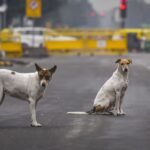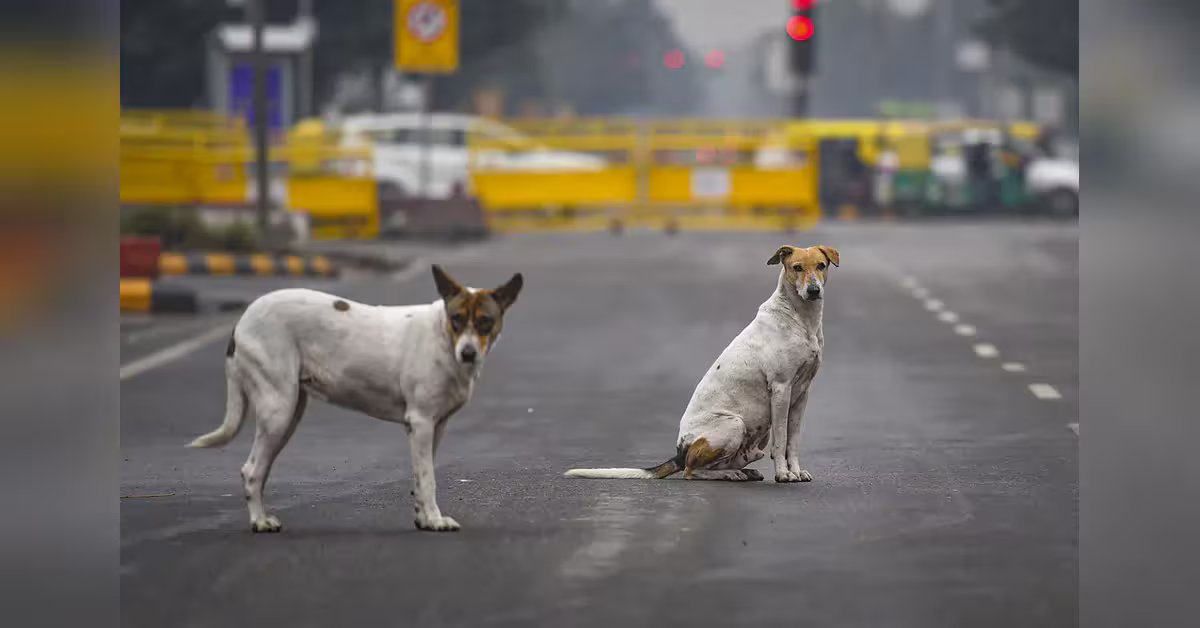

The Supreme Court has asked the National Highways Authority of India (NHAI) to shelter stray cattle near toll plazas after the authority argued that the responsibility for removing and sheltering animals lies with state governments and local authorities, which face their own practical difficulties.
Appearing before a Bench on Tuesday, Solicitor General Tushar Mehta said NHAI lacked the statutory mandate to acquire land for shelters and did not have sufficient funds to cover the cost, which was estimated at around ₹5,000 crore.
The court questioned this position, suggesting that NHAI contribute towards shelters through its corporate social responsibility (CSR) funds.
The matter came to light after NHAI sought clarification of the Supreme Court’s earlier directions on stray animals on highways.
Who is responsible for keeping national highways free of stray animals?
Under the National Highways Authority of India Act, 1988, NHAI is authorised to develop, maintain and manage national highways, while local bodies usually handle stray animal management.
The Supreme Court, however, has linked the presence of animals on highways to road safety.
In its May 19 order, the apex court rejected NHAI’s argument that it had only a limited role in coordinating with state governments.
It held that maintaining safe and obstruction-free highways also required addressing hazards caused by stray cattle and other animals.
“The safety of motorists and the welfare of animals should not become competing responsibilities,” said K Sai Teja, advocate, Supreme Court of India.
NHAI, state governments and local authorities must work together, with clearly defined duties, so that neither road users nor stray animals suffer because government agencies cannot agree on who should act, Teja added.
Why does NHAI say it lacks the powers and funds to remove animals?
NHAI contended that its primary statutory functions are restricted to highway construction, maintenance and traffic management.
It further argued that it lacks the local administrative machinery available to municipal bodies to capture animals, provide veterinary arrangements or operate shelters.
“It can be observed that this list of functions includes only the road and the people using it. Nothing in it covers feeding, treating or housing animals. However, since welfare and sheltering of animals is allocated in the state list under the constitution, capturing and sheltering stray animals on highways would primarily belong to state/local governments,” said Monika Tanna, Partner, Singhania & Co.
However, the court’s May judgment observed that NHAI had the administrative, financial and logistical capacity to arrange specialised vehicles, holding facilities and partnerships with animal welfare organisations and gaushalas.
What has the Supreme Court directed NHAI and state governments to do?
In its May order, the Supreme Court directed NHAI to coordinate with state governments and Union Territories to put in place a comprehensive, time-bound mechanism to deal with stray cattle and other animals on national highways and national expressways.
The directions include deploying specialised vehicles to safely relocate animals, creating or identifying holding and shelter facilities, and entering into arrangements with gaushalas and animal welfare organisations.
State governments and Union Territories have separately been directed to strengthen shelter infrastructure, veterinary services and other facilities required for animal management.
The court has also placed responsibility for monitoring compliance on jurisdictional High Courts, which can take action against authorities for continued failure to implement its directions.
Who can be held liable if stray animals cause a highway accident?
Liability depends on the circumstances of the accident and whether negligence can be established.
For NHAI, the Supreme Court’s directions strengthen its responsibility to address such risks on national highways. However, the mere presence of an animal on a road does not automatically establish negligence or make a particular authority liable.
“The presence of an animal on the road will not by itself establish liability. A claimant must show a duty owed by the particular authority, a breach of that duty, and a causal link to the death,” said Akash Lamba, counsel, SKV Law Offices.
NHAI’s duty is attached to the stretch it manages and to any concessionaire it has engaged. The state’s and municipality’s duties relate to cattle control under their respective laws, and liability can also depend on whether the road falls within their remit, Lamba added.
Can accident victims seek compensation from NHAI or other authorities?
Yes, accident victims can seek legal remedies, but compensation is not automatic. Liability must be established through due process and depends on the circumstances of each case.
“Where the occurrence is not in dispute, a writ for compensation as a public law remedy is available. In Nisha v. Municipal Council Sangrur, 2026 the Supreme Court declined to send a family to a civil suit after years of delay and awarded Rs 15 lakh on the facts and suggested that States create compensation mechanisms,” Lamba said.
Section 166 of the Motor Vehicles Act, 1988, provides that an injured person or the legal representatives of someone killed in a motor vehicle accident can approach the Motor Accident Claims Tribunal (MACT) for compensation.
The tribunal determines liability and compensation based on the evidence.