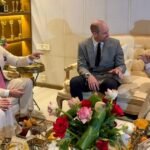

The government of Jammu and Kashmir is set to implement a 25% quota for children hailing from economically disadvantaged backgrounds and marginalised communities in private educational institutions throughout the Union Territory, Education Minister Shamim Firdous said on Tuesday, November 17.
As reported by PTI, this reservation will be established in accordance with Section 12(1)(c) of the Right to Education (RTE) Act. This provision mandates that private schools allocate 25 per cent of their entry-level seats for children who come from eligible EWS and underprivileged families.
The rules governing the implementation of the provision are in the final stages of notification and will be issued shortly, the minister said during a meeting with senior School Education Department officials, representatives of private school associations, parents’ groups and civil society members.
What is the aim of the 25% RTE seats in J&K?
The initiative aims to improve access to private school education for children from economically weaker families and disadvantaged communities, allowing them to study alongside children from other backgrounds.
The government is expected to provide financial assistance to schools for educating eligible students free of cost. The reimbursement will be made in accordance with the applicable guidelines and procedures.
J&K private schools to follow JKBOSE textbooks
The meeting also addressed complaints regarding textbooks prescribed by private schools. It was decided that private schools associated with the Jammu and Kashmir Board of School Education (JKBOSE) are required to follow the prescribed syllabus and use textbooks aligned with the NCERT syllabus.
Firdous said schools should not burden students with unnecessary additional or supplementary books, stressing that the National Education Policy (NEP) 2020 advocates a flexible, balanced and child-centred approach to learning.
J&K rules for school uniforms
Concerning school uniforms, notebooks, and various educational materials, the minister stated that schools cannot force parents to acquire these items exclusively from chosen stores or sellers on school premises. Parents should be able to choose where to buy uniforms and other necessary supplies without any limitations.