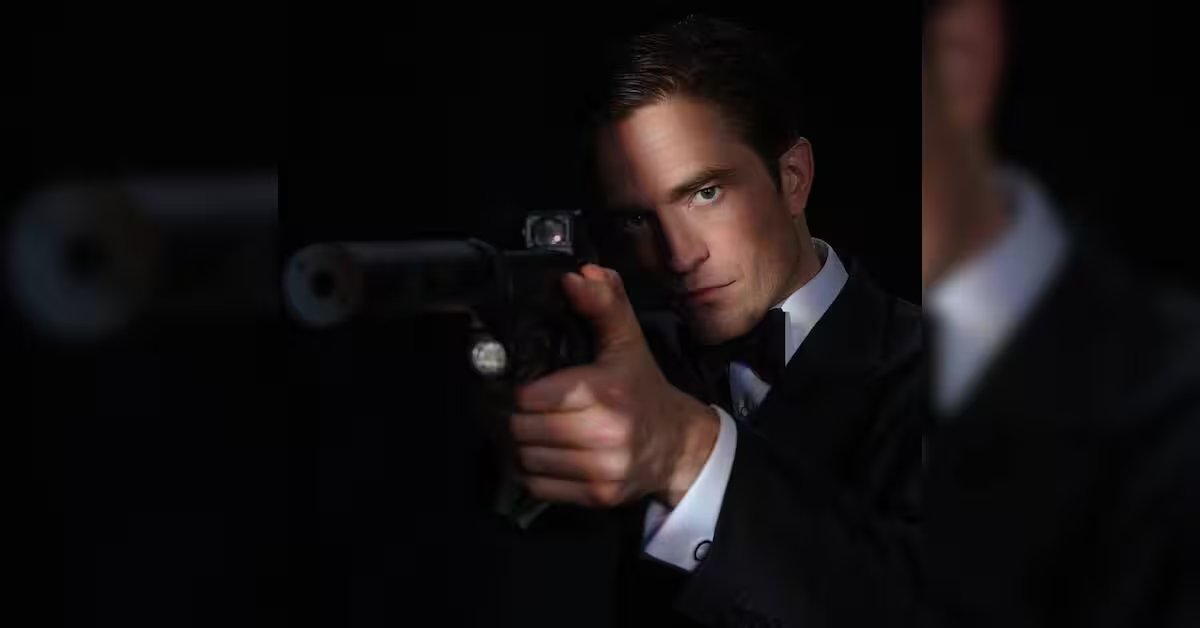

By Calum Marsh
Now that Robert Pattinson has been announced as the next James Bond, fans of the franchise will no doubt weigh in with their verdicts, sizing up the actor and drawing firm conclusions before he even has the chance to make a first impression as 007.
It won’t be the first time. Opining about Bond casting is an age-old pastime, and each actor who has played the world-famous British spy has faced skepticism upon being thrust into this particular spotlight.
And some Bond traditionalists are also wary over what direction the films, based on the novels by Ian Fleming, will take now that the franchise is controlled by Amazon MGM, which has said that it plans to take the series in new paths.
Sean Connery
Before Fleming’s novel “Dr. No” was adapted for the screen, a London newspaper conducted its own search for the ideal actor to play the super spy, The New York Times recalled in a 1987 lookback for the film’s 25th anniversary. “A thousand readers sent suggestions, including a man named, appropriately enough, James Bond,” the article noted.
Sean Connery, the producers’ choice for the role, won Fleming’s approval, too: He described Connery, according to The Times, as “an absolute corker, a 30-year-old Shakespearean actor, ex-Navy boxing champion, etc., and even intelligent.”
George Lazenby
Lazenby, who appeared in only one Bond adventure — “On Her Majesty’s Secret Service” (1969) — rarely gets much of a second thought.
In his review, the critic A.H. Weiler was immediately dismissive of Lazenby, a former model and car salesman who was new to film acting. “He’s tall, dark, handsome and has a dimpled chin,” Weiler wrote. “But Mr. Lazenby, if not a spurious Bond, is merely a casual, pleasant, satisfactory replacement.”
Roger Moore
“The Saint is taking over as 007,” James F. Clarity proclaimed in The Times when it was announced that Moore, the star of TV’s “The Saint,” had been named Connery’s successor. (Connery, the piece added, had abandoned the part after it “made him rich and bored.”)
But the critic Roger Greenspun was left unimpressed by “Live and Let Die,” the eighth Bond installment and the first starring Moore. In fact, it was Moore’s presence in particular that Greenspun objected to in his review for The Times, dismissing the actor as “handsome, suave, somewhat phlegmatic,” and with “a tendency to throw away his throwaway quips as the minor embarrassments that, alas, they usually are.”
Timothy Dalton
Dalton was first flagged as a potential Bond as early as 1969, but he declined on the grounds that he felt too young for the role. Nearly two decades later, he accepted the part.
A brief Reuters news item published in The Times in 1986 noted that Dalton, “who was born in Wales and whose physique and accent fit the fictional mold of Mr. Fleming’s dashing hero,” was a serious actor known for his theater work. A Times profile of Dalton, published in the lead-up to his Bond debut and written by Benedict Nightingale, reiterated the point, describing the actor as “a bit of a paradox,” like Bond himself.
The Dalton films were a little edgier than their predecessors, and reviewers noted the absence of light comedy that had defined many of the Moore escapades. Caryn James called “License to Kill,” Dalton’s second Bond flick, “familiar,” but noted that “Mr. Dalton’s presence adds a darker tone.”
Pierce Brosnan
Although Brosnan, best-known at the time for “Remington Steele,” did not appear as Bond until 1995, he had professed in an interview a full decade earlier that he had aspirations of succeeding Moore in the role. When he eventually made his debut as Bond in “GoldenEye,” at age 43, he told The Times that he would “be a fool to tamper with what makes James Bond work.”
In her reviewing of “GoldenEye,” Janet Maslin called Brosnan “the best-moussed Bond ever to play baccarat in Monte Carlo.” But he was getting on in years as the series continued.
In “Die Another Day,” Brosnan was nearing 50, and as the critic A.O. Scott noted in a positive review of the film, had “a thicker face and a stiffer gait than he did in his callow ‘Remington Steele’ days.” But, Scott added, Brosnan’s Bond “is curiously vulnerable, decidedly flappable underneath the cynical urbanity.” The writer also highlighted a quality most rare in Bond actors: “tenderness.”
Daniel Craig
In October 2005, the franchise unveiled Daniel Craig as “the first blond James Bond and only the second Englishman to star as Agent 007 in the movie series.”
The reaction was vociferously negative.
In an opinion article for the Times, Deborah Lipp lamented that Brosnan was being “forced out while still on top.” And a news article quoted one fan’s diatribe over the announcement: “My god, don’t the producers have any brains? Craig is not Bond material. Bond must be tall, dark and handsome. Or at least two of the three, and he isn’t even one!”
But Craig won the day. The critic Manohla Dargis wrote in a review that Craig “fits Fleming’s description of the character as appearing ‘ironical, brutal and cold’ better than any actor since Mr. Connery.”
Sarah Lyall wrote from London, “Now even the meanest-spirited, most Sean Connery-nostalgic critics in Britain seem to have been charmed out of their bad attitudes by Mr. Craig’s performance as a gritty, steely James Bond.”