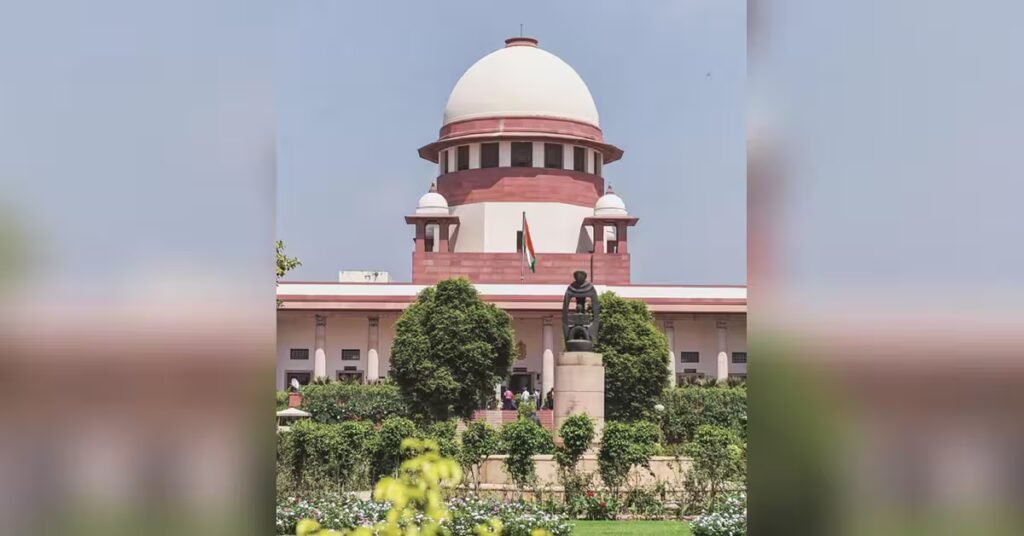


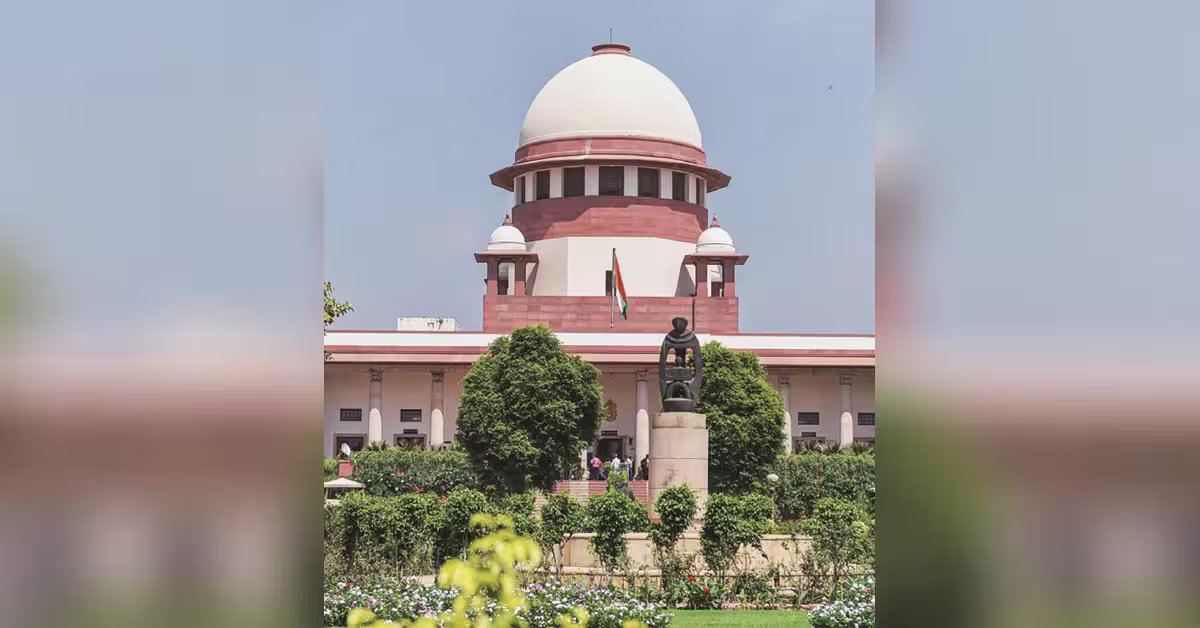

The Supreme Court on Monday dismissed appeals challenging the National Company Law Appellate Tribunal’s (NCLAT) decision to set aside the ₹2,962.02 crore resolution plan submitted by Twinstar Technologies for 13 Videocon group companies and remitted it to the committee of creditors (CoC) for reconsideration.
The CoC is the supreme decision-making body formed during an insolvency process when a company defaults on its debt.
A Bench of Justices Pamidighantam Sri Narasimha and Alok Aradhe held that the plan did not comply with the Insolvency and Bankruptcy Code (IBC) because it proposed to discharge the claims of dissenting lenders substantially through non-convertible debentures (NCDs), rather than payment in money.
The plan, approved by 95.09 per cent of the CoC’s voting share on December 11, 2020, provided for an upfront payment of ₹200 crore to lenders and NCDs worth ₹2,700 crore, carrying an annual coupon of 6.65 per cent. The debentures were redeemable in instalments over a period extending up to six years. Four lenders, holding about 3.077 per cent of the voting share, had voted against the plan.
Relying on its earlier ruling in the Jaypee Kensington Boulevard Apartments Welfare Association versus NBCC (India) Limited case, the court said the payment contemplated under the IBC to dissenting lenders must be in money. The plan’s reliance on debentures redeemable over several years did not meet this requirement. It also failed to secure the priority for dissenting creditors mandated under the CIRP Regulations.
The Bench further held that the National Company Law Tribunal (NCLT) could not have modified the plan by directing that dissenting creditors be paid their liquidation value in cash upfront, before payments to other lenders. Such a change to the plan’s payment structure could be made only by the CoC through the prescribed voting process.
The court, however, clarified that the NCLAT was wrong in holding that prior approval of the Competition Commission of India (CCI) had not been obtained. A CCI communication dated December 8, 2020, showed that approval was secured before the CoC’s voting concluded on December 11, 2020.
It also rejected the contention that the CoC had become functus officio, that is, having exhausted its authority, after approving the plan. The CoC continues to exist until the resolution plan is implemented or liquidation is ordered, and can reconsider its decision while statutory appeals are pending.
The NCLT had recorded that the plan offered ₹2,962.02 crore against admitted claims of ₹64,838.63 crore, entailing a haircut of 95.85 per cent. It had approved the plan in June 2021 but directed upfront cash payment to dissenting lenders. The NCLAT stayed that approval in July 2021. Subsequently, creditors representing about 94.98 per cent of the voting share informed the appellate tribunal that they wished to reconsider the plan.
In a significant clarification on the appellate tribunal’s powers, the Supreme Court laid down five considerations to guide remand orders. It said remand must further the IBC’s objectives, including keeping the distressed company a going concern, ensuring fair recovery for creditor classes and maximising asset value. It must be based on a finding of legal non-compliance, exercised sparingly and accompanied by strict timelines. The NCLAT may also remand a plan where the NCLT has improperly modified it instead of returning it to the CoC.
In a separate part of the judgment, the Bench rejected promoter Venugopal Dhoot’s plea to include overseas oil and gas interests held by Videocon subsidiaries in the insolvency proceedings of Videocon Industries Limited (VIL). It held that a holding company and its subsidiaries are separate legal entities, and the assets of subsidiaries cannot be treated as those of the parent merely because of beneficial ownership arrangements.
The court also declined to interfere with the transfer of the Brazilian interests following the exercise of a pre-existing right of first refusal by BPCL’s indirect wholly owned subsidiary, Bharat PetroResources Limited (BPRL). It noted that the transaction had been approved by the CoC of Videocon Oil Ventures Ltd and the NCLT, and had since been completed.
The Bench dismissed the appeal by the VIL Vendors Association, which represents operational creditors, but permitted it to pursue remedies available under the IBC. It said that if VIL had parted with its rights or furnished guarantees without consideration, the association could seek relief under the IBC. No such application had been filed.