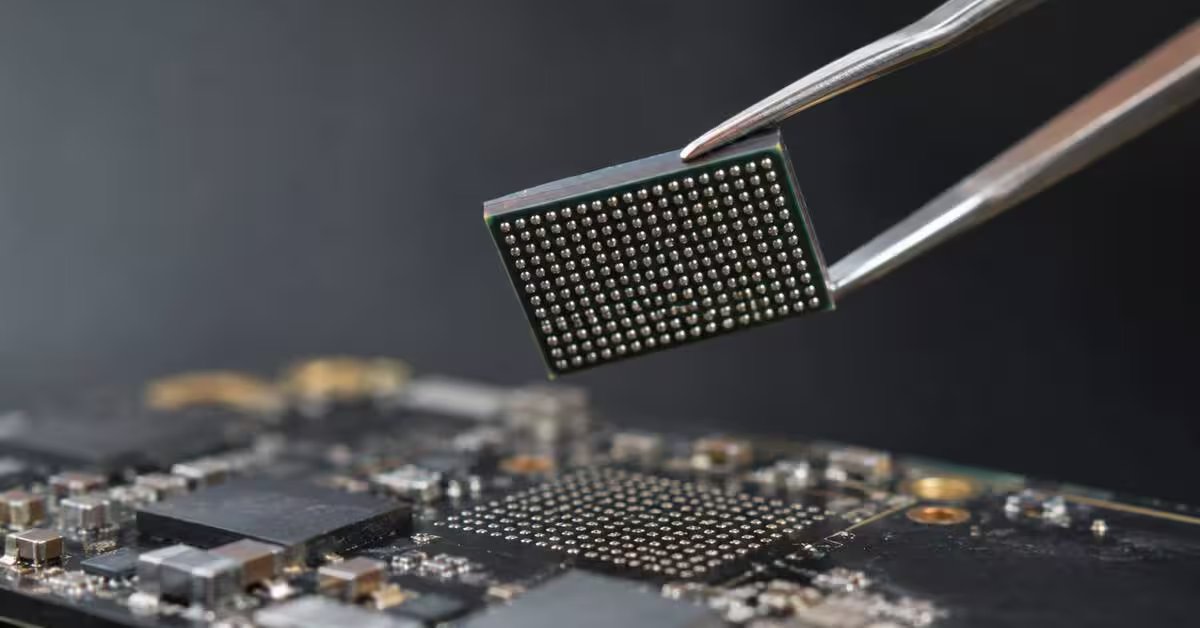

Rising memory prices are pushing smartphone manufacturers to explore alternatives to newly manufactured DRAM chips, including recovering memory components from existing circuit boards and reusing them in new devices. According to market research firm TrendForce, “reballed memory” could account for 3-4 per cent of smartphone memory adoption in 2026, rising to 7-9 per cent in 2027.
TrendForce said the practice is currently concentrated in entry-level and budget smartphones, with 4GB LPDDR4X accounting for most of the reballed memory available in the market. These recovered chips are primarily being used in 4G smartphones priced below $200, as manufacturers look to manage rising memory costs.
What is memory reballing and how does it work?
Memory reballing is part of a broader process involving the recovery and reuse of semiconductor components. Three terms are relevant here: reclaimed memory, reballed memory and refurbished memory.
Faisal Kawoosa, Chief Analyst at Techarc, explained the distinction between the three processes.
“Reclaimed, mainly comes from discarded electronics. So the gadget or device is no longer usable, but some components, including memory, are. Hence, it’s harvested. Reballing is when you prepare a harvested chip for mounting again on the PCB,” he said.
He added that reballing involves replacing the solder balls underneath a chip, which serve as electrical connections to the circuit board. Unlike conventional electronic components that use protruding metal pins, semiconductor components such as DRAM use solder balls to connect to the motherboard.
“Refurbishment is a more rigorous process where the focus is not just on the physical reconstruction of the chip, but on the functional validation. So, tests and validations are done to check the performance of the memory or chip, rather than just making it physically new,” Kawoosa said.
Why are smartphone makers considering reballed memory
The immediate reason is the rise in DRAM prices, driven by supply constraints and demand from the artificial intelligence (AI) infrastructure market. Memory manufacturers are catering to growing requirements for high-bandwidth memory (HBM) and server DRAM, putting pressure on the availability and pricing of other memory categories.
Smartphone manufacturers operating in lower price segments have limited flexibility to pass on higher component costs to consumers. Memory accounts for a significant share of the bill of materials (BOM) in entry-level smartphones, making cheaper sourcing alternatives worth exploring.
According to Navkendra Singh, Associate Vice President at IDC India, the price pressure is already affecting the entry-level smartphone market.
“Memory is a larger share of the cost of an entry-level phone, and these buyers are the most price sensitive. IDC’s data shows the pressure there: sub-$100 shipments fell 74.3 per cent in Q2’26,” he said.
Singh added that the memory shortage is expected to continue into 2027 and early 2028. Manufacturers catering to lower price bands could therefore consider recovered components to manage production costs.
Kawoosa also said that the business case for using reballed memory is strongest in the entry-level segment, where memory can account for 40 per cent or more of a smartphone’s BOM.
“That’s where it can make the maximum impact. The memory contribution to the BOM there is 40 per cent or more. So makes a strong business case to go for this,” he said.
TrendForce estimates that reballed memory could account for 3-4 per cent of smartphone memory adoption in 2026 and 7-9 per cent in 2027. IDC does not have published figures to validate these estimates, Singh said, but considers the projections plausible given the supply situation.
Kawoosa said Techarc had also heard from supply-chain sources that entry-level smartphone brands were using reballed memory, although the firm could not independently verify the practice. He expects adoption to rise in 2027 if the trend continues.
Why is reballing concentrated in entry-level 4G smartphones
The use of recovered memory is currently concentrated in lower-cost 4G smartphones with 4GB LPDDR4X memory. One reason is the availability of older memory components in the secondary market.
LPDDR4X is an older generation of low-power DRAM used in smartphones. Components from older or discarded devices can potentially be recovered and reused, provided they remain functional and are compatible with the target device.
Newer memory generations are less likely to be available in sufficient quantities through recovered stock. Higher-priced smartphones also have more room to absorb increases in component costs, reducing the incentive to use previously deployed memory.
Singh said extending the practice to 5G smartphones and higher memory configurations was possible, but unlikely in the near term because of the limited availability of newer memory in the secondary market.
Kawoosa, however, believes the practice could move into higher price segments in 2027, although he does not expect it to reach flagship smartphones.
The adoption of reballed memory may also depend on a manufacturer’s cost structure rather than whether it is an established smartphone brand or an original design manufacturer (ODM).
“Rather than that distinction, I think it will be driven by which segment you are in. So even an established smartphone brand can use reballed memory in lower-tier phones and use the new ones for flagships,” Kawoosa said.
Singh said manufacturers with thinner margins and weaker purchasing power were more likely to explore alternative sourcing models. ODMs and smaller players serving lower price bands could therefore be among the early adopters. Third-party component suppliers and secondary markets would play a role in making recovered memory available at scale.
Is semiconductor reballing limited to smartphones
Reballing is not exclusive to smartphone manufacturing. The technique is used in electronics repair to remove and reinstall components mounted on circuit boards using Ball Grid Array (BGA) packaging. Graphics cards, laptop motherboards and gaming consoles are among the electronics where BGA rework is used to repair or replace processors and graphics chips.
However, using reballing to recover components for installation in newly manufactured devices is a different proposition. Semiconductor company Micron’s BGA manufacturer’s user guide, for instance, does not recommend reballing for production applications, citing the risks associated with solder removal and excessive heat exposure.
Memory reuse is also being explored outside smartphones. Meta, for instance, has been reusing DDR4 memory modules from decommissioned servers in its data centre infrastructure. The approach involves qualifying and redeploying complete memory modules rather than recovering individual DRAM chips through reballing.
What are the reliability risks of using reballed memory
The primary concern with recovered memory is the uncertainty surrounding its previous usage and physical condition.
Singh said the additional heat exposure and removal process could affect the reliability of used components.
“Used chips have already been through heat cycles, and removal and reballing add further stress. Hidden wear and tear could affect performance or lifespan over time. The risk depends on how well the parts are screened, which is hard to verify at volume,” he said.
Kawoosa also pointed to traceability as a concern, particularly when recovered components enter the supply chain through third-party suppliers and secondary markets.
“There are traceability issues; you don’t exactly know how much thermal, structural and physical stress the chips have undergone. What kind of tests and validations were performed? There is always a grey market that could be exploiting this opportunity,” he said.
Can recovered memory work with a different smartphone processor
Compatibility is another challenge. Smartphone memory does not operate independently of the rest of the hardware. It needs to work with the processor’s memory controller, motherboard layout and device firmware.
Singh said memory recovered from different sources would need validation against the specific hardware and software configuration of the new smartphone.
“Memory must be validated against the specific processor, memory controller, board layout and firmware. Parts from mixed sources can differ in timing and tolerance. Testing every configuration is costly and slow, which is the main concern with unvalidated parts,” he said.
There is also a possibility that smartphones sold under the same model name could contain memory from different manufacturers, batches or component revisions. This could lead to differences in performance or stability between individual units.
Singh said strong quality control could reduce these inconsistencies, but would also add to the cost savings that manufacturers are seeking through the use of recovered components.
Should manufacturers disclose the use of recycled memory
The use of recovered memory in a newly manufactured smartphone also raises questions about consumer disclosure and product warranties.
A refurbished smartphone is generally a completely used device that has undergone reconditioning before being resold. A newly manufactured smartphone containing a previously used memory chip falls into a different category.
Singh said the two should be treated separately, adding that consumers would expect a new smartphone to offer the same warranty and quality standards as other new devices.
IDC does not have a published position on mandatory disclosure, he said, but clear labelling would be reasonable and could be addressed through regulation and consumer protection measures.
Kawoosa called for mandatory disclosure by smartphone manufacturers using reballed memory or other recovered components to reduce production costs.
“The government must immediately introduce a mandatory disclosure clause for brands using reballed memory or any such component to contain costs. It’s consumers’ right to know they aren’t getting everything new and fresh,” he said.
He also called for manufacturers to provide a guarantee of at least three years or more for such devices, based on scientific testing and agreed reliability standards.
Kawoosa suggested that manufacturers could explore device-as-a-subscription models, under which consumers pay a monthly fee to use a smartphone while the manufacturer remains responsible for keeping it operational during the subscription period.
Whether recovered memory becomes a more common part of smartphone manufacturing will depend on the availability of used components, the savings they offer and the ability of manufacturers to establish reliable testing and quality-control processes. With memory prices expected to remain under pressure into 2027, the economics of reusing components could become more attractive, particularly in the entry-level segment.