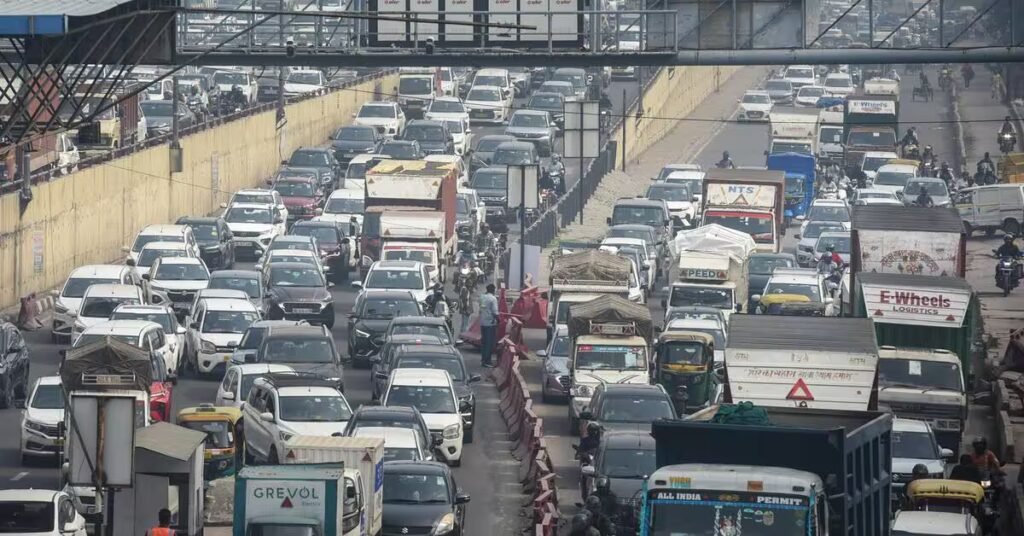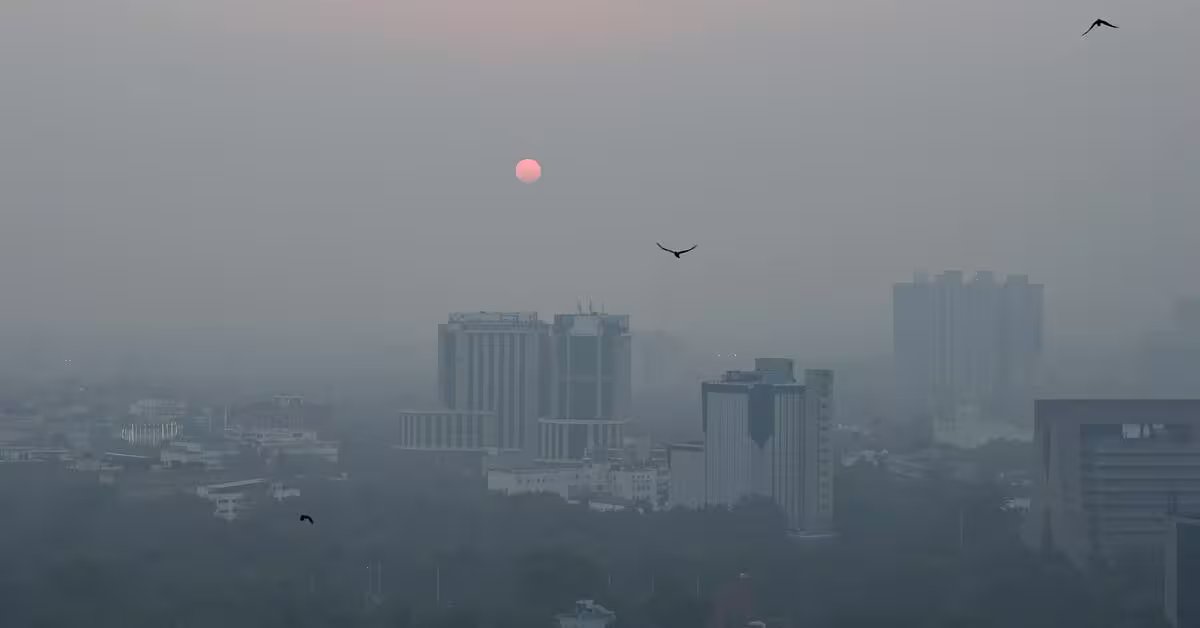

Delhi woke up to a hazy morning on Monday with the city-level 216 Air Quality Index (AQI) at 7 am, moving into the ‘poor’ category, according to the Central Pollution Control Board’s (CPCB’s) real-time data. The reading was down from 352 recorded at 7 am on Sunday.
Out of the 59 monitoring stations in Delhi, 39 recorded AQI levels above 200. Only two locations crossed the 300 mark, while none entered the ‘severe’ category.
Sirifort recorded the highest AQI at 346, followed by NSIT Dwarka at 330. Pusa recorded 282, while Punjabi Bagh stood at 276 and Chandni Chowk at 271. ITO registered 267, followed by Narela at 260 and North Campus of Delhi University at 259.
At the other end, Cantonment Area recorded the lowest AQI at 94, in the ‘satisfactory’ category. Najafgarh followed at 144, while Pusa’s DPCC monitoring station recorded 141.
PM10 and PM2.5 were identified as the prominent pollutants, according to CPCB.
Pollution levels across neighbouring National Capital Region (NCR) cities were also mixed. Bahadurgarh recorded the highest AQI among the neighbouring cities at 252, followed by Gurugram at 221. Manesar stood at 200, while Faridabad recorded 195 and Bhiwadi 193. Ghaziabad and Noida registered readings of 179 and 178, respectively, while Greater Noida recorded 140. All these cities, except Bahadurgarh and Gurugram, were in the ‘moderate’ category.
The national picture showed Gajraula in Uttar Pradesh recording the highest AQI among 276 cities with valid readings in the CPCB’s 7 am dataset, at 329. Sonipat in Haryana followed at 298, while Hisar recorded 282 and Jind 276. Buxar in Bihar registered 265, followed by Moradabad in Uttar Pradesh at 264 and Siwan in Bihar at 263.
At the other end of the spectrum, Leh in Ladakh recorded the lowest AQI at 22, followed by Aizawl in Mizoram at 23 and Srinagar in Jammu and Kashmir at 35. Rupnagar in Punjab recorded 36, while Chamarajanagar in Karnataka and Pampore in Jammu and Kashmir registered 43 each. These locations were in the ‘good’ category.
Stage III of the Graded Response Action Plan (Grap) remains in force across Delhi-NCR. The Commission for Air Quality Management (CAQM) invoked Stage III on November 6, after Delhi’s AQI reached 382 and forecasts indicated a possibility of the air quality slipping into the ‘severe’ category.
Stage III measures include restrictions on non-essential construction and demolition activities, curbs on certain categories of vehicles, and tighter controls on industrial and other polluting activities. These are in addition to measures under Stages I and II, including intensified road cleaning, water sprinkling, dust suppression, restrictions on diesel generator sets and efforts to strengthen public transport.
Under the CPCB’s National Air Quality Index classification, readings between 101 and 200 are categorised as ‘moderate’, 201-300 as ‘poor’, 301-400 as ‘very poor’ and 401-500 as ‘severe’. Poor air quality can cause breathing discomfort to people with lung disorders, asthma and heart disease, while prolonged exposure to very poor air can cause respiratory illness.