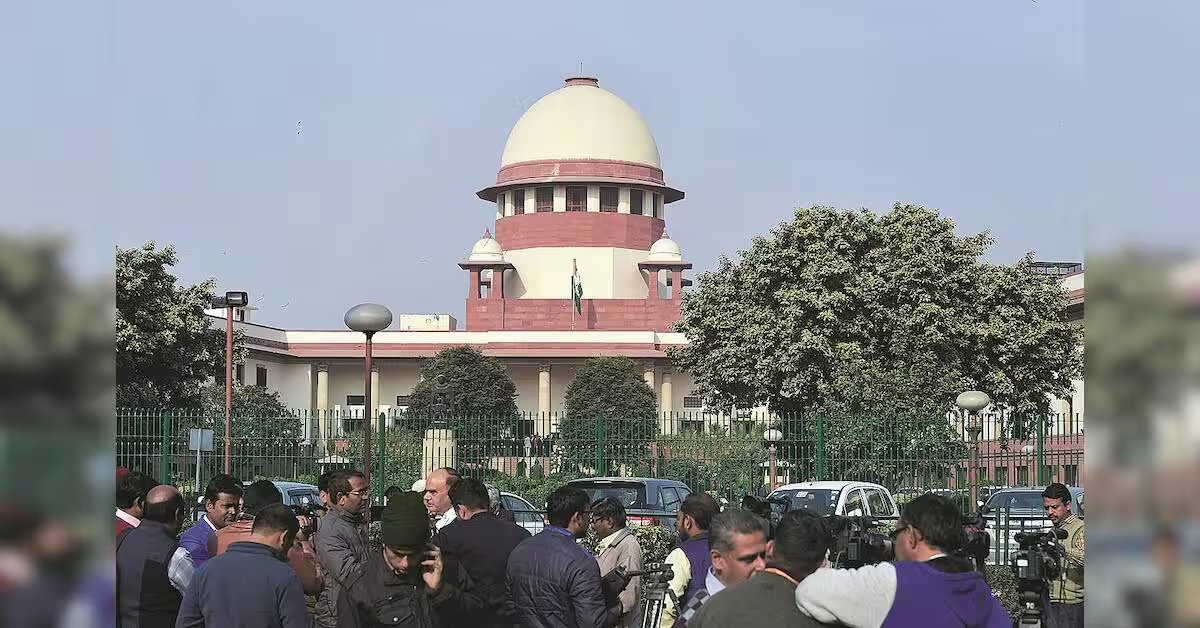

A company’s balance sheet is more than just a financial record. It can serve as a legal tool for the creditors and can affect how long they are eligible to recover unpaid money. The Supreme Court, in its November 10 ruling, held that entries in a company’s balance sheets can amount to an acknowledgement of liability under Section 18 of the Limitation Act, 1963. This will give creditors a fresh opportunity to file recovery claims.
The ruling came in a dispute involving construction dues dating back to the early 2000s. The apex court overturned a Delhi High Court decision which dismissed the recovery suit as time-barred. However, it further clarified that the financial entries did not conclusively establish the whole amount claimed by the contractor. The actual liability depends on the facts of the case.
How much time does a business normally have to recover unpaid dues?
Limitation Act, 1963, prescribes the period within which a person must approach a court to enforce a legal right. Here, in this case, the time-barred condition is posed to recover credit-related claims. The proceedings clarify that businesses do not have to wait indefinitely to recover money through proceedings.
In the claims related to money, the limitation period is three years under Section 18 of the Limitations Act, 1963. However, the date from which this period begins depends on the date and the nature of the transaction.
“Section 18, requires a written and signed acknowledgement of a subsisting liability, made before limitation expires,” said Saurav Agarwal, Advocate, Delhi High Court.
The entry must, read with the accounts and surrounding circumstances, establish a creditor-debtor relationship. In short, the context did the identifying. A bare sundry-creditors figure, without that evidentiary link, may not suffice, Agarwal further added.
How can a balance-sheet entry give creditors another three years to sue?
Section 18 of the Limitation Act comes into the picture here.
When a person or company acknowledges an existing liability in writing before the original limitation period expires, a fresh limitation period begins from the date when the acknowledgement is signed, the provision says.
In simple terms, suppose a business has to pay a supplier ₹5 lakh, and the supplier has three years to file a recovery suit. If the business acknowledges the outstanding amount in a qualifying signed document before those three years expire, the supplier gets a fresh three-year period from the date of that acknowledgement.
In Asset Reconstruction Company (India) Ltd v. Bishal Jaiswal (2021), the Supreme Court bench held that entries in a company’s books of accounts, including balance sheets, could qualify as accounts, including balance sheets, could qualify as an acknowledgement of liability under Section 18. They further made clear that the creditor need not mention the recovery claim in every subsequent balance sheet to establish the connection.
“For the purpose of extension of limitation, such entry of debt in the balance sheet must have been done before the expiry of the original limitation of the debt,” said Samarjit G Pattnaik, Managing Partner at Trinetra Legal.
Does every entry showing outstanding dues count as an acknowledgement of debt?
No. Merely showing an amount under outstanding liabilities or sundry creditors does not automatically extend the limitation period.
Courts must examine the balance sheet as a whole, including its accompanying notes, explanations and auditor’s report. These documents may contain qualifications or disputes about the liability.
In the present case, the original contractor, Wazir Hussain, had undertaken construction work for Vigyapan Loke Delhi Advertising Cooperative Group Housing Society Ltd. under a contract. He raised running bills between 2000 and 2003 and subsequently filed a recovery suit in 2014, seeking ₹11.16 lakh along with interest.
Can companies face recovery claims for debts that are several years old?
Yes, that depends on whether the legal requirements for extending limitations are satisfied.
For instance, a company may face a recovery claim relating to an older transaction if acknowledgement has been given in writing before the existing limitation period expires. Hence, it depends on the wording of the contract.
However, this does not mean that a company can be sued indefinitely for every old liability appearing in its accounts. Section 18 cannot ordinarily revive a claim whose limitation period has already expired before the acknowledgement was made.
“A subsequent denial of liability does not, by itself, automatically nullify an earlier acknowledgement validly made under Section 18,” said Vipul Wadhwa, Partner, Singhania & Co.
The earlier acknowledgement must, however, independently satisfy the statutory requirements and must genuinely indicate a subsisting liability, Wadhwa further added.
What should businesses, MSMEs and creditors take away from the ruling?
For MSMEs and small suppliers, the case extends the need to preserve important financial documents, including invoices, purchase orders, contracts, and other payment-related correspondence. Companies, meanwhile, must ensure that their financial statements accurately disclose outstanding liabilities.
For creditors, the ruling offers an important legal route when a debtor’s own financial records acknowledge unpaid dues.
“Companies must exercise caution while classifying and disclosing outstanding liabilities, particularly disputed, contingent or unverified claims,” said B. Shravanth Shanker, Managing Partner, B. Shanker Advocates LLP.
The Board of Directors and finance teams should ensure that disclosures accurately reflect the company’s legal and contractual position, Shanker further added.