
Odisha is embarking on a major expansion of its hydropower infrastructure with a ₹4,708.64 crore investment to set up its first large-scale pumped storage project.
The proposed 600 megawatt (Mw) facility at Upper Indravati in Kalahandi district will give the state critical energy storage capability as it prepares to accommodate a larger share of renewable power in its electricity mix.
Officials said the project would be implemented through Odisha Hydro Power Corporation Ltd (OHPC), and Megha Engineering and Infrastructures Ltd (MEIL) had been selected as the engineering, procurement and construction (EPC) contractor following a competitive tendering process. The project is targeted for commissioning in the financial year 2030-31.
The Upper Indravati mega pumped storage hydroelectric project (PSP) was among the two such big projects cleared by the Central Electricity Authority (CEA) in 2024. The other PSP, with a capacity to generate 2,000 Mw of power, was in Karnataka.
The Odisha project will have four stages, each having a capacity to generate 150 Mw of power. The complex will consist of two reservoirs — upper and lower — along with the underground storage unit. This one-of-its-kind project has been designed to reuse water from the upper reservoir.
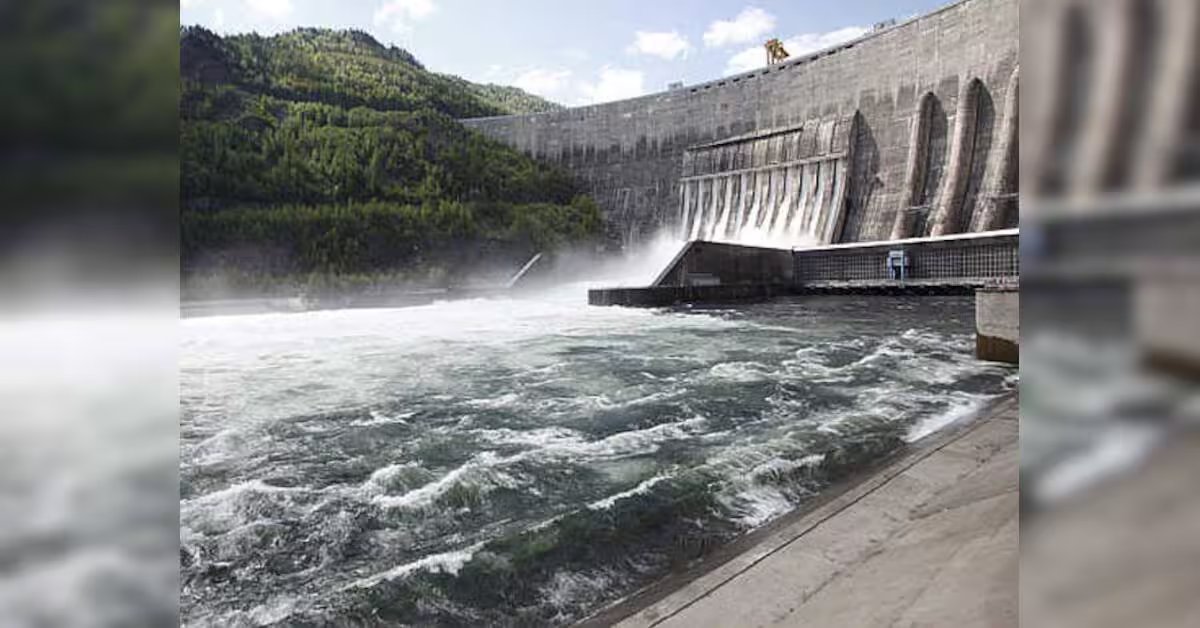
The project will be located adjacent to the existing Upper Indravati Hydroelectric Project at Mukhiguda, with Ranibahal village serving as the site for the proposed lower reservoir. It will use the existing Indravati reservoir as the upper reservoir, avoiding the need to create an entirely new upper storage facility. A lower reservoir and an underground powerhouse will be developed to complete the system.
Unlike a conventional hydropower station, which generates electricity from the natural flow or release of water, the pumped storage facility will function as a giant rechargeable battery, storing electricity when demand is low and releasing it when consumption rises. This will help Odisha manage fluctuations in electricity demand, improve grid reliability and make better use of solar and other variable renewable energy sources.
The PSP will feature an underground powerhouse equipped with four vertical-axis, reversible hydroelectric units. Each unit will comprise a generator-motor coupled with a reversible pump-turbine, enabling the facility to switch between power generation and water pumping modes.
“The underground complex with step-up transformers and GIS switchyard will function as a giant energy storage system, using surplus electricity to pump water to the upper reservoir and releasing it through the turbines to generate up to 600 MW of electricity during periods of peak demand,” officials said.
The existing Upper Indravati hydropower project has an installed capacity of 600 Mw and will generate around 1,040 million units of electricity annually. Once the PSP is commissioned, the combined installed capacity of the two facilities will go up to 1,200 Mw.
The state Cabinet, chaired by Chief Minister Mohan Charan Majhi, recently approved the project cost, EPC contractor and financial framework for the project. The project cost of ₹4,708.64 crore includes GST, expenses for consultancy, land acquisition, forest clearances and interest during construction, among other project-related expenses.
Chief Secretary Anu Garg said the Upper Indravati PSP would act as a massive grid-scale energy storage system, absorbing surplus electricity during off-peak hours and generating power during peak demand periods.
“This infrastructure provides instant frequency response, load variation mitigation, spinning reserves, and critical black-start capabilities to stabilise the state power grid against intermittent renewable energy generation,” she told mediapersons during the Cabinet briefing.
The project will be financed through an 80:20 debt-equity structure. OHPC will contribute 20 per cent of the project cost through its internal reserves in a phased manner, while the remaining 80 per cent will be provided by the state government as a soft loan. The loan will carry an interest rate at par with the Reserve Bank of India’s repo rate, with disbursement linked to the project’s implementation requirements.
The Centre has identified pumped storage as an important component of India’s energy transition, given its ability to provide long-duration storage and grid-balancing services. According to the power ministry, India had 4,746 Mw of operational pumped storage capacity, with another 8,450 Mw under construction. It also estimated the country’s exploitable on-river pumped storage potential at around 61,975 Mw.