

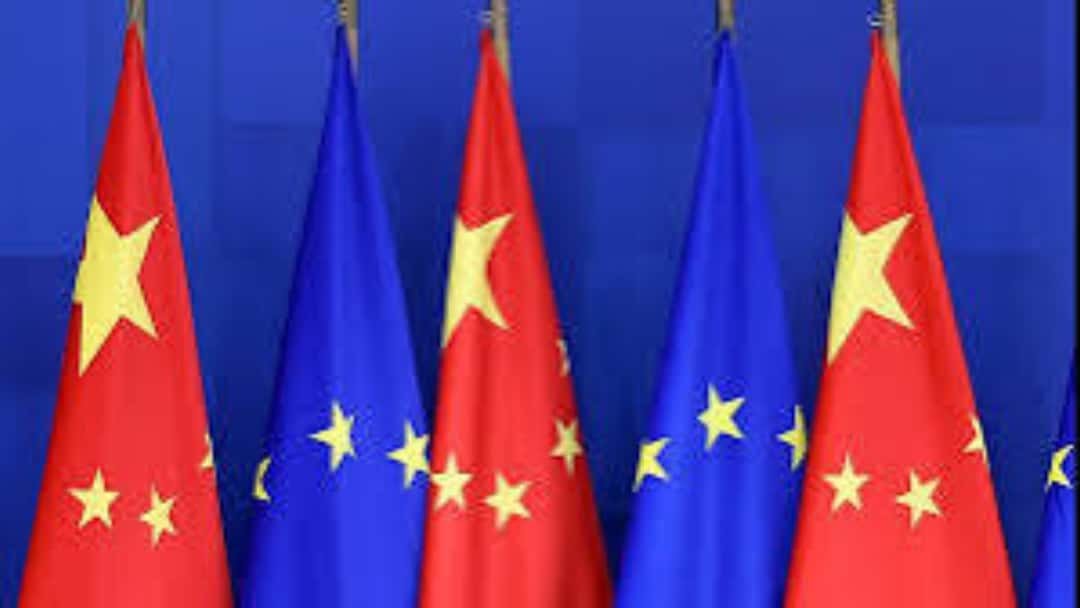

Beijing : China and the European Union (EU) have agreed to maintain stable and balanced economic and trade relations following their second trade and investment consultation meeting held in Beijing on October 8–9, 2026. The two sides reached a consensus on 16 specific points covering key trade and investment issues, including trade imbalances, export controls, intellectual property rights, and reform of the World Trade Organization (WTO).
The discussions were co-chaired by Chinese Commerce Minister Wang Wentao and European Commissioner for Trade and Economic Security Maroš Šefčovič. Both sides reaffirmed the importance of their bilateral economic relationship and expressed their commitment to managing differences through dialogue and in accordance with international trade rules.
The next meeting of the China-EU trade and investment consultation mechanism has been scheduled for March 2027. In addition, the two sides agreed to hold a ministerial video conference in January 2027 to maintain communication and review progress on key issues.
16 Points of Consensus Reached During Beijing Talks
The two-day consultation focused on addressing trade-related concerns and identifying areas where China and the EU could strengthen economic cooperation.
According to the meeting summary provided, the two sides reached consensus on 16 specific points. These discussions covered several important areas of their economic relationship, including:
- Trade and investment balance
- Export controls and licensing procedures
- Intellectual property rights protection
- Reform of the World Trade Organization
- Trade in hybrid vehicles
- The EU’s anti-subsidy investigation into Chinese electric vehicles
- The EU Foreign Subsidies Regulation
- Cooperation in investment and economic development
Both sides emphasised the importance of practical engagement and continued negotiations to resolve differences affecting bilateral trade.
China and EU Explore Possible Tariff Reductions
One of the key outcomes of the discussions was an agreement to continue exploring potential tariff reductions on certain goods within the framework of WTO rules.
The move reflects an effort to identify opportunities for improving market access and reducing trade friction while maintaining compliance with international trade obligations.
However, the discussions did not establish that specific tariffs had already been reduced. Any future changes would depend on further negotiations and the applicable procedures.
The two sides also reaffirmed their intention to handle trade disputes through established multilateral mechanisms rather than allowing disagreements to disrupt their broader economic relationship.
Understanding Reached on Hybrid Vehicle Trade
China and the EU reached an understanding regarding trade in hybrid vehicles, with both sides emphasising consistency with WTO rules.
The discussions also addressed the EU’s anti-subsidy investigation into Chinese electric vehicles. The two sides agreed to continue discussions on price undertakings and the review process associated with the investigation.
Price undertakings generally involve exporters committing to specified pricing conditions as a possible means of addressing concerns in trade investigations. Any arrangement would need to be assessed under the relevant EU trade rules.
The continuation of these discussions indicates that electric vehicle trade remains an important issue in China-EU economic relations.
No final resolution of the broader electric vehicle dispute was specified in the information provided.
Technical Dialogue Planned on EU Foreign Subsidies Regulation
Another important issue discussed during the meeting was the European Union’s Foreign Subsidies Regulation (FSR).
The regulation enables the EU to examine certain financial contributions provided by non-EU governments to companies operating in the European market, particularly where those contributions may distort competition.
China and the EU agreed to hold a technical dialogue on the regulation. The discussions are intended to provide an avenue for addressing concerns and improving communication regarding its implementation.
The outcome of this dialogue could be relevant to businesses operating across the two markets, particularly companies involved in cross-border investment, acquisitions, public procurement, and other commercial activities covered by the regulation.
Rare Earth and Permanent Magnet Export Licensing
The supply of rare earth materials and permanent magnets was another significant subject of the consultations.
China agreed to continue facilitating export licence applications for rare earths and permanent magnets destined for the EU through a designated green channel mechanism.
Such materials are important for a range of industrial applications, including electric vehicles, renewable energy technologies, electronics, and advanced manufacturing.
The EU and its member states, in turn, agreed to continue easing key dual-use licensing cases involving China.
Dual-use goods and technologies are items that can have both civilian and military applications. Their exports are often subject to specific licensing and regulatory requirements.
The commitments indicate an effort by both sides to improve communication and facilitate certain trade procedures while continuing to operate within their respective regulatory frameworks.
The announcement does not mean that all export restrictions have been removed or that every licence application will automatically be approved.
Investment Cooperation to Support Mutual Economic Growth
China and the EU also agreed to explore opportunities for investment cooperation to support economic growth on both sides.
Given the scale of their commercial relationship, investment cooperation could create opportunities across manufacturing, technology, industrial supply chains, and other sectors.
Both sides highlighted the importance of maintaining stable economic ties and exploring practical solutions to issues that affect businesses and investors.
The discussions also reinforced the significance of intellectual property rights and international trade rules in providing a framework for commercial engagement.
January 2027 Ministerial Conference and March Meeting Scheduled
To ensure that the agreements reached in Beijing translate into practical progress, both sides have established a schedule for continued engagement.
The next steps include:
- January 2027: A ministerial video conference to maintain close communication.
- March 2027: The third meeting of the China-EU trade and investment consultation mechanism.
- Ongoing: Working teams from both sides will implement the agreed outcomes and prepare for the next consultation.
The working teams are expected to follow up on the areas of consensus and continue discussions on unresolved trade issues.
The two scheduled meetings will provide opportunities to review progress, address emerging concerns, and assess possible areas for further cooperation.
China-EU Trade Relations: Cooperation Amid Differences
China and the European Union are major participants in global trade, with extensive commercial links across manufacturing, technology, consumer goods, industrial equipment, and other sectors.
At the same time, their economic relationship has faced disagreements over market access, subsidies, industrial competition, export controls, and regulatory policies.
The latest consultations represent an effort to manage these differences through structured dialogue while preserving opportunities for trade and investment.
The agreement to continue discussions on tariffs, vehicle trade, export licensing, and investment demonstrates that both sides are seeking practical approaches to complicated economic issues. However, the effectiveness of these efforts will depend on the implementation of the commitments and the progress achieved in subsequent negotiations.
Conclusion
The second China-EU trade and investment consultation meeting in Beijing concluded with consensus on 16 specific points and a commitment to maintain stable and balanced economic relations.
Key outcomes included continued exploration of possible tariff reductions, further discussions on hybrid and electric vehicle trade, a planned technical dialogue on the EU Foreign Subsidies Regulation, and cooperation on export licensing for rare earths and permanent magnets.
With a ministerial video conference scheduled for January 2027 and the next formal consultation meeting planned for March 2027, both sides have established a framework for continued engagement.
The upcoming discussions will be important in determining how effectively the commitments reached in Beijing can be translated into concrete progress on bilateral trade and investment issues.
Source: Information supplied in the original report dated October 10, 2026.